
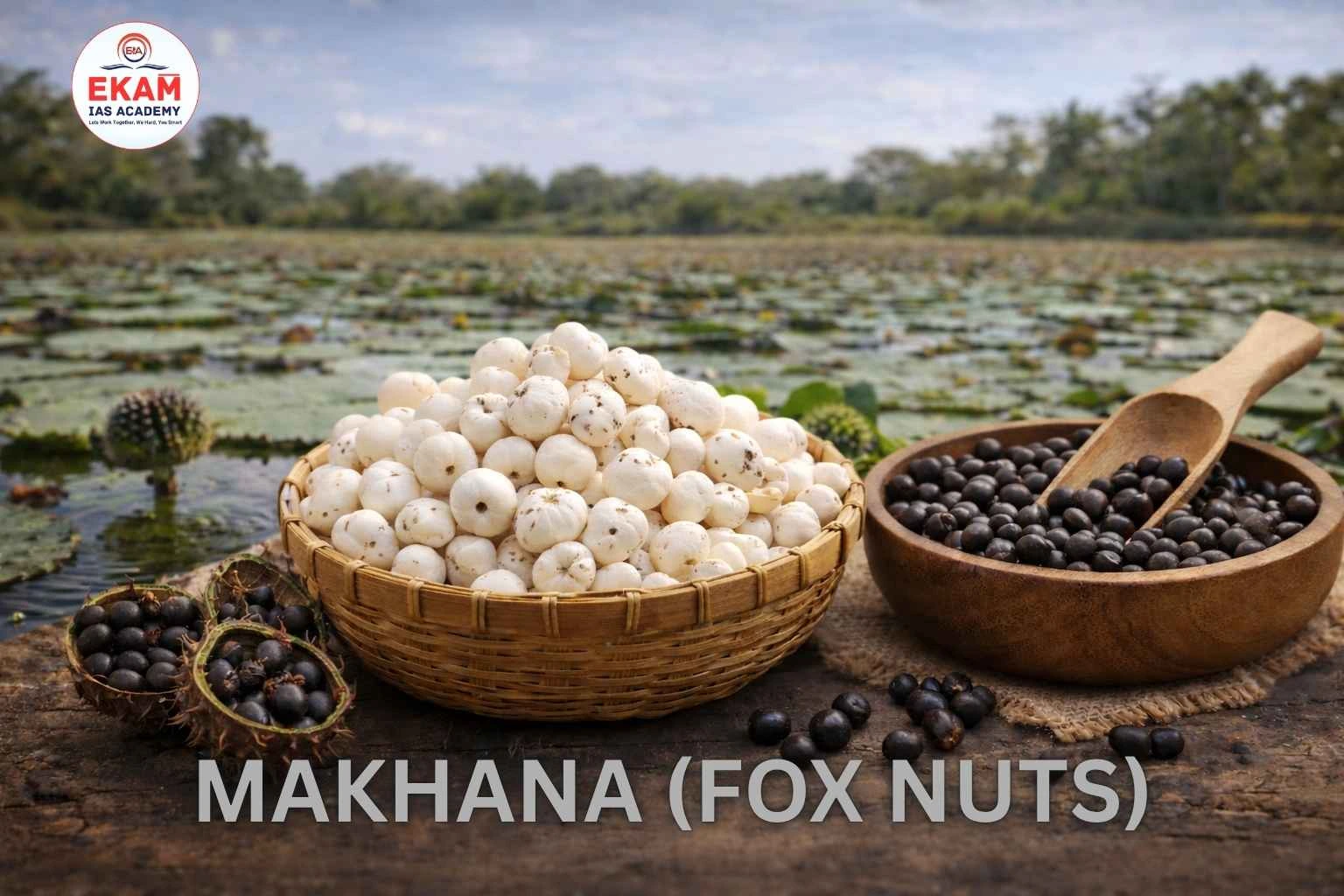
Exports of makhana (fox nuts) have been hit due to the ongoing conflict in West Asia, leading to a sharp fall in demand and prices. This topic is important for aspirants preparing through IAS coaching in Hyderabad, UPSC online coaching, and other civil services preparation platforms.
About Makhana
• Also called Foxnut or Black Diamond (due to its dark seed coat).
• Botanical name: Euryale ferox, belonging to the water lily family.
• Native to South-East Asia and China, but now cultivated widely.
• Recognised under the One District One Product (ODOP) scheme of the Government of India.
Such agriculture and economy-related topics are frequently covered in UPSC coaching in Hyderabad and Hyderabad IAS coaching institutes.
Cultivation Conditions
• Grown in stagnant water bodies like ponds, oxbow lakes, swamps, and ditches.
• Climate: Tropical and subtropical.
• Temperature: 20°C–35°C.
• Rainfall: 100–250 cm annually.
• Soil: Smooth loamy soil.
• Major Indian states: Bihar (largest producer), West Bengal, Manipur, Tripura, Assam, Odisha, Rajasthan, Madhya Pradesh, Uttar Pradesh, and Jammu & Kashmir.
These aspects are often analysed in IAS coaching and civils coaching in Hyderabad for GS3 preparation.
Benefits
• Serves as both food and medicine, with wide applications in nutrition and healthcare.
• Rich in protein, fibre, and antioxidants, making it a healthy snack.
• Used in Ayurveda and traditional medicine for its therapeutic properties.
• Contributes to the local economy and provides livelihood opportunities, especially in Bihar.
Such topics are important for aspirants undergoing UPSC online coaching and structured GS answer writing programs.
Conclusion
Makhana is a nutritionally rich and economically significant crop, central to Bihar’s rural economy and India’s export basket. Current challenges due to geopolitical tensions highlight the need for diversified markets and stronger value chains. For aspirants preparing through IAS coaching in Hyderabad, UPSC coaching in Hyderabad, and civils coaching in Hyderabad, this topic holds high relevance for GS3 and agriculture-based questions.
This topic is available in detail on our main website.