

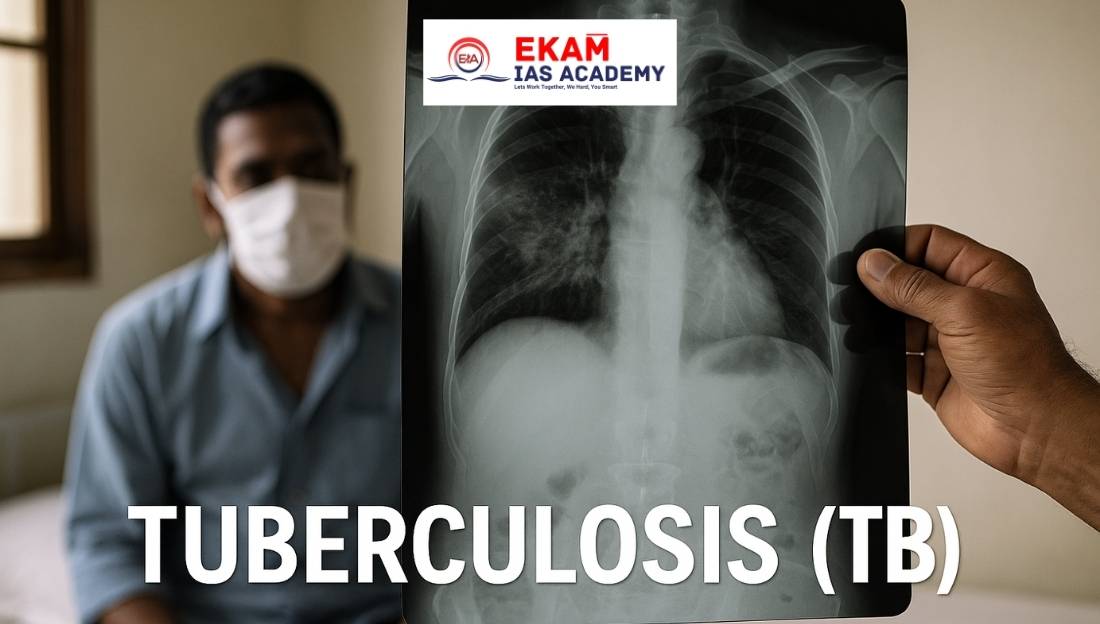
On World AIDS Day (December 1, 2025), Tamil Nadu’s innovative health models are highlighted for their role in controlling HIV and now tackling TB. The State has adopted predictive technology to reduce TB deaths, similar to its earlier success with the AIDS Control Society model.
HIV and AIDS in India
- 1980s Africa: HIV/AIDS devastated populations with no treatment available.
- Early 1990s India: HIV spread across the country, mainly through unsafe sex; in the northeast, drug use and needle sharing were major causes.
- Challenge: No cure, high mortality due to opportunistic infections like TB and diarrhoea.
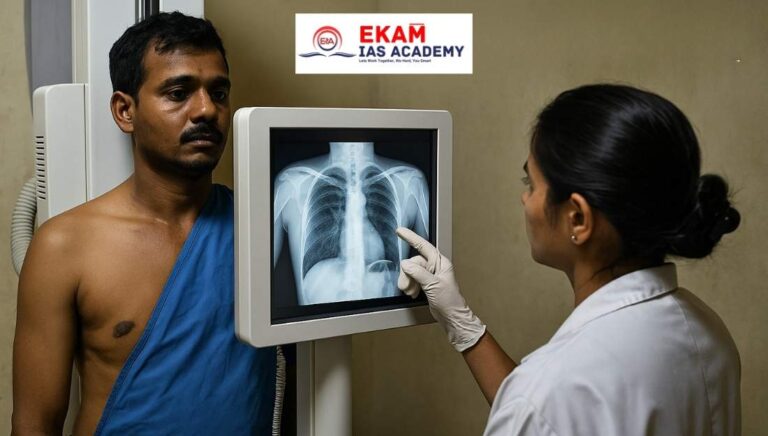
Tamil Nadu State AIDS Control Society (TNSACS) Model
- 1992: National AIDS Control Project launched with World Bank support.
- Problem: Slow fund flow through government channels.
- 1994 Solution: Tamil Nadu converted its AIDS Cell into a registered society (TNSACS) for direct funding and autonomy.
- Impact:
- Rapid awareness campaigns.
- Sharp fall in new HIV infections.
- Model replicated nationwide in 1997–2002.
- Result: India’s adult HIV prevalence dropped from 0.54% (2000) to 0.22% (2025).
TB Burden in India
- WHO Global TB Report 2025:
- India has 25% of global TB cases (36 million).
- 7.5% of global HIV cases are in India.
- TB is the leading opportunistic infection in HIV patients, causing 25% of AIDS deaths.
- India also has 25% of global MDR-TB cases.
India’s Response to TB
- Target: Eliminate TB by 2025 (ahead of global 2030 target).
- Progress: Target not fully met, but decline in TB cases is faster than global average.
- Government Efforts: Pradhan Mantri TB Mukt Bharat Abhiyaan (PMTBMBA) supports treatment, nutrition, and community participation.
Tamil Nadu’s New TB Model
- Variation across States: 5 States (UP, Maharashtra, MP, Bihar, Rajasthan) account for 56% of TB cases.
- Tamil Nadu Innovation:
- First State to integrate ICMR-NIE predictive software into TB screening.
- Helps identify patients at risk of TB deaths.
- Steps: rapid testing → reporting → treatment → nutrition support.
- Collaboration: State National Health Mission and Central TB Office work jointly.
- Outcome: Efficient adoption of technology and delivery system, replicating the AIDS success story.
TUBERCULOSIS (TB)
Caused by Bacteria
- TB is an infectious disease caused by Mycobacterium tuberculosis.
- It mainly affects the lungs (pulmonary TB) but can also impact other organs (extrapulmonary TB).
Mode of Transmission
- TB spreads through the air when a person with active pulmonary TB coughs, sneezes, or speaks.
- Close and prolonged contact increases risk of infection.
Global and Indian Burden
- India accounts for about 25% of global TB cases, making it the country with the highest TB burden.
- TB is also the most common opportunistic infection among HIV patients.
Risk Factors for Spread
- Poor nutrition, overcrowded living conditions, weak immunity (HIV/AIDS), and lack of timely treatment.
- Multidrugresistant TB (MDRTB) is a growing challenge due to incomplete or improper treatment.
Prevention and Control
- Early detection and completion of treatment under DOTS (Directly Observed Treatment Strategy).
- Vaccination with BCG (Bacillus Calmette–Guérin) in childhood.
- Public health measures: awareness, nutrition support, and reducing stigma.
Conclusion
Tamil Nadu’s proactive health governance — from TNSACS for HIV to predictive TB models — demonstrates how innovation and autonomy can control epidemics.
This topic is available in detail on our main website.