

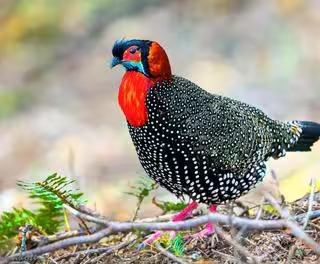
The captive breeding programme for the western tragopan (Tragopan melanocephalus) in Himachal Pradesh has successfully increased the population in captivity. Experts warn that without habitat protection and climate adaptation, long-term survival in the wild remains uncertain.
About the Western Tragopan
- Species: Tragopan melanocephalus, one of India’s rarest pheasants and the state bird of Himachal Pradesh.
- Habitat: Historically in Jammu & Kashmir, Himachal Pradesh, Uttarakhand, now restricted to fragmented pockets.
- Population: Estimated 3,000–9,500 mature individuals, all from a single subpopulation; climate change and human encroachment threaten survival.
Captive Breeding Programme
- Sarahan Pheasantry: First successful captive hatching in 2005, marking world’s first for the species.
- Population Growth: 2007–2015: 43 captive-born birds; currently, 46 birds maintained, with 6–8 eggs hatching annually.
- Genetic Diversity: Entire captive population originated from 8 wild founders, retaining ~87% of genetic variability.
- Habitat Simulation: Enclosures replicate natural conditions—dense cover, nesting material, seasonal diet—to reduce stress and improve survival.
Conservation Challenges
- Climate Impact: Shifts in insect availability and seasonal patterns affect chick survival in the wild.
- Limited Rewilding: Experimental releases in 2020–21 showed some success, but budget and protocol development delays have paused large-scale reintroductions.
- Human Disturbance: Habitat fragmentation and past community interference reduced survival chances in natural forests.
Role of Community & Policy
- Community-Based Tourism: Local participation provides alternative livelihoods, incentivising forest protection and reducing disturbance.
- Habitat Protection Needed: Ex-situ breeding alone cannot ensure survival; in-situ conservation is crucial.
- Long-Term Commitment: Reintroduction requires patience, monitoring, and adaptive management, similar to the decade-long breeding effort.
Species Protection Initiatives in India
- Project Tiger (1973): Protect Bengal tigers through tiger reserves and NTCA; population now 3,167 (2023).
- Project Elephant (1992): Conserve Asian elephants via elephant reserves, corridors, and reducing human-elephant conflict.
- Olive Ridley Turtle Conservation: Protect mass nesting sites in Odisha & Andhra; nest protection and community awareness.
- Project Snow Leopard (2009): Conserve snow leopards in Himalayas through habitat management, anti-poaching, and eco-tourism.
Conclusion
Captive breeding has stabilised the western tragopan population, but long-term conservation depends on habitat protection, climate adaptation, and community engagement. Sustainable survival requires coordinated ex-situ and in-situ efforts.
This topic is available in detail on our main website.