
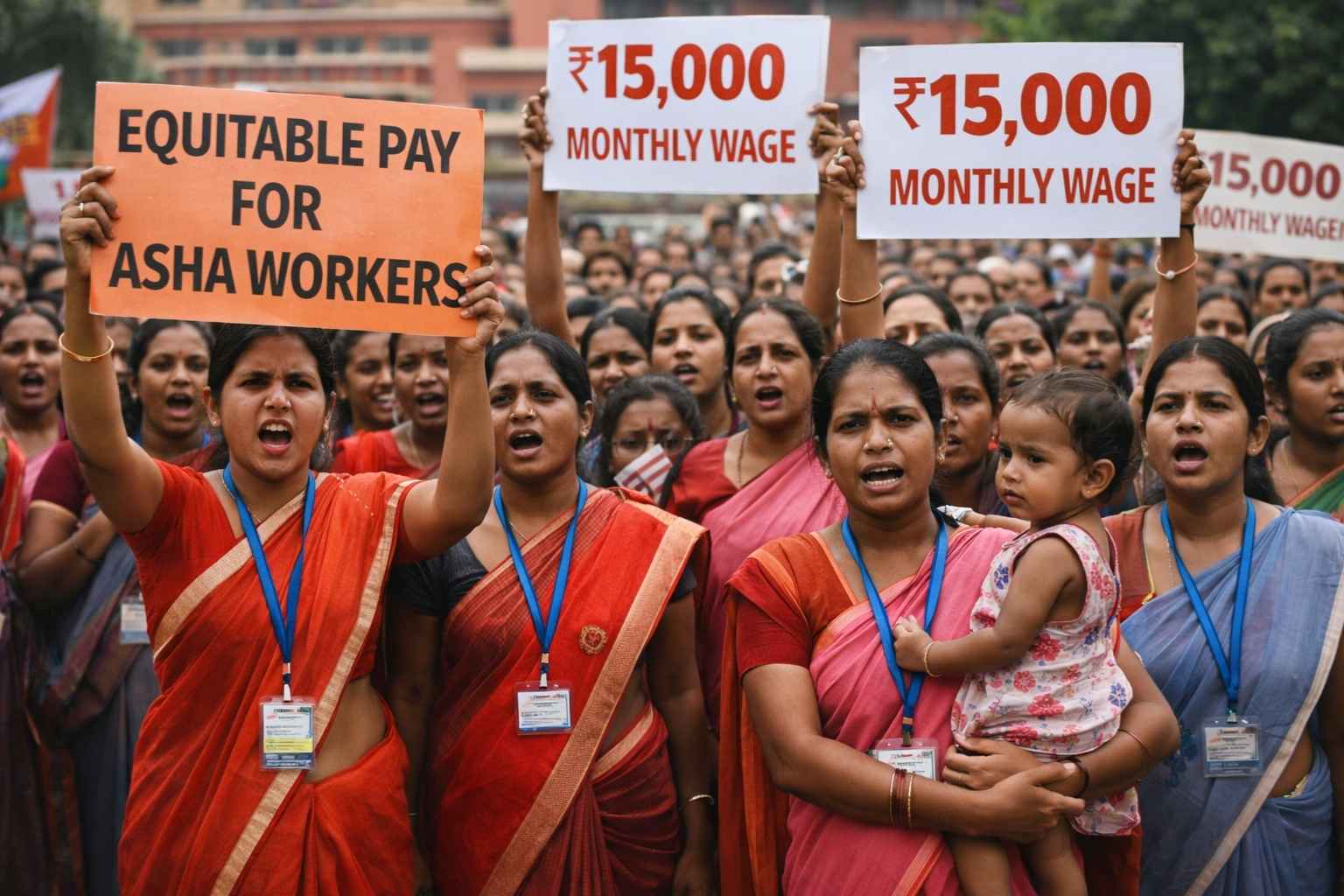
ASHA and anganwadi workers in West Bengal are protesting, demanding a monthly wage of ₹15,000, highlighting the long-standing issue of denial of permanent employee status and fair pay despite their crucial role in welfare schemes. The issue raises important questions of labour rights, social justice, and welfare governance, frequently discussed in GS Paper II by aspirants preparing through UPSC coaching in Hyderabad.
Background
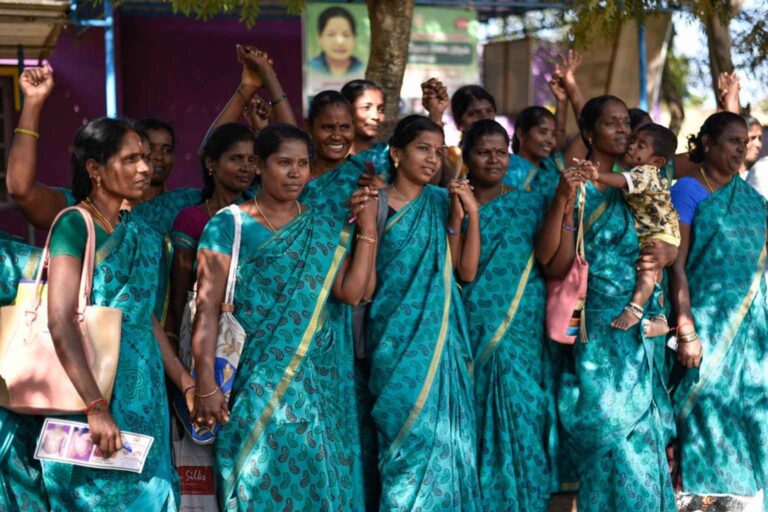
- ASHA and anganwadi workers form the backbone of healthcare and child development programmes.
- Since the Indira Gandhi era, they were classified as “scheme workers” under ICDS, not regular government employees.
- The Karnataka vs Ameerbi (1996) tribunal ruling excluded them from government employee status.
- The ASHA programme (2005) followed the same path, treating them as “activists” rather than workers.
Historical Issues
- 1989: National union formed to demand recognition and fair wages.
- 2004: Supreme Court expanded the right to food, increasing reliance on these workers.
- 2010s: 45th Labour Conference recommended regularisation, minimum wages, pension, and gratuity — not implemented.
- 2015: ICDS budget cut, worsening financial insecurity.
- 2018: Centre froze its contribution to honoraria, leaving States to bear the burden.
Present Challenges
- Unequal Pay Across States: Wealthier States can provide higher top-ups, while poorer States struggle.
- Fiscal Shock Absorption: Workers remain vulnerable due to stagnant central support.
- Labour Codes: New labour codes fail to ensure improved conditions for gig and scheme workers.
- Exploitative Practice: Despite being essential to service delivery, they continue to be underpaid and undervalued—an issue often highlighted in governance modules at Hyderabad IAS coaching.
Way Forward
- Legal Reclassification: Recognise ASHA and anganwadi workers as statutory employees under the Code on Social Security.
- Minimum Wages & Pension: Guarantee fair pay, retirement benefits, and social security coverage.
- Fiscal Coordination: Centre and States must jointly bridge funding gaps to ensure uniform pay.
- Equity Across Regions: Prevent disparities between richer and poorer States.
- Institutional Protection: Build a framework that safeguards dignity and ensures sustainable livelihoods.
Conclusion
Denying them fair wages and employee status undermines both social justice and governance. Recognising their contribution through legal protection, equitable pay, and pension rights is essential to uphold their right to dignity and strengthen India’s welfare delivery.
This topic is available in detail on our main website.