
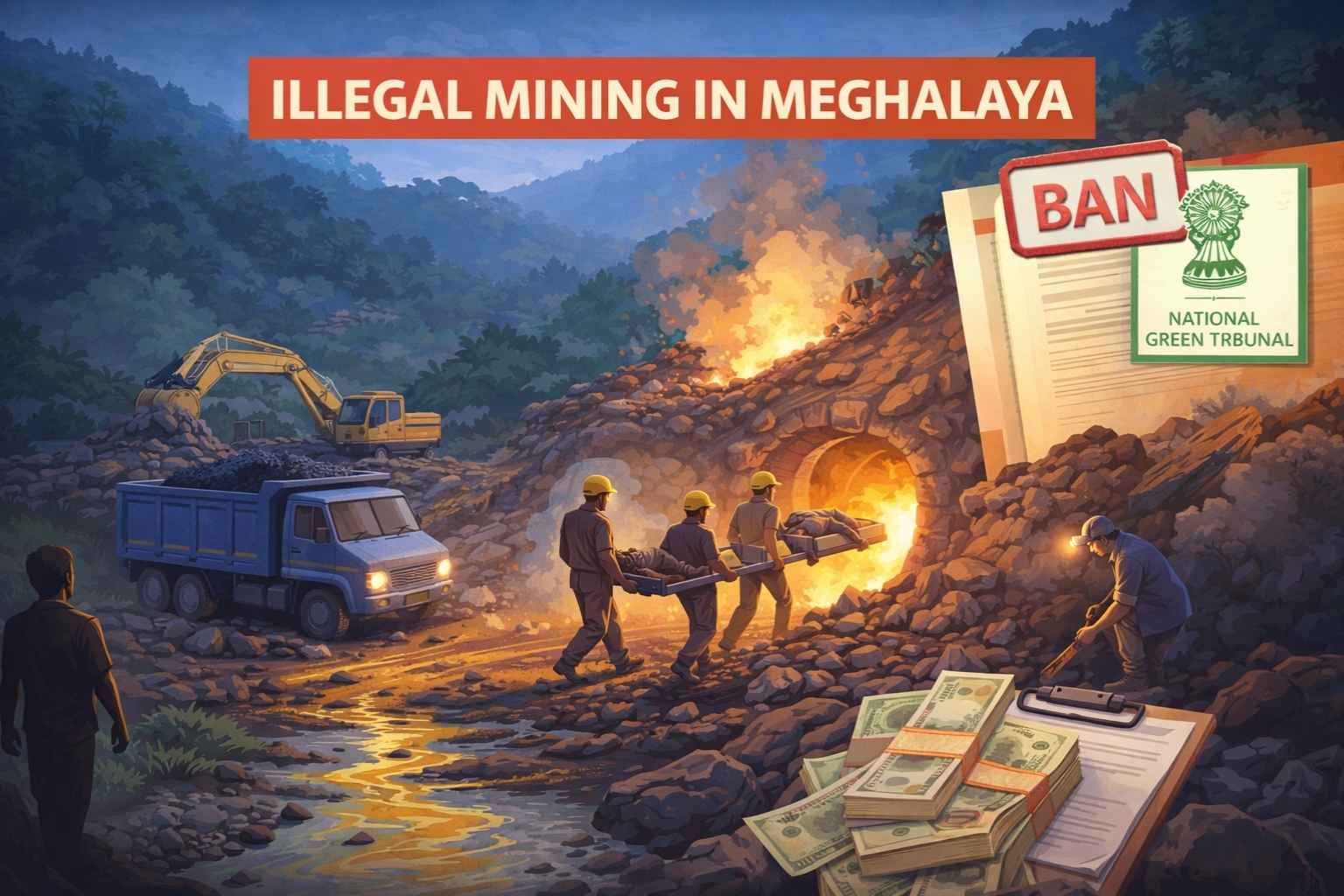
On February 5, 2026, an explosion in an illegal rat-hole coal mine in Meghalaya killed at least 18 workers. The incident highlights the persistence of illegal mining despite bans and court supervision, a governance failure often analysed in GS Paper III by aspirants enrolled in UPSC coaching in Hyderabad.
Background
- Rat-hole Mining: Small tunnels dug into coal seams without engineering safeguards; prone to collapse.
- Ban: National Green Tribunal prohibited rat-hole mining in 2014.
- Persistence: Mining continues due to local dependence on coal income, fragmented land ownership, and weak enforcement.

Problems with Illegal Mining
- Safety Hazards: Frequent accidents, collapses, and explosions; deaths often underreported.
- Health & Environment: Acid drainage, polluted water, unstable landscapes, degraded roads.
- Labour Issues: Informal labour market, child labour, and lack of worker records.
- Supply Chain Laundering: Illegal coal mixed with legal consignments, making detection difficult.
Governance Challenges
- Weak Enforcement: Local authorities face difficulties due to fragmented ownership patterns and entrenched patronage networks.
- Court Supervision Limits: Judicial orders alone cannot substitute for continuous administrative action.
- Diffuse Accountability: Contractors and intermediaries dilute responsibility, making prosecution difficult—an issue often debated in IAS coaching in Hyderabad polity and governance modules.
Measures Suggested
- Technology Use: GPS tracking for coal carriers. Satellite and drone monitoring integrated with control rooms.
- Community Monitoring: Involve local bodies; share penalties to incentivise vigilance.
- Target Intermediaries: Seizure of illegal consignments. Licence cancellations, prosecutions, and blacklisting from auctions.
- Alternative Livelihoods: Promote horticulture, construction, tourism, and small manufacturing. Public works to absorb displaced mining labour.
- Labour Protection: Allow workers to testify against contractors with amnesty. Pursue errant contractors aggressively.
Way Forward
- Raise Costs of Illegality: Make illegal mining financially and socially prohibitive.
- Provide Alternatives: Replace mining income with sustainable livelihood options.
- Strengthen Enforcement: Combine technology, community participation, and strict action against intermediaries.
Conclusion
Illegal mining in Meghalaya persists because bans alone are ineffective without economic alternatives, strict enforcement, and community involvement. The February 5 tragedy underscores the urgent need to make illegal mining both operationally impossible and socially unacceptable.
This topic is available in detail on our main website.