
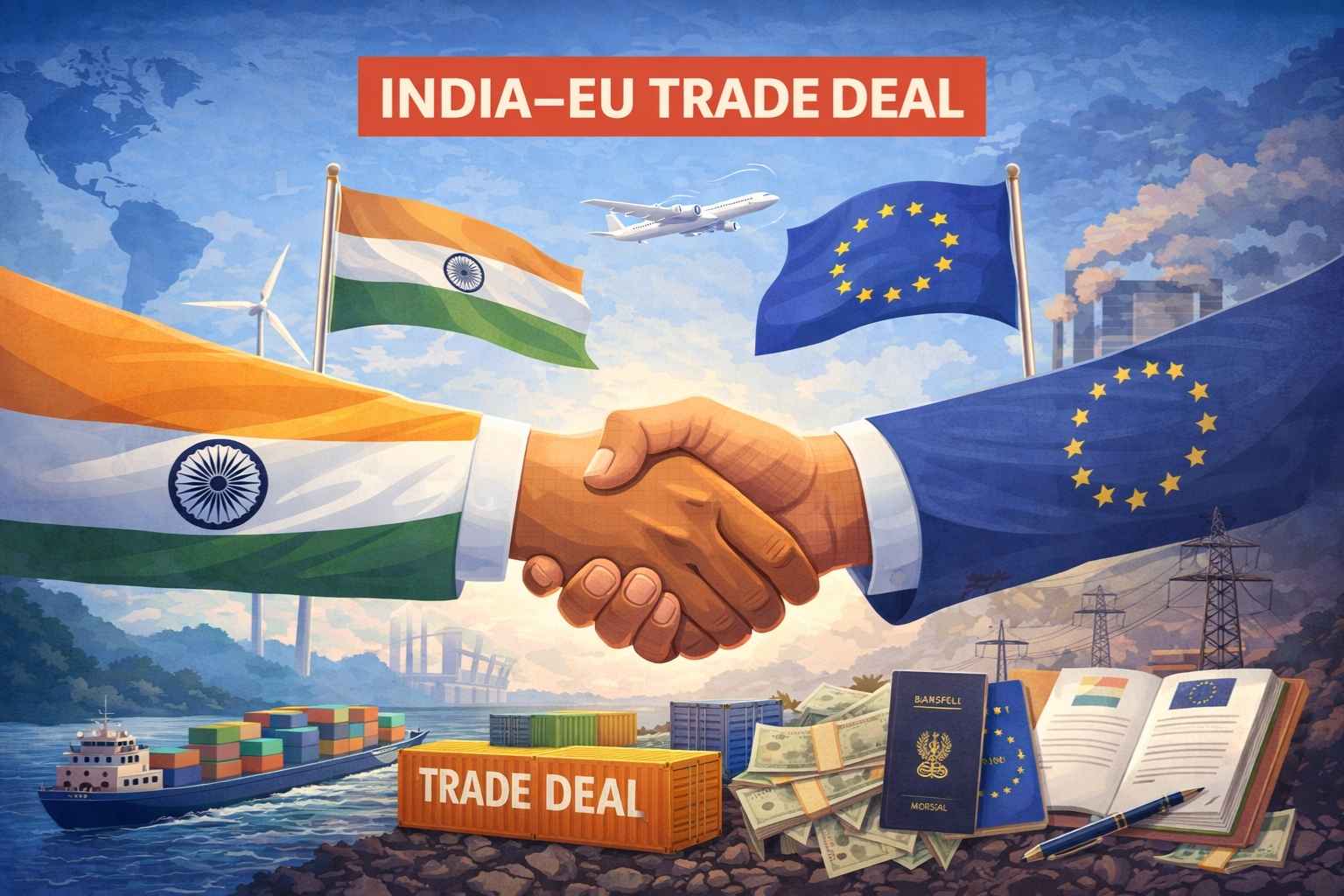
India and the European Union (EU) recently concluded a long-pending trade agreement after 25 years of negotiations. The development is being closely followed by aspirants preparing through UPSC coaching in Hyderabad as it carries major GS-II and GS-III relevance.
Background
- Negotiations began in the late 1990s but faced repeated delays due to protectionist concerns and bureaucratic hurdles.
- Political trust built through frequent highlevel meetings since 2016 enabled progress.
- Previous trade deals with the UK and Australia helped India prepare for EU negotiations.
Drivers of the Agreement
- Political Diplomacy: Summitlevel engagement created trust and allowed leaders to invest political capital.
- Geopolitical Pressures: U.S. trade offensives under Trump. Economic coercion from China and Russia.
- Need for stable partnerships in a turbulent global order.
Strategic Dimensions Beyond Trade
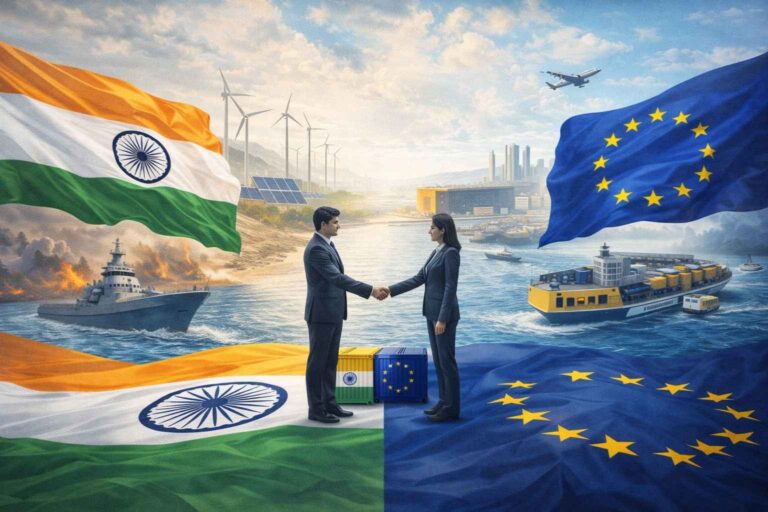
- Defence & Security: Cooperation for maritime stability and freedom of navigation. Joint military exercises, information sharing, and IndoPacific security capacity building.
- Energy: EU’s decarbonisation goals align with India’s need for affordable sustainable energy. Opportunities in green hydrogen, renewable technologies, and resilient infrastructure.
- Technology: Collaboration on semiconductors, AI, digital public infrastructure, and data governance.
- Mobility: Easier visas and recognition of professional qualifications. Student, researcher, and skilled worker exchanges to strengthen innovation ecosystems.
Importance of the Deal
- Marks a strategic realignment, not just a trade pact.
- Offers India and EU a chance to jointly promote multipolarity, openness, and resilience.
- Can deliver tangible public goods across the IndoPacific and Global South, countering China’s influence.
Way Forward
- The Commission said putting a fixed limit on cesses and surcharges would be risky, though depending on them for too long is not good.
- It stated that States already have enough funds to carry out their constitutional duties.
- As a way forward, it suggested that the Centre should gradually move back to collecting more regular taxes instead of relying heavily on cesses and surcharges, so that the shareable pool of revenue becomes larger.
Conclusion
The India–EU trade deal is more than an economic agreement; it is the foundation of a strategic partnership. If sustained and broadened, this convergence could become a pillar of a more stable and multipolar international system.
This topic is available in detail on our main website.