
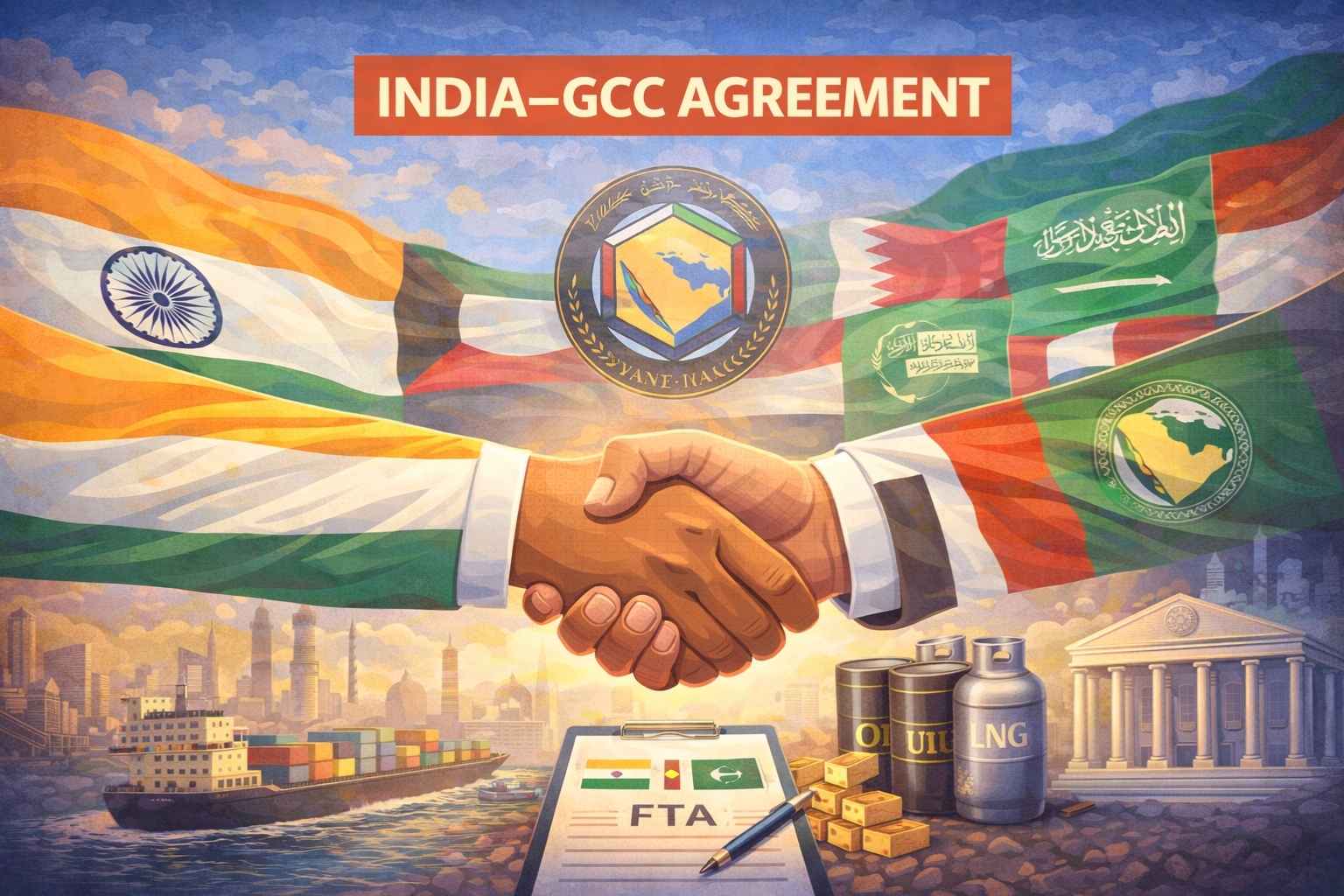
India and the Gulf Cooperation Council (GCC) recently signed the Terms of Reference for a Free Trade Agreement (FTA) in New Delhi, a development of high relevance for GS Paper II and III, often analysed in UPSC coaching in Hyderabad.
About GCC
- Established: 1981 as a regional political and economic alliance.
- Members: Bahrain, Kuwait, Oman, Qatar, Saudi Arabia, and UAE.
- Objective: Promote cooperation in economy, security, culture, and social development.
- Background: Formed in response to regional instability after the Iranian Revolution (1979) and the Iran–Iraq War (1980–88).
- Headquarters: Riyadh, Saudi Arabia.
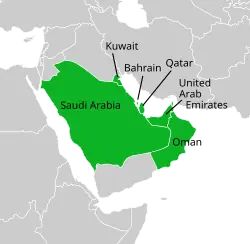
Organisational Structure
- Supreme Council: Heads of member states; meets annually; presidency rotates alphabetically.
- Ministerial Council: Composed of foreign ministers; proposes policies and implements decisions.
- Secretariat General: Prepares studies, coordinates projects, and enhances integration among members.
India–GCC Free Trade Agreement
- India’s Exports to GCC: Engineering goods, rice, textiles, machinery, gems, and jewellery.
- India’s Imports from GCC: Crude oil, LNG, petrochemicals, and precious metals like gold.
- Significance: Strengthens India’s energy security and expands market access for Indian industries, a key discussion area in IAS coaching in Hyderabad.
Importance of the Agreement
- Enhances India’s trade diversification and reduces dependence on other regions.
- Builds stronger economic interdependence with Gulf nations.
- Supports India’s long-term energy and export growth strategy.
Conclusion
The India–GCC FTA framework is a strategic milestone that goes beyond trade, reinforcing India’s economic resilience and geopolitical engagement with the Gulf region.
This topic is available in detail on our main website.