
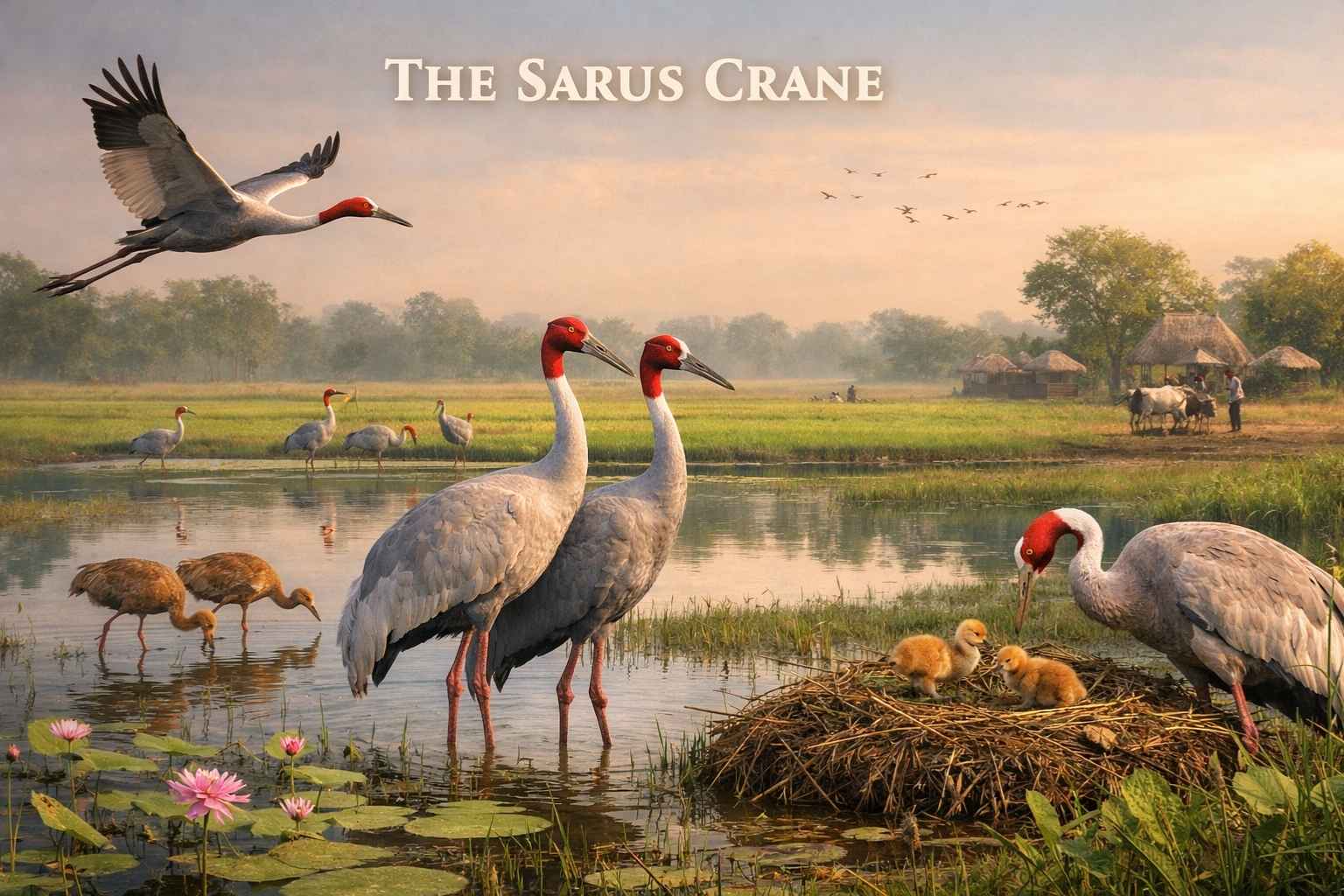
A recent census in Uttar Pradesh recorded an increase of 634 birds (≈3% rise) in one year across multiple forest divisions. The state continues to hold the largest population of Sarus Cranes in India—a trend often analysed in GS-III environment topics covered under UPSC coaching in Hyderabad.
About Sarus Crane
The Sarus Crane (Antigone antigone) is the world’s tallest flying bird and a key indicator of wetland ecosystem health. Its survival reflects the condition of agricultural wetlands and traditional water bodies in northern India, a recurring theme in environment sections of IAS coaching in Hyderabad.
Habitat & Distribution
- Prefers freshwater wetlands — marshes, ponds, canals, flooded fields.
- Often seen near human settlements, especially in paddy-growing regions.
- Major Indian presence in the Gangetic Plains and eastern Rajasthan.
- Numbers decline toward peninsular India due to habitat loss.
- Also found in parts of Southeast Asia and northern Australia.
- Non-migratory species (resident bird).
Habitat & Distribution
- Prefers freshwater wetlands — marshes, ponds, canals, flooded fields.
- Often seen near human settlements, especially in paddy-growing regions.
- Major Indian presence in the Gangetic Plains and eastern Rajasthan.
- Numbers decline toward peninsular India due to habitat loss.
- Also found in parts of Southeast Asia and northern Australia.
- Non-migratory species (resident bird).
Physical & Behavioral Traits
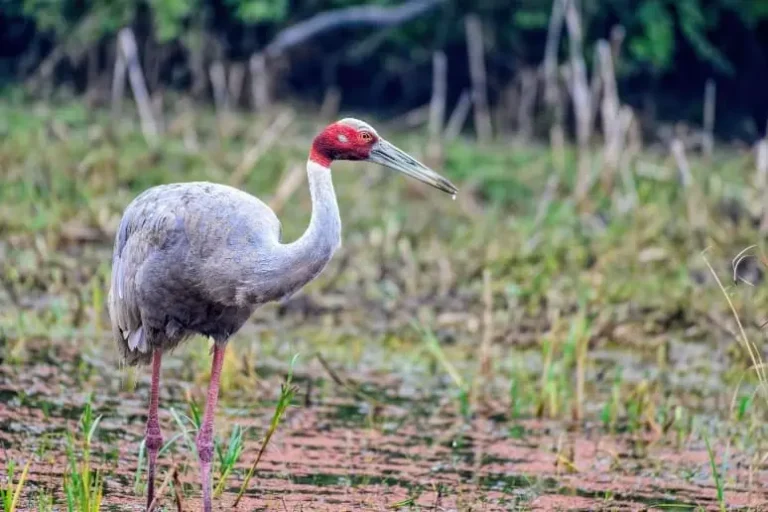
- Height: Up to 1.8 m, making it the tallest flying bird globally.
- Appearance: Grey body, bare red head and upper neck, pinkish-red legs.
- Among cranes, considered least gregarious — usually in pairs or small groups.
- Monogamous; pairs often remain together for life.
- Nests built on shallow water platforms in wetlands or flooded farms.
- Lifespan: Around 30–40 years in the wild.
Ecological Importance
- Acts as a flagship wetland species.
- Helps in pest control and maintains food chain balance.
- Presence signals healthy agro-wetland systems.
Threats
- Wetland drainage and urban expansion.
- Pesticide use in agriculture.
- Power line collisions.
- Decline in traditional water bodies.
Conservation Status
- IUCN Red List: Vulnerable (via International Union for Conservation of Nature)
- CITES: Appendix II (regulated trade under Convention on International Trade in Endangered Species)
- Protected under India’s Wildlife Protection framework.
This topic is available in detail on our main website.