
Why in News?
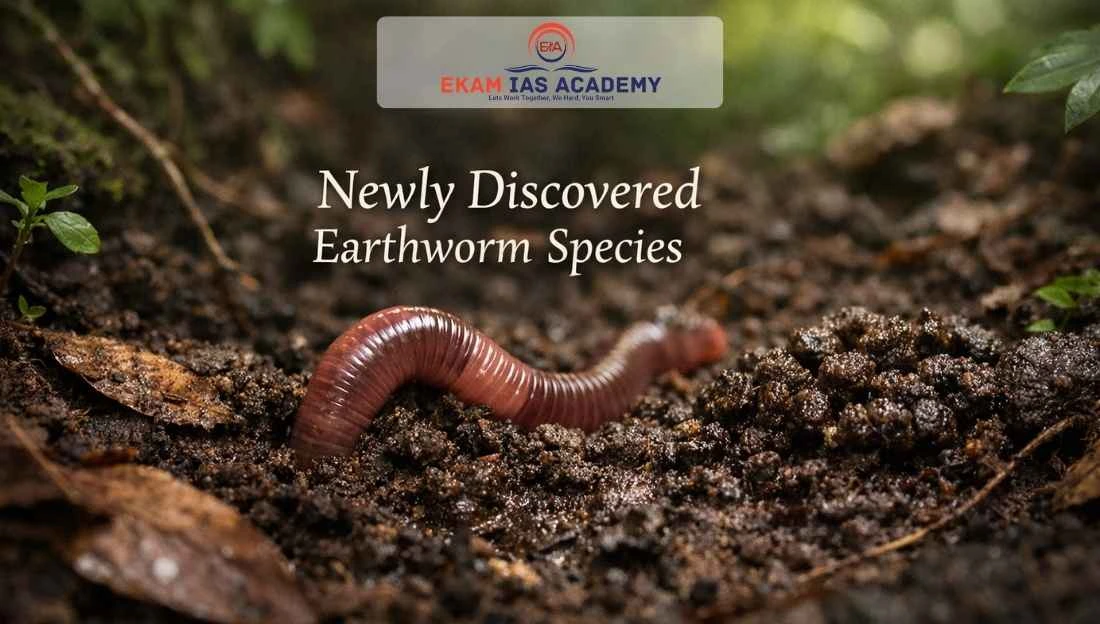
Scientists recently discovered two new earthworm species named Moniligaster girishi and Drawida reynoldsi in India — a development highlighting biodiversity research, often discussed in UPSC coaching in Hyderabad under environment and ecology topics.
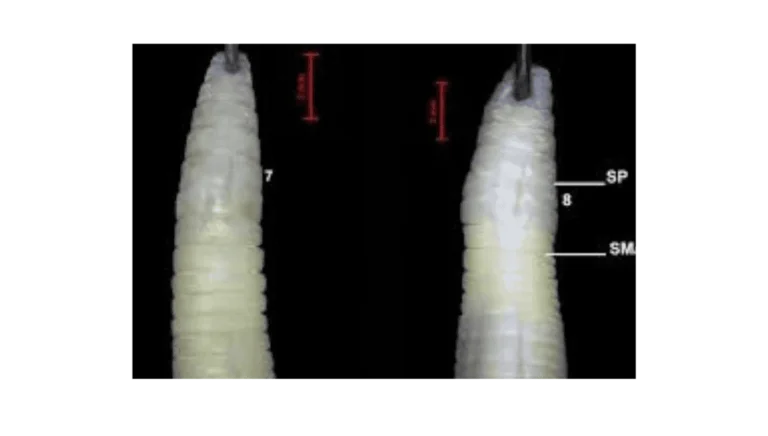
About Moniligaster girishi
• It belongs to the family Moniligastridae.
• Found in tropical wet evergreen forests of the Western Ghats.
• Named after P. Girish Kumar, a scientist from the Zoological Survey of India.
• It belongs to the gravelyi species group and is identified by unique reproductive gland structures.
About Drawida reynoldsi
• Found in montane grasslands of the Western Ghats.
• Named after John Warren Reynolds, a Canadian earthworm expert.
• It belongs to the robusta species group and has distinctive bilobed reproductive structures.
About Drawida reynoldsi
• Found in montane grasslands of the Western Ghats.
• Named after John Warren Reynolds, a Canadian earthworm expert.
• It belongs to the robusta species group and has distinctive bilobed reproductive structures.
Key Facts About Earthworms
• Earthworms belong to Phylum Annelida and Class Oligochaeta.
• They are terrestrial worms that live in moist soils.
• The genus Lumbricus includes several commonly known earthworms — a topic frequently covered in IAS coaching in Hyderabad for biodiversity and ecology preparation.
Ecological Importance
1. Soil Fertility
Earthworms convert organic matter into nutrient-rich humus, improving soil fertility.
2. Soil Aeration
Their burrowing creates channels that improve airflow and water movement in soil.
3. Nutrient Cycling
Earthworm castings provide essential nutrients for plant growth.
4. Soil Structure Improvement
Their activities enhance soil texture, microbial activity, and agricultural productivity — concepts often discussed in UPSC online coaching while studying ecosystem services.
Significance of the Discovery
• Helps expand knowledge about biodiversity of the Western Ghats, one of the world’s major biodiversity hotspots.
• Supports scientific research and conservation planning.
• Highlights the importance of protecting soil ecosystems and micro-fauna, a theme commonly analysed in civils coaching in Hyderabad for GS3 environment preparation.
This topic is available in detail on our main website.