
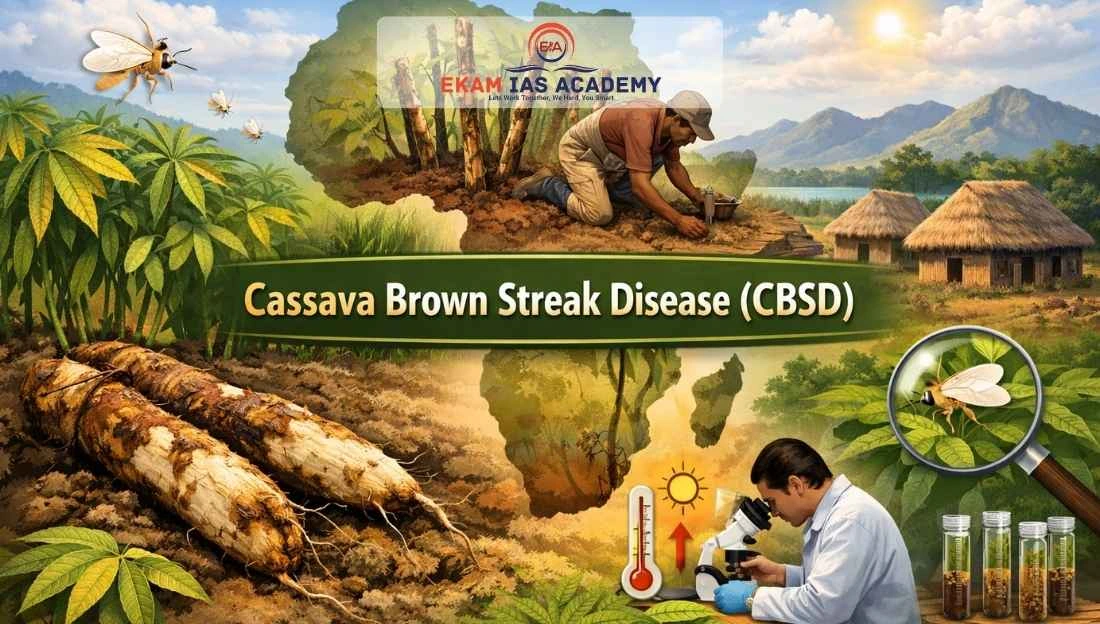
Why in News?
A recent scientific study has warned that over one-third of Africa’s cassava-growing regions are at risk of Cassava Brown Streak Disease (CBSD) — an issue relevant to food security and plant disease management, often discussed in UPSC coaching in Hyderabad under environment and agriculture topics.
About Cassava
• Scientific name: Manihot esculenta
• It is a drought-tolerant tropical crop widely grown in Africa, Asia, and Latin America.
• Cassava roots are rich in carbohydrates and serve as a staple food for nearly 800 million people worldwide.
Cause of the Disease
CBSD is caused by two plant viruses:
• Cassava Brown Streak Virus (CBSV)
• Ugandan Cassava Brown Streak Virus (UCBSV)
These viruses infect cassava plants and damage both leaves and storage roots.
Distribution
The disease was first reported in East Africa in the mid-20th century. It has since spread across several countries including:
• Tanzania, Kenya, Uganda
• Rwanda, Burundi
• Democratic Republic of Congo
• Malawi, South Sudan and Zambia
Transmission
The disease spreads mainly through:
1. Whitefly Vector
• The insect Bemisia tabaci carries the virus between plants.
2. Infected Plant Cuttings
• Farmers unknowingly plant diseased cassava stems, spreading infection.
3. Climate Factors
• Warmer temperatures support the growth of whitefly populations.
Symptoms
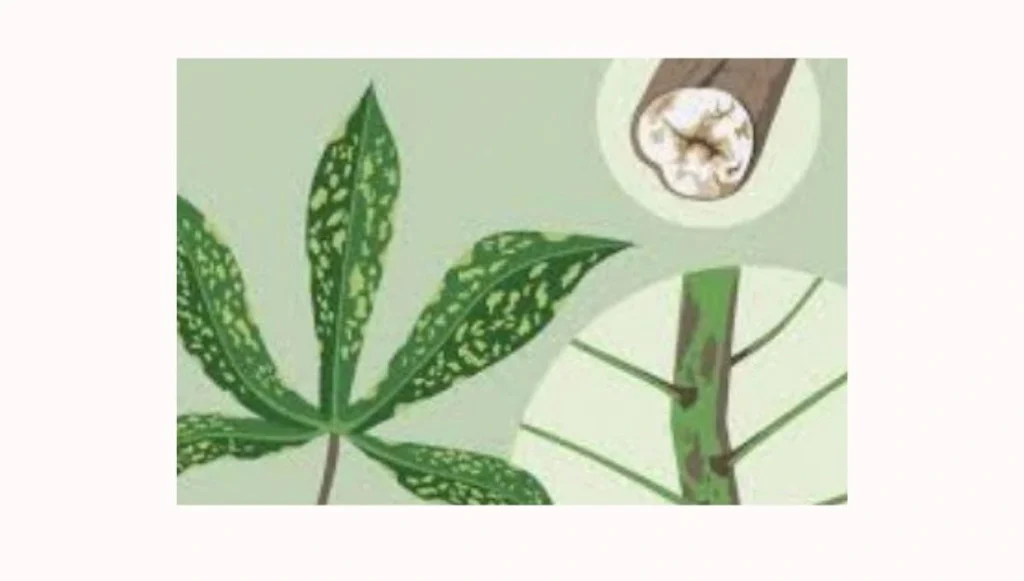
CBSD symptoms appear on leaves, stems and roots.
Common symptoms include:
• Yellowing of leaves (chlorosis)
• Brown streaks on stems
• Rotting and necrosis in cassava roots
Root damage makes the tubers unfit for consumption or sale.
Management Measures
• Use of virus-free planting material.
• Development of disease-resistant cassava varieties.
• Monitoring and controlling whitefly populations.
• Strengthening agricultural surveillance systems — topics commonly analysed in IAS coaching in Hyderabad while discussing crop diseases and food security.
Conclusion
Cassava Brown Streak Disease poses a major threat to food security in tropical regions. Strengthening research, surveillance, and disease-resistant crop development is crucial to protect cassava production — issues often discussed in UPSC online coaching and civils coaching in Hyderabad while preparing for GS3 agriculture and environment.
This topic is available in detail on our main website.