
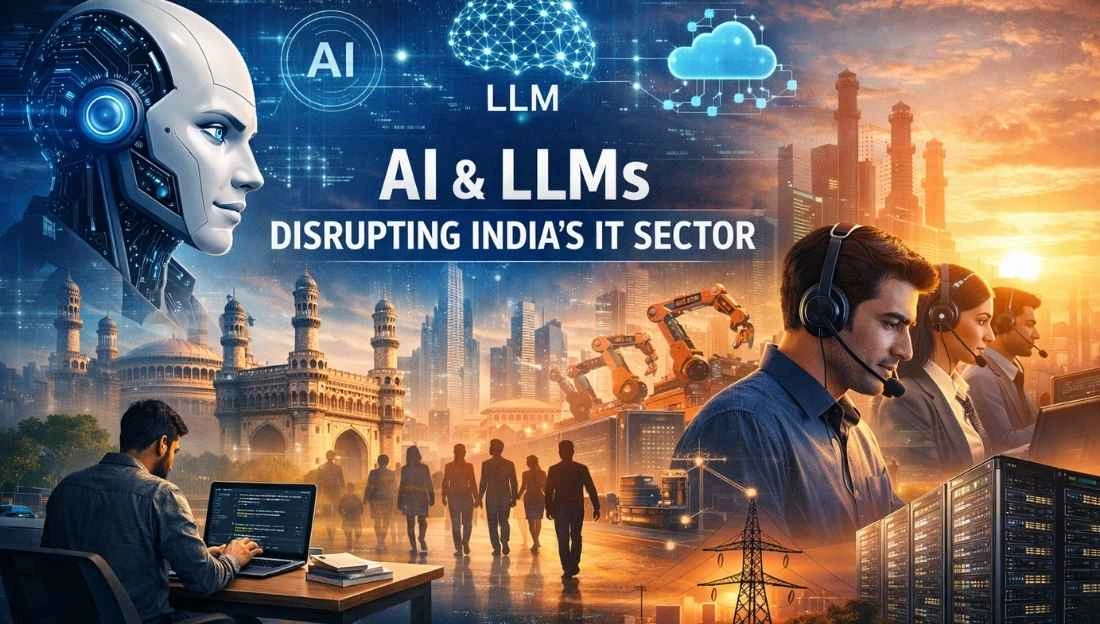
Rapid adoption of Artificial Intelligence (AI) and Large Language Models (LLMs) is reshaping India’s IT and BPO sectors coinciding with layoffs and restructuring in tech firms — a major technological shift often analysed in UPSC coaching in Hyderabad.
Transformation vs Disruption
• AI Washing: Some layoffs are labelled as “AI-driven” but are largely cost-cutting measures.
• Positive Transformation: Developers, testers, and product managers are using AI tools to improve productivity.
• Shift in Model: From labour arbitrage (adding manpower) to intelligence arbitrage (leveraging AI for efficiency) — a trend increasingly discussed in IAS coaching in Hyderabad.
Impact on Roles
• Software Development: AI assists coding, testing, DevOps, and product management, reducing time but requiring new skills (context engineering, refactoring).
• Team Size: Squads of 8–10 may shrink to 3–5, but new roles in AI fine-tuning and monitoring are emerging.
• Revenue per Engineer: Increasing due to efficiency gains.
Vulnerability of Entry-Level Jobs
• BPO/KPO Roles: Repetitive tasks in call centres and documentation are highly vulnerable to automation.
• Agentic AI: Can automate end-to-end processes, reducing large teams to small monitoring groups.
• IT Services: Less vulnerable, as human coordination across geographies and teams remains essential.
Global Partnerships
• Indian IT firms embed AI into the Software Development Life Cycle for regulated industries like banking.
• Partnerships with global AI leaders are growth strategies, not defensive moves.
• India consumes AI built abroad but adds value through systems engineering, integration, and execution.
Shifts in Business Models
• Moving from time-and-material billing to outcome-based pricing.
• Customers demand predictable delivery, quality, and cost clarity.
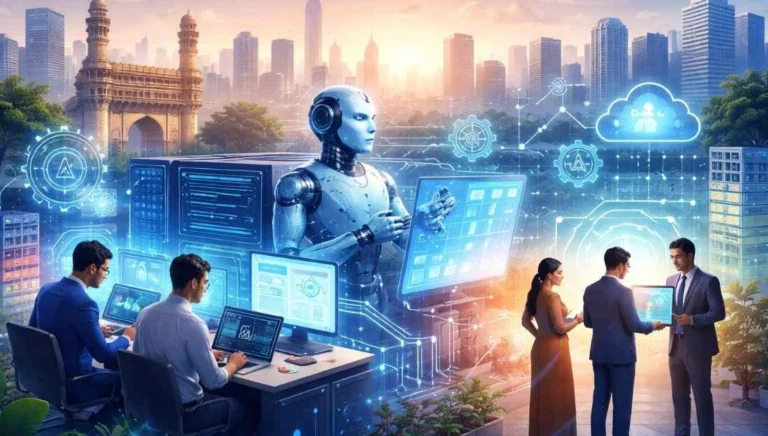
Challenges & Concerns
• Job Security: Entry-level layoffs without social safety nets.
• Skill Gaps: Reskilling limited to prompt engineering; lack of foundational AI research in India.
• Regulation: Need for transparency in algorithmic decision-making.
• Environmental Impact: AI-driven data centres consume high electricity and water — themes regularly examined in UPSC online coaching.
Way Forward
• Just Transition – Introduce unemployment benefits and stronger worker protections.
• Reskilling & Certification – Formal skill accreditation under Skill India for AI-related roles.
• Balanced Strategy – Build sovereign LLMs while strengthening India’s dominance in AI services.
Conclusion
India must balance growth with social protections, reskilling, and strategic investments to ensure a fair and sustainable transition — a crucial issue for aspirants preparing through civils coaching in Hyderabad.
This topic is available in detail on our main website.