
- Debates on creating an Indian Scientific Service (ISS) have gained attention, as experts argue India needs a dedicated cadre of scientists in governance to strengthen evidence-based policymaking in areas like climate, health, and technology — an important theme frequently discussed in UPSC coaching in Hyderabad.
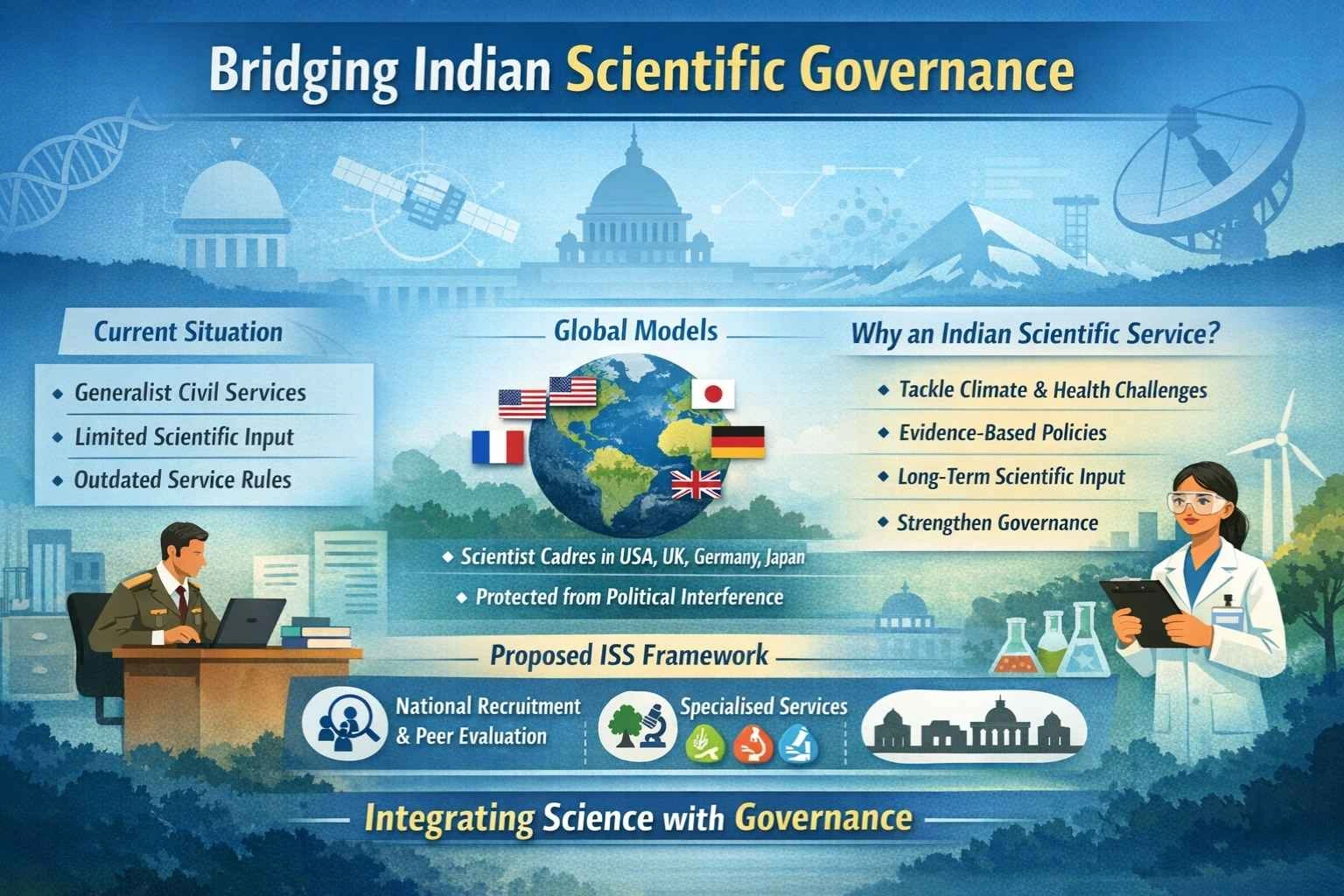
Current Situation
- India’s governance relies mainly on generalist civil services.
- Scientists in government are bound by civil service rules (1964), designed for administrators, not scientific work.
- This limits their ability to provide independent, long-term scientific input.
Global Practices
- Countries like France, Germany, Japan, UK, USA have scientific cadres with tailored service rules.
- Example: U.S. Scientific Integrity Policies protect scientists from political interference and ensure transparency.
Need for ISS in India
- India faces complex challenges: climate change, environment, public health, disaster management, nuclear safety, AI, biotechnology, space science.
- Without a scientific framework, India risks weak long-term policies.
- ISS would ensure scientific evidence complements administrative efficiency — a governance reform dimension analysed in IAS coaching in Hyderabad.
Proposed Framework
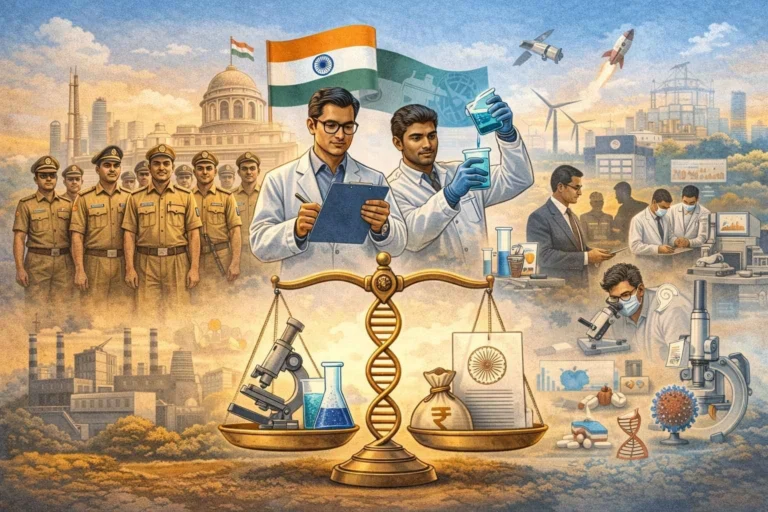
- ISS could be a permanent all-India scientific cadre, recruited through national-level selection and peer evaluation.
- Scientists placed in ministries and regulatory bodies as integral decision-makers.
- Possible specialised services:
- Indian Environmental & Ecological Service
- Indian Climate & Atmospheric Service
- Indian Marine & Ocean Service
- Indian Public Health & Biomedical Service
- Indian Disaster Risk & Resilience Service
- Indian Energy & Resources Service
- Indian Agricultural & Food Systems Service
- Indian Science & Technology Policy Service.
Challenges
- Scientific advice is often reactive (for legal cases or crises) rather than continuous.
- Lack of structured training, career progression, and safeguards for scientists in government.
- Inputs remain advisory, not formally integrated into decision-making — an issue often debated in UPSC online coaching discussions on administrative reforms.
Conclusion
The creation of an Indian Scientific Service would be a forward-looking reform, ensuring science is not just advisory but a core pillar of governance. By integrating scientific expertise with administrative systems, India can strengthen policy credibility, resilience, and global leadership in tackling future challenges.
This topic is available in detail on our main website.