
India is exploring Carbon Capture and Utilisation (CCU) technologies to reduce emissions from hard-to-abate sectors like cement and steel — an important climate strategy frequently analysed in UPSC coaching in Hyderabad.
What is CCU?
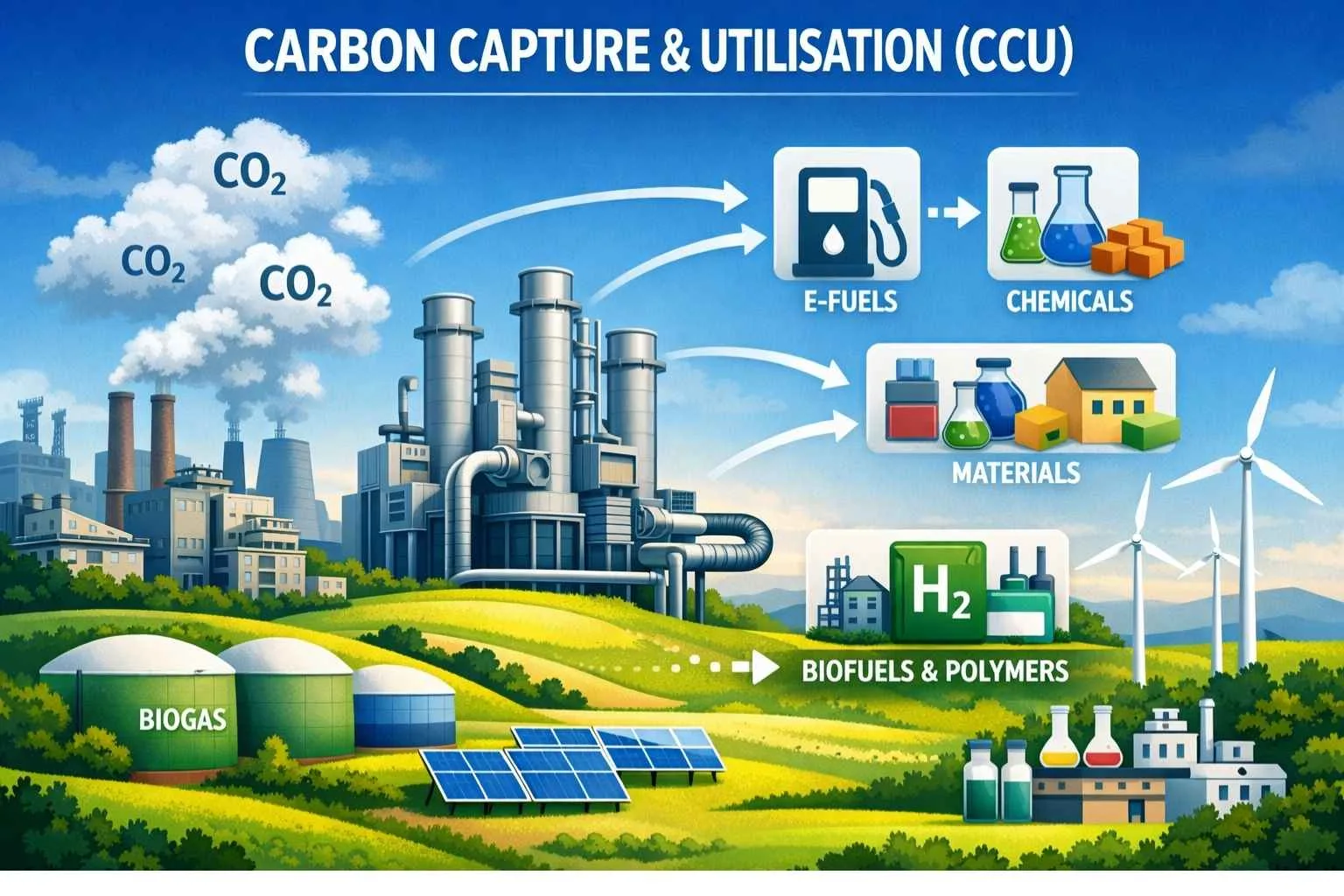
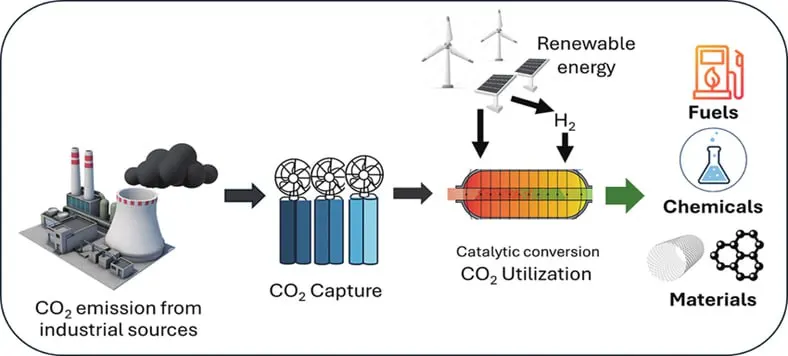
• CCU refers to technologies that capture CO₂ emissions from industrial sources or directly from the air.
• Unlike Carbon Capture and Storage (CCS), CCU reuses captured CO₂ to produce fuels, chemicals, building materials, or polymers.
• It integrates carbon into the economy instead of storing it underground.
How CCU Reduces Emissions
• Industrial Decarbonisation: Helps reduce emissions from cement, steel, and chemicals, which are difficult to decarbonise.
• Circular Economy: Converts waste CO₂ into value-added products, reducing dependence on fossil feedstocks.
• Net-Zero Pathway: Supports India’s 2070 net-zero goal by addressing unavoidable industrial emissions — a topic often covered in IAS coaching in Hyderabad.
Global Strategies
• EU Bioeconomy Strategy & Circular Economy Action Plan: Promotes CCU to turn CO₂ into feedstocks for chemicals, fuels, and materials.
• U.S.: Uses tax credits and funding to scale CCU, especially for CO₂-derived fuels.
• UAE: Al Reyadah project links CCU with green hydrogen for chemicals.
• Industry Example: ArcelorMittal in Belgium trials converting CO₂ into carbon monoxide for steel production.
India’s Current Efforts
• Government Roadmaps: Department of Science & Technology and Ministry of Petroleum have drafted CCUS plans.
• Private Sector Pilots:
• Ambuja Cements with IIT Bombay (Indo-Swedish project).
• JK Cement testbed for lightweight concrete and olefins.
• ORSL Bio-CCU platform converting CO₂ from biogas into bio-alcohols and chemicals.
Challenges in India
• High Costs: Capturing, purifying, and converting CO₂ is energy-intensive and expensive.
• Infrastructure Gaps: Requires industrial clusters, CO₂ transport, and integration with downstream industries.
• Policy & Standards: Lack of clear certification and market signals limits investor confidence.
Way Forward
• Policy Incentives: Subsidies, tax credits, and carbon pricing to make CCU competitive.
• Infrastructure Development: Build industrial hubs with shared CO₂ transport and storage facilities.
• Research & Innovation: Invest in low-cost capture technologies and pilot projects.
• Market Creation: Establish standards and certification for CO₂-derived products to boost demand — a sustainability dimension discussed in UPSC online coaching and civils coaching in Hyderabad.
Conclusion
CCU offers India a pathway to reduce emissions from hard-to-abate sectors while creating new value chains. Scaling up requires policy support, infrastructure readiness, and alignment with India’s net-zero and circular economy goals.
This topic is available in detail on our main website.