

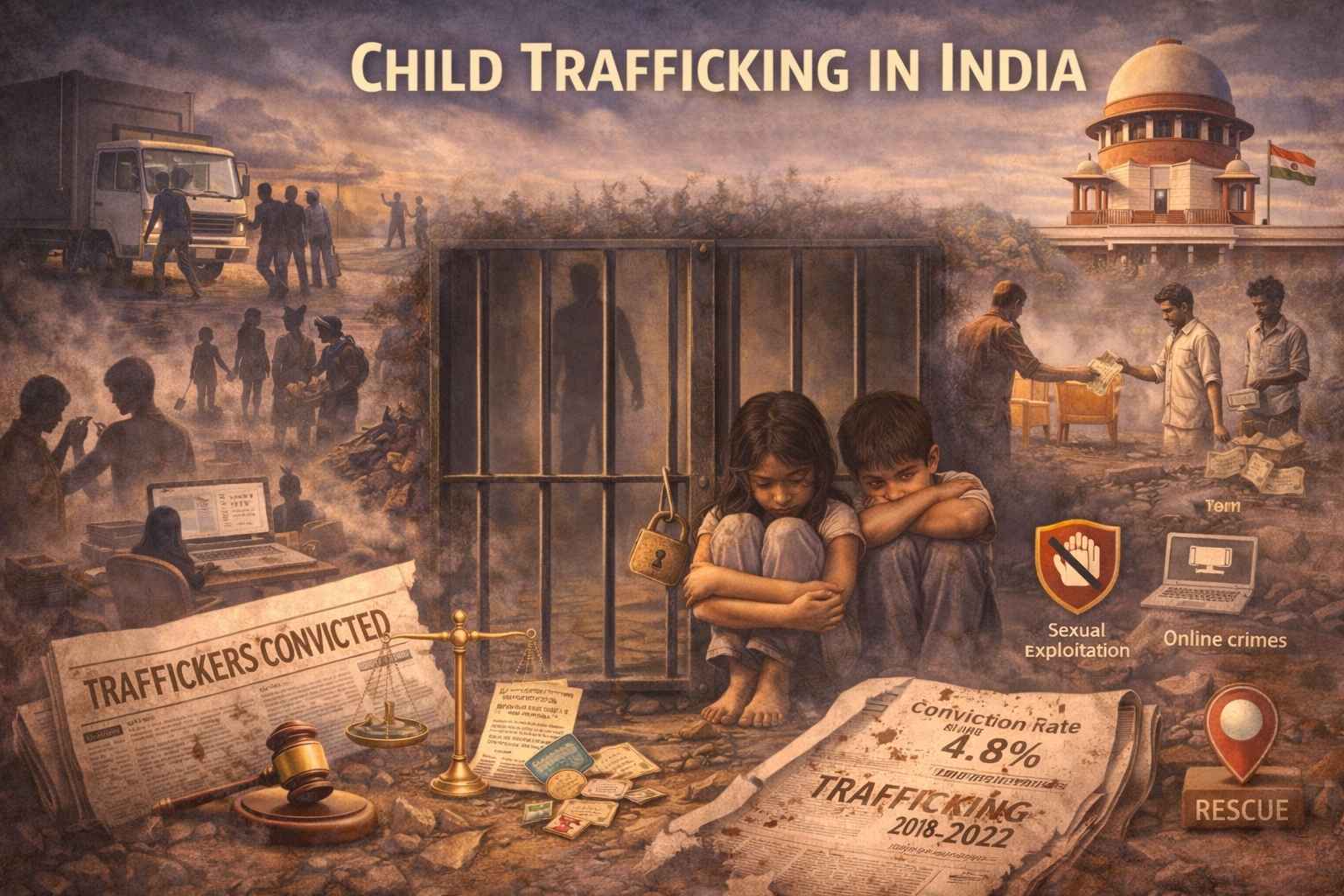
The Supreme Court of India, in a judgment delivered on December 19, described child trafficking as a “deeply disturbing reality” in India. While upholding the conviction of traffickers in a Bengaluru case, the Court also issued crucial guidelines for handling such cases with sensitivity. This issue is of high relevance for governance and social justice debates among aspirants preparing through UPSC coaching in Hyderabad.
Nature of the Problem
- Child trafficking is one of the worst forms of modern slavery.
- Organised cartels operate at multiple levels—recruiting, transporting, harbouring, and exploiting minors.
- Victims are often subjected to sexual exploitation, forced labour, and other abuses.
Supreme Court Observations
- The offence violates dignity, bodily integrity, and constitutional protection against exploitation.
- A minor victim of sex trafficking is not an accomplice; her testimony must be treated as that of an injured witness.
- Courts must show sensitivity and not dismiss testimony due to minor inconsistencies.
Current Situation in India
- Between 2018 and 2022, India recorded 10,659 cases of human trafficking.
- The conviction rate stands at a worrying 4.8%, reflecting systemic weaknesses in investigation and prosecution.
- Existing laws, including the Immoral Traffic (Prevention) Act, provide a legal framework, but enforcement remains inadequate—an issue often discussed in polity classes at Hyderabad IAS coaching.
Challenges
- Weak anti-trafficking units and lack of dedicated manpower.
- Delay in passing a comprehensive anti-trafficking Bill.
- Rehabilitation remains limited to compensation, without long-term support.
- Digital platforms have created new avenues for trafficking, making it harder to track.
Way Forward
- Strengthen anti-trafficking units with resources and accountability. Pass a robust anti-trafficking law to cover modern forms of exploitation.
- Keep children in school till 14 years as mandated by the Right to Education Act, reducing vulnerability.
- Use technology to monitor trafficking networks and enhance coordination between agencies.
- Civil society must work alongside government to spread awareness and provide community-level protection.
Supreme Court Observations
- Child trafficking violates dignity, bodily integrity and Article 21 (Right to Life).
- Victims, especially minors, are not accomplices but injured witnesses.
- Courts must show sensitivity while recording testimony:
- Minor contradictions should not discredit victims.
- Trauma affects memory and narration.
Conclusion
Child trafficking undermines constitutional guarantees of dignity and protection. The Supreme Court’s strong observations must translate into action, with governments, law enforcement, and civil society working together to end exploitation and safeguard children’s future.
This topic is available in detail on our main website.