
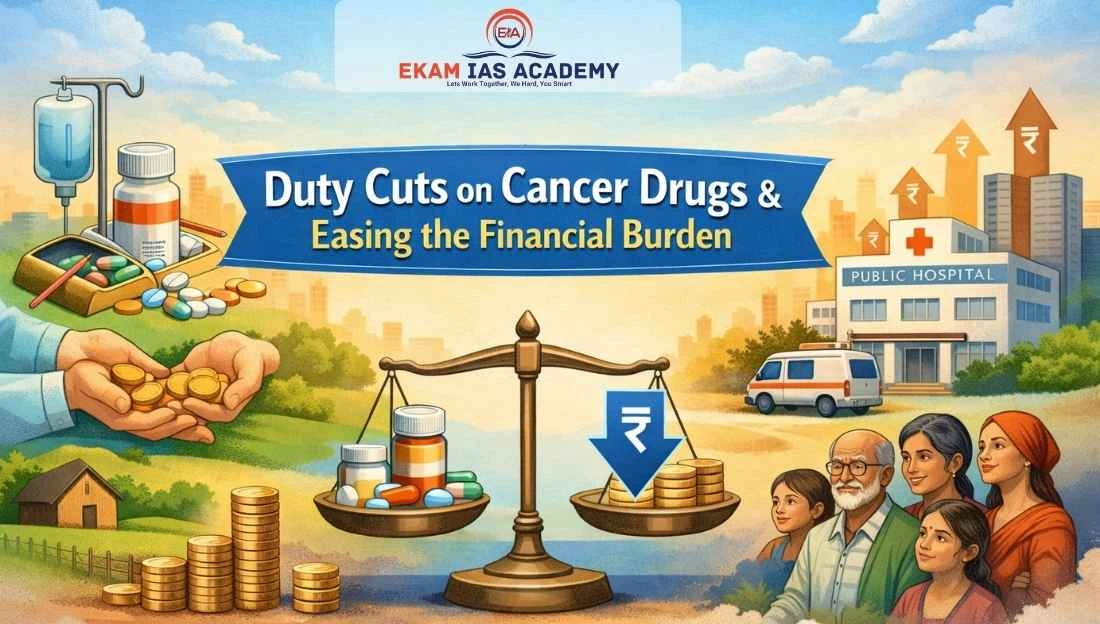
The Union Budget proposed full exemption of basic customs duty on 17 cancer-related medicines, aiming to reduce treatment costs and improve access to life-saving drugs — an issue often discussed in UPSC coaching in Hyderabad while analysing healthcare policy and social justice.
Background
• Cancer treatment costs are nearly 3 times higher than average hospitalisation expenses.
• Medicines form the largest share of cancer care costs, especially in public hospitals where doctor fees are minimal.
• India saw a 26.4% rise in cancer incidence (1990–2023) — among the highest globally.
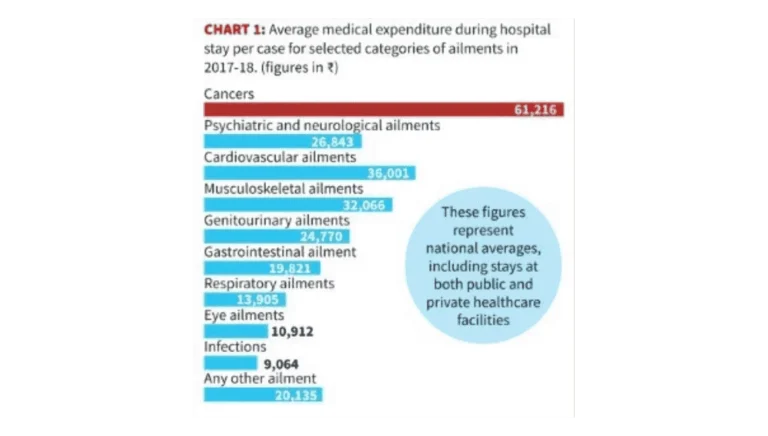
Cancer Treatment Costs
Cancer Care Is Much Costlier Than General Treatment
• Cancer treatment cost: ₹61,000 — nearly 3 times higher than general treatment.
Public Hospitals Show Higher Relative Burden
• Private cancer care: ₹93,305 vs general ₹31,845 → 3× multiplier.
• Public cancer care: ₹22,520 vs general ₹4,452 → 5× multiplier.
• In rural public hospitals, the burden rises to 5.5×, showing deeper impact on poor patients.
Medicines Drive the Expense
• Public hospitals: 40–50% of total cost is medicine.
• Private hospitals: 20–25% of total cost is medicine.
• Duty cuts on 17 cancer drugs will directly reduce out-of-pocket costs, especially for rural and low-income patients.
Why Duty Cuts Matter
• Reducing import duties lowers medicine prices, particularly for life-saving drugs.
• Helps poor and rural patients who depend on public hospitals and face high out-of-pocket healthcare expenses.
• Addresses health equity by making cancer care more accessible — a theme frequently analysed in IAS coaching in Hyderabad while studying welfare policies.
From the Election Commission’s Viewpoint
• Lower treatment costs reduce economic distress, especially during elections when welfare issues dominate political discourse.
• Enhances public trust in governance and budgetary responsiveness.
• Supports inclusive healthcare, a key electoral promise across parties.
Way Forward
• Expand Drug Coverage: Include more essential cancer drugs under duty exemption.
• Strengthen Public Hospitals: Ensure availability of affordable medicines and diagnostics.
• Monitor Price Pass-Through: Ensure that duty cuts actually reduce retail prices for patients — policy reforms often discussed in UPSC online coaching for GS2 health governance.
Conclusion
With cancer cases rising and treatment expenses surging, this policy move can significantly ease the financial burden on vulnerable patients and promote equitable access to life-saving healthcare, an issue widely discussed in civils coaching in Hyderabad while analysing social justice and healthcare policy.
This topic is available in detail on our main website.