
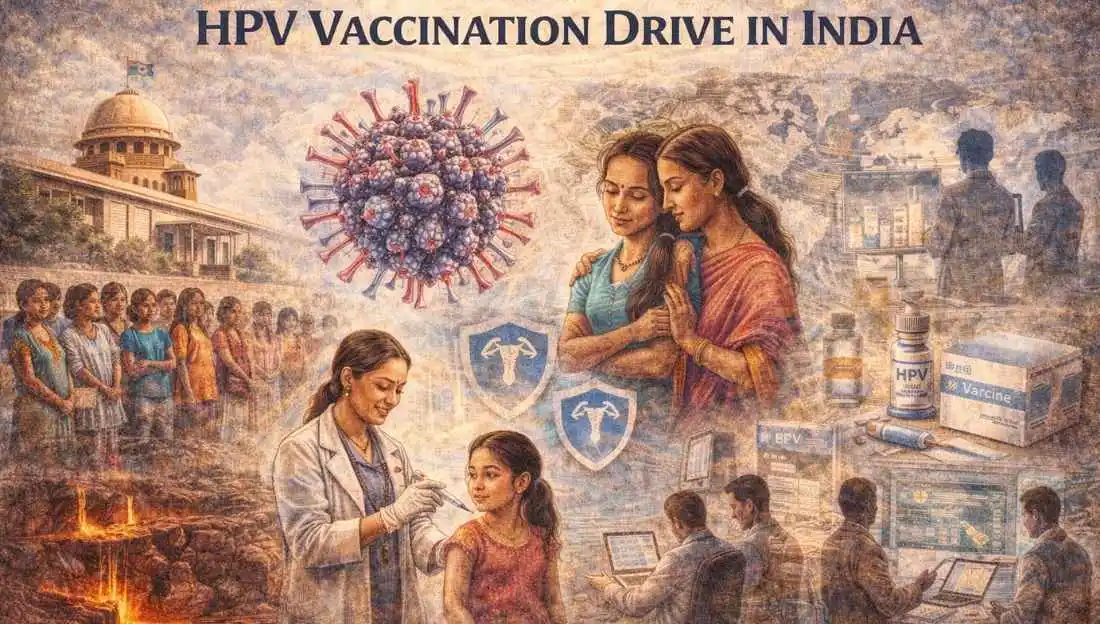
The Government of India has announced a free HPV vaccination programme to be rolled out at designated public health facilities — a significant public health development often discussed in UPSC coaching in Hyderabad.
What is HPV?
• Human Papillomavirus (HPV) is a group of viruses, some of which cause infections that can lead to cervical cancer.
• HPV spreads through sexual contact and is a major risk factor for cervical cancer.
• Vaccination prevents HPV infection before it progresses to cancer.
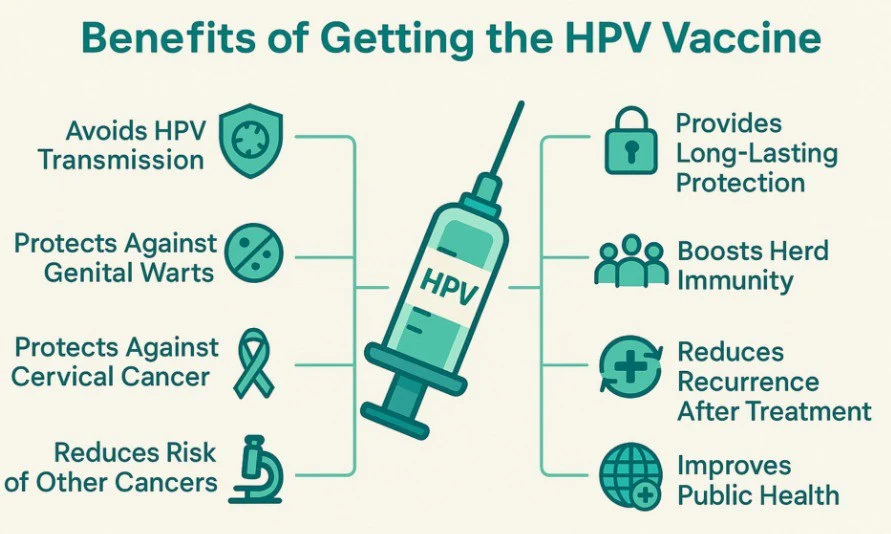
Why is HPV Vaccination Necessary?
• Cervical Cancer Burden: Nearly 80,000 new cases annually in India.
• Preventable Disease: Vaccination and early screening can significantly reduce incidence.
• Effectiveness: HPV vaccines show 93–100% protection against cancer-causing HPV types.
• Safety Record: Non-live vaccine, does not cause infection; over 500 million doses administered globally since 2006 — an important health governance topic covered in IAS coaching in Hyderabad.
Disease Burden in India
• Cervical cancer is the second most common cancer among women in India.
• Causes significant health, social, and economic burden on families.
• Limited awareness and screening contribute to high incidence and mortality.
Global Context
• Over 90 countries have adopted single-dose HPV vaccination schedules.
• This improves affordability, coverage, and accessibility.
Conclusion
The free HPV vaccination programme is a landmark public health initiative. By preventing HPV infections, India can drastically reduce cervical cancer cases, save thousands of lives, and strengthen women’s health outcomes — a crucial GS2 topic regularly analysed in UPSC online coaching and civils coaching in Hyderabad.
This topic is available in detail on our main website.