
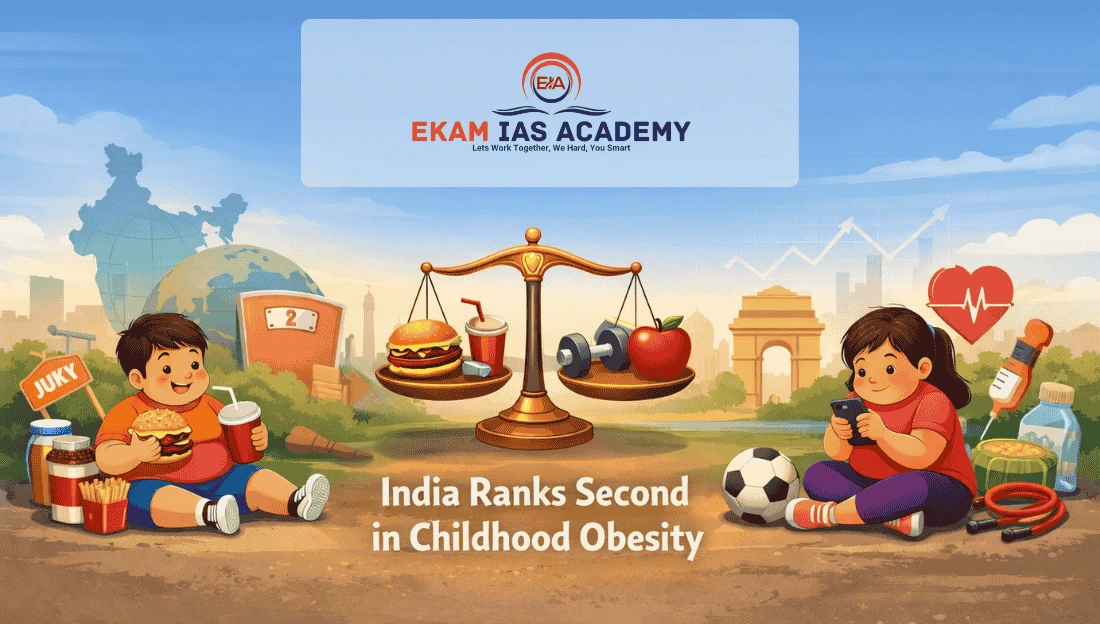
The World Obesity Atlas 2026, released on World Obesity Day (March 4), reported that India has the second highest number of children with obesity, after China — an issue often discussed in UPSC coaching in Hyderabad while analysing public health challenges and demographic trends in India.
Key Findings
• Global Concentration: Over 200 million children (5–19 years) with obesity are concentrated in just 10 countries.
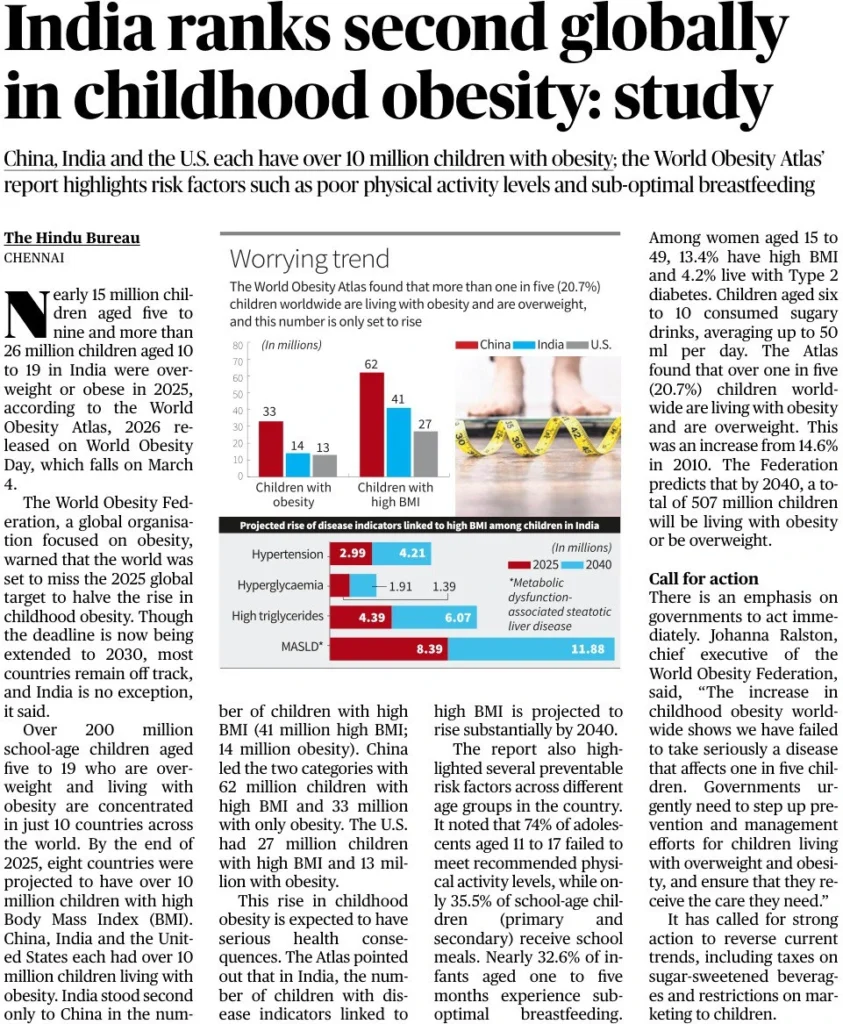
• India’s Numbers: Nearly 41 million Indian children have high BMI, of which 14 million are obese.
• 5–9 years: 15 million overweight/obese.
• 10–19 years: 26 million overweight/obese.
| Country | High BMI Population (Million) | Obese Population (Million) |
|---|---|---|
| China | 62 | 33 |
| India | 41 | 14 |
| United States | 27 | 13 |
• Risk Factors in India:
• 74% adolescents (11–17 years) lack adequate physical activity.
• Only 35.5% of school children receive school meals.
• 32.6% infants face sub-optimal breastfeeding.
• Sugary drink consumption is common among children (6–10 years).
Definition of Obesity (WHO Standards)
• Obesity is defined as abnormal or excessive fat accumulation that presents a risk to health.
Measurement
• BMI (Body Mass Index) ≥ 25 = Overweight.
• BMI ≥ 30 = Obesity (for adults).
• For children, obesity is defined using age-specific BMI percentiles (≥95th percentile).
Challenges to Society
• Health Burden: Childhood obesity increases risk of diabetes, hypertension, cardiovascular diseases, and early mortality.
• Economic Costs: Rising healthcare expenditure and productivity loss due to chronic illness.
• Social Impact: Obesity leads to stigma, reduced self-esteem, and mental health issues among children.
Public health concerns like these are frequently analysed in IAS coaching in Hyderabad and UPSC online coaching while discussing India’s healthcare governance and SDG-related goals.
Way Forward
• Policy Interventions: Taxation on sugar-sweetened beverages; restrictions on junk food marketing to children.
• School-based Measures: Ensure nutritious mid-day meals; promote physical activity and sports in schools.
• Public Health Campaigns: Awareness on healthy diets, breastfeeding, and lifestyle changes; community-level programmes to reduce consumption of sugary drinks and processed foods — issues often emphasised in civils coaching in Hyderabad for GS2 health and social development preparation.
Conclusion
India’s demographic advantage is at risk if childhood obesity continues to rise. With millions of children already affected, urgent multi-sectoral action is needed to prevent obesity from becoming a long-term public health crisis.
This topic is available in detail on our main website.