
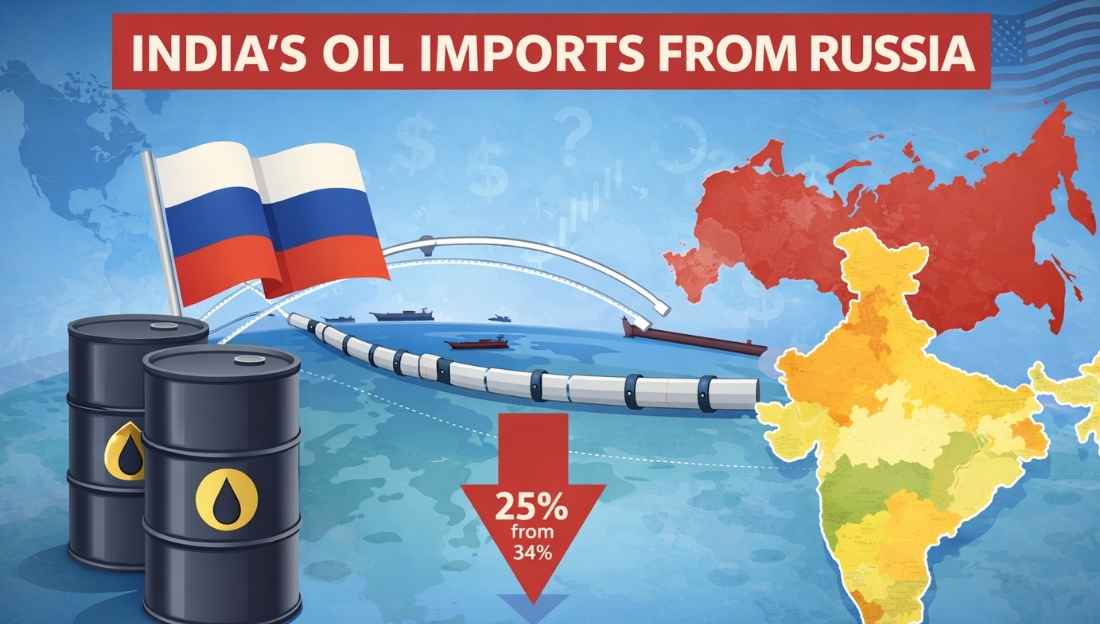
India’s crude oil imports from Russia fell to a 38-month low in December 2025, dropping Russia’s share in India’s oil basket to 25% from 34% the previous month. This comes amid U.S. claims that India may reduce Russian oil purchases in exchange for lower tariffs — an issue closely followed in UPSC coaching in Hyderabad under Economy and International Relations.
Background
- India is one of the world’s largest importers of crude oil, meeting over 85% of its needs through imports.
- Since 2022, Russia became a major supplier to India due to discounted crude amid Western sanctions.
- Recent data shows a sharp decline in Russian oil imports, raising questions about India’s energy diversification strategy— a recurring theme in IAS coaching in Hyderabad current affairs analysis.
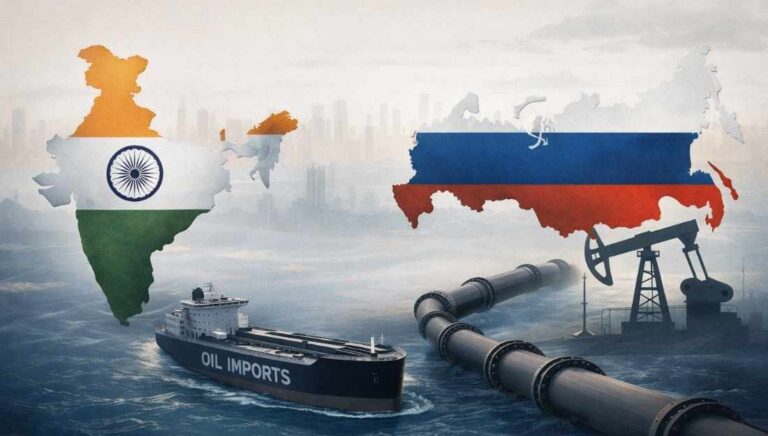
Import Trends
- Russian Oil Value: $2.7 billion in Dec 2025 – the lowest in more than three years.
- Russian Share in Basket: Declined to 24.9%, down from 34% in Nov 2025.
- Russian Volume: 5.8 million tonnes – the weakest since Feb 2025.
- U.S. Oil Value: $569.3 million in Dec 2025 – a 31% rise compared to Dec 2024.
- Diversification: India imported crude from 19 countries in Dec 2025, compared to 16 countries a year earlier
U.S. Claims vs India’s Position
- U.S. Claim: President Trump stated India will stop Russian oil imports in return for tariff cuts on Indian goods (from 50% to 18%).
- India’s Response: No official confirmation; India emphasized diversification based on market conditions and global dynamics.
Economic Considerations
- Shipping Distance Matters: Importing oil from nearby regions like West Asia or Russia is cheaper compared to faraway suppliers such as the U.S. Gulf Coast or Venezuela.
- Cost Efficiency: Russian oil remains more affordable because of shorter transport routes and discounts offered, making it commercially attractive.
- Quality Factor: Venezuelan crude is heavier and more sulphur-rich, so it would only be viable if sold at a significant discount.
- Market Choice: India’s decisions are guided by balancing transport costs, crude quality, and pricing advantages rather than political commitments.
Strategic Implications
- India is balancing between economic pragmatism (cheaper Russian oil) and geopolitical pressures (U.S. push to reduce Russian dependence).
- Diversification helps India reduce risks of overreliance on any single supplier.
- Energy security remains a priority, with cost efficiency guiding decisions.
Way Forward
- Strengthen Diversification: Continue expanding crude oil sources beyond Russia and the U.S. to maintain a balanced energy basket.
- Focus on Cost Efficiency: Secure favourable pricing by factoring in shipping distance and crude quality.
- Enhance Strategic Autonomy: Keep energy security decisions independent and guided by national economic interests — a core takeaway for UPSC coaching in Hyderabad.
Conclusion
India’s declining Russian oil imports reflect both market dynamics and geopolitical pressures. While the U.S. claims a strategic shift, India’s stance highlights a pragmatic approach—choosing suppliers based on affordability, shipping distance, and discounts rather than political commitments.
This topic is available in detail on our main website.