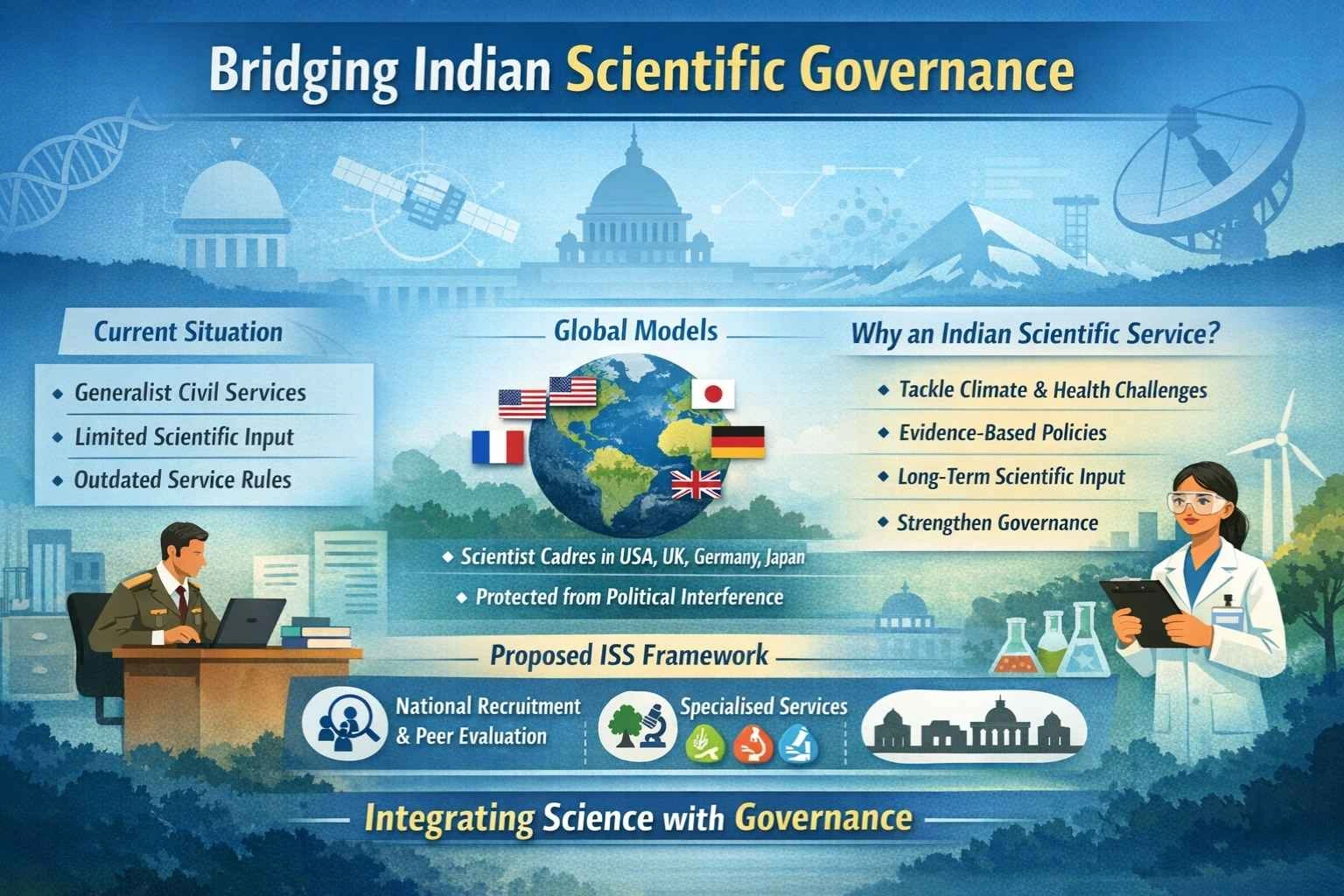

The Union government has asked ministries and scientific departments to review PhD guidelines and align research with national priority areas. This comes amid concerns over delayed fellowships, stagnant stipends, weak industry linkages, and deeper governance problems affecting India’s STEM ecosystem.
Structural Problems in India’s Research System
- Misaligned Research Priorities: Many government-funded PhD projects do not directly support national technological needs, reducing innovation output.
- Poor Public Engagement: Limited visibility of how public-funded research benefits society lowers long-term support for science.
- Uncoordinated Institutional Support: Agencies lack a unified system to select, mentor, and fund scholars in critical fields such as energy, health tech, semiconductors, agri-tech, and battery research.

Why Applied Research Struggles
- Weak Industry Partnerships: Industry–university collaboration is minimal, slowing the scale-up of lab research into practical technologies.
- Missing Innovation Ecosystems: India lacks sustained support systems for deep-tech research, unlike global models behind lasers and optical fibres.
- Commercialisation Gaps: Poor industry-academia linkage slows the transition from prototype to market-ready technologies.
Fellowship and Funding Challenges
- Delayed Fellowships: Non-NET and university scholars face long delays in stipend payments, harming morale and basic sustenance.
- Stagnant Stipends: Many fellowships remain at ₹8,000 per month since 2012, far below living requirements.
- Forced Teaching Work: Scholars take up temporary teaching jobs, reducing research time.
- Failed Direct Transfer Systems: Attempts at bank-based transfers collapsed due to administrative and technical issues.
Why India Struggles to Retain Research Talent
- Limited Faculty Vacancies: Too few funded PhD seats restrict opportunities for capable students.
- Unpredictable Hiring: Contractual, non-transparent recruitment discourages long-term academic careers.
- Weak University Infrastructure: Many institutions lack stable administration, timely fund flow, and research governance.
Non-STEM Responsibilities Burden STEM Scholars
- Excessive Teaching Load: Scholars often teach unrelated subjects (history, psychology), affecting scientific focus.
- Administrative Duties: Heavy paperwork, event management, and clerical tasks reduce research productivity.
- Cultural Bias: Institutional structures often prioritise non-STEM disciplines, limiting resources for STEM fields.
Conclusion
India’s scientific progress depends on fixing structural gaps, ensuring predictable funding, strengthening industry linkages, improving university governance, and aligning research with national priorities. Without deep systemic reforms, India cannot build a globally competitive STEM ecosystem essential for future development.
This topic is available in detail on our main website.