
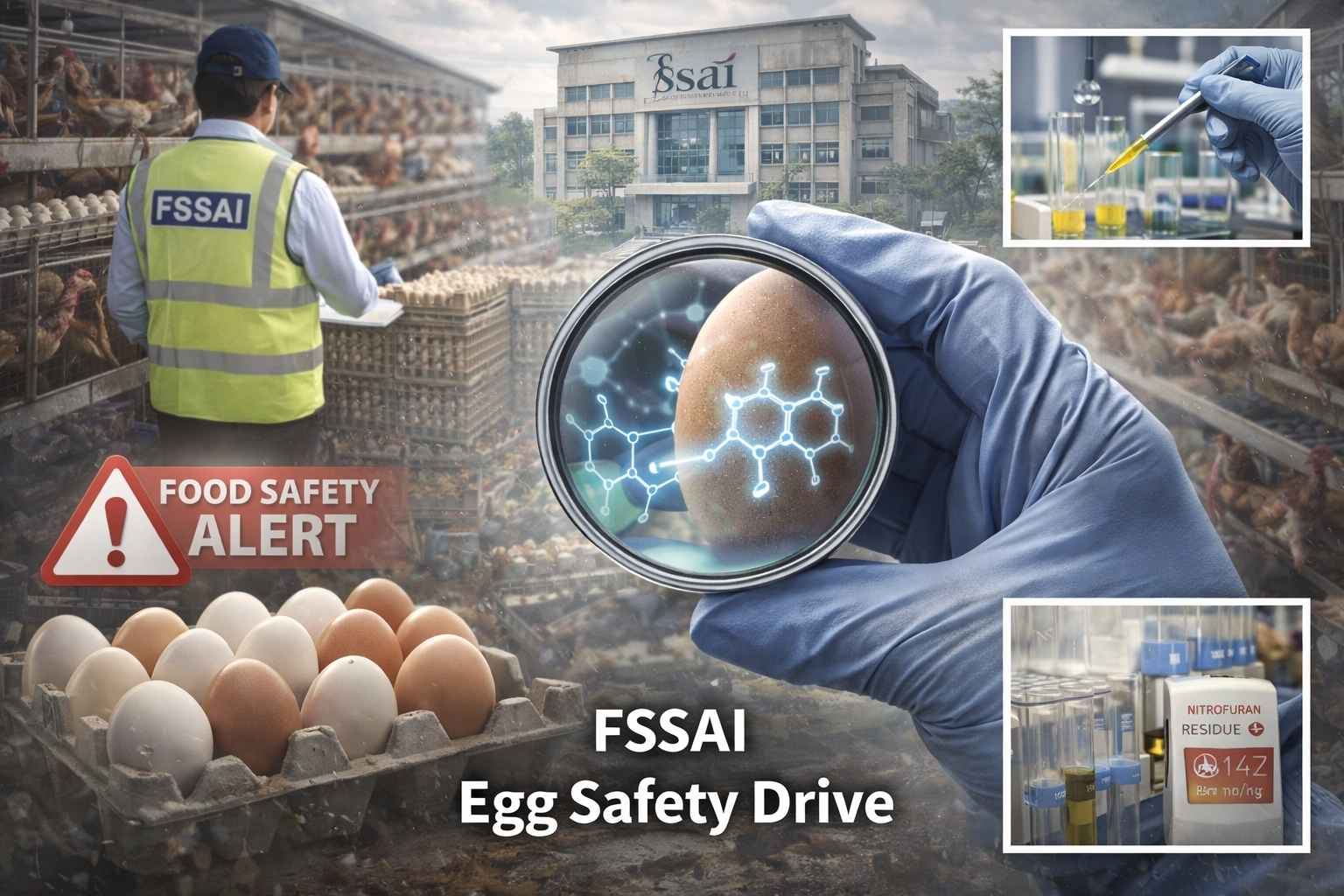
Recently, the Food Safety and Standards Authority of India (FSSAI) initiated a nationwide egg safety drive following concerns over the presence of nitrofuran antibiotic residues in eggs. The issue gained public attention after allegations circulated on social media, raising important questions related to food safety, public health, antimicrobial resistance (AMR), and regulatory oversight—a recurring theme for aspirants preparing governance and health topics through a UPSC Academy in Hyderabad.
Role of FSSAI
The Food Safety and Standards Authority of India (FSSAI) is a statutory body established under the Food Safety and Standards Act, 2006.
Its mandate includes regulating:
- Manufacture
- Storage
- Distribution
- Sale
- Import of food products
This covers animal-origin foods, including eggs, meat, milk, and poultry products. FSSAI plays a central role in ensuring science-based food regulation, an area often discussed in GS II answers at the Best IAS Academy in Hyderabad.
Reason for the Safety Drive
- A viral video alleged the presence of banned antibiotic residues in branded eggs.
- This triggered concerns related to consumer health, antibiotic misuse, and trust in food systems.
Steps Taken by FSSAI
- Issued directions to Food Safety Officers across states.
- Random sampling of both branded and non-branded eggs.
- Samples sent for analysis to multiple FSSAI-notified laboratories to ensure credibility.
About Nitrofurans
- Nitrofurans are synthetic antibiotics prohibited in food-producing animals.
- Residues may remain due to illegal veterinary practices.
- Long-term exposure is linked to carcinogenic effects, making strict monitoring essential.
Global and National Context
- The European Union has completely banned nitrofurans in livestock.
- The drive aligns with India’s National Action Plan on Antimicrobial Resistance (NAP-AMR) and the One Health approach, which integrates human, animal, and environmental health.
Public Health Significance
- Strengthens food safety surveillance systems
- Reduces risks from:
- Antibiotic residues
- Antimicrobial resistance
- Builds consumer confidence in regulatory institutions
- Encourages responsible livestock and poultry practices
Such interventions highlight the preventive role of the State in health governance—an important GS II dimension discussed in IAS Coaching in Hyderabad.
Conclusion
The nationwide egg safety drive underscores India’s commitment to safe food systems, preventive public health governance, and evidence-based regulation. By responding swiftly to public concerns and aligning domestic action with global standards, FSSAI reinforces regulatory credibility and trust.
For UPSC aspirants analysing food safety, AMR, and regulatory institutions through platforms like the UPSC Academy in Hyderabad, this episode serves as a strong contemporary case study linking governance, science, and public health.
This topic is available in detail on our main website.