
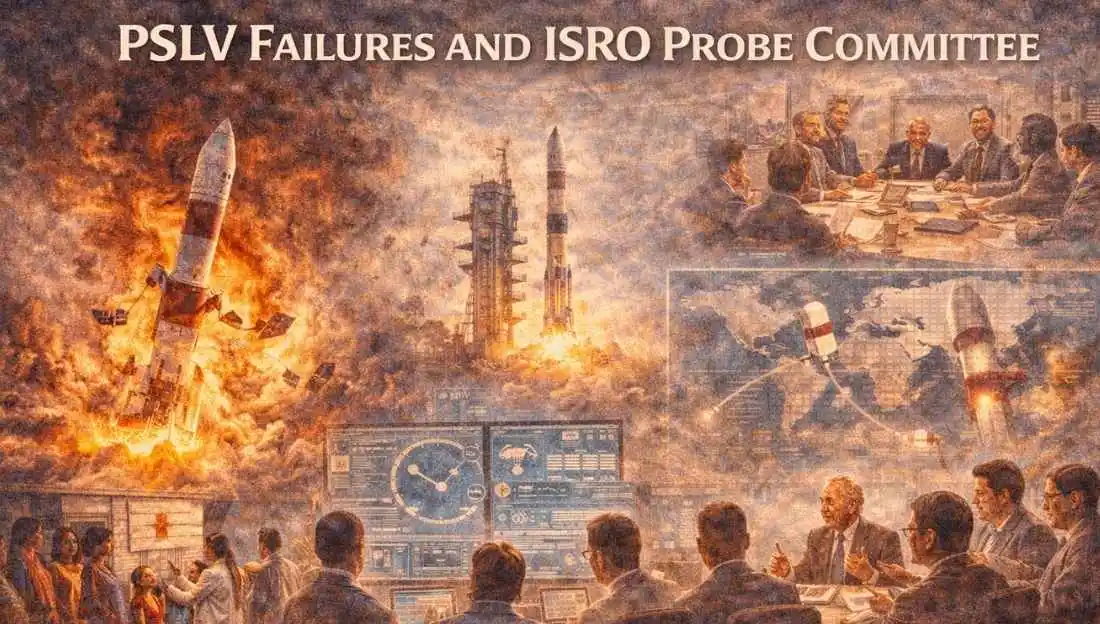
ISRO has constituted a national-level expert committee to investigate repeated failures of the Polar Satellite Launch Vehicle (PSLV), including the recent PSLV-C62 mission (Jan 2026) — a crucial development frequently analysed in UPSC coaching in Hyderabad.
Background
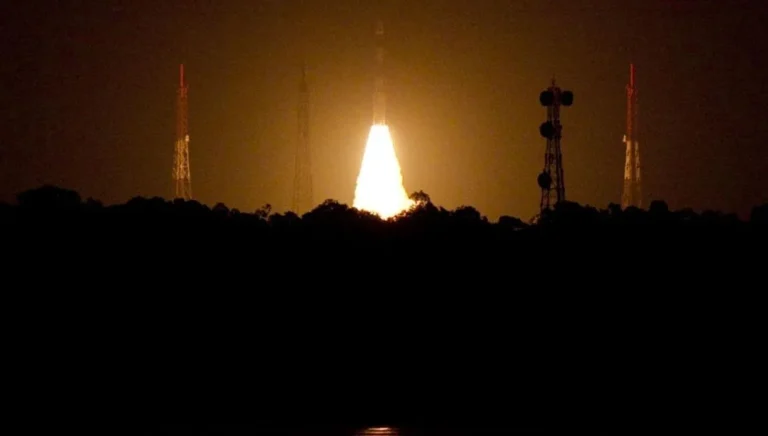
• PSLV-C62 Failure (Jan 2026): The rocket failed after its third stage did not ignite, leading to the loss of 16 satellites.
• PSLV-C61 Failure (May 2025): A similar third-stage ignition failure destroyed the EOS-09 satellite.
• Traditionally, ISRO’s Failure Analysis Committees investigate technical causes, but this new panel will also probe manufacturing, procurement, and assembly processes.
• The involvement of the National Security Adviser highlights the strategic importance of PSLV missions — a dimension often covered in IAS coaching in Hyderabad.
Technical Causes
• Third Stage Ignition Failure: In both missions, the PS3 stage (third stage) failed to ignite properly.
• Uncontrolled Roll and Flight Path Deviation: In PSLV-C62, disturbances in the rocket’s roll rates caused uncontrolled spinning. This deviation from the flight path made satellite deployment impossible.
• Recurring Stage-Specific Issues: The near-identical failures in C61 and C62 point to systemic flaws in the third-stage design, integration, or quality control.
Challenges
• Recurring Technical Failures: Similar stage ignition problems in consecutive missions suggest deeper systemic flaws.
• Organizational Weaknesses: Possible lapses in procurement, quality control, and coordination across teams.
• Accountability Issues: With private companies now part of India’s space ecosystem, responsibility for failures is harder to fix.
• Transparency Concerns: Unlike earlier practice, failure reports have not been made public, reducing trust in ISRO’s processes.
• Strategic Setback: PSLV is India’s most reliable launcher; repeated failures affect credibility and delay key missions.
Way Forward
• Strengthen quality control and independent audits in manufacturing and procurement.
• Establish a clear accountability framework for both public and private partners.
• Ensure transparent reporting of failure analysis to maintain public confidence.
• Diversify launch options by accelerating development of SSLV and GSLV Mk-III.
• Introduce systemic reforms in organizational processes to prevent recurrence — key governance and science topics discussed in UPSC online coaching.
Conclusion
The PSLV failures underline the need for structural reforms in ISRO’s processes beyond technical fixes. Ensuring accountability, transparency, and robust quality checks will be vital to sustain India’s reputation as a reliable space power and safeguard its strategic missions — an important theme for aspirants preparing through civils coaching in Hyderabad.
This topic is available in detail on our main website.