

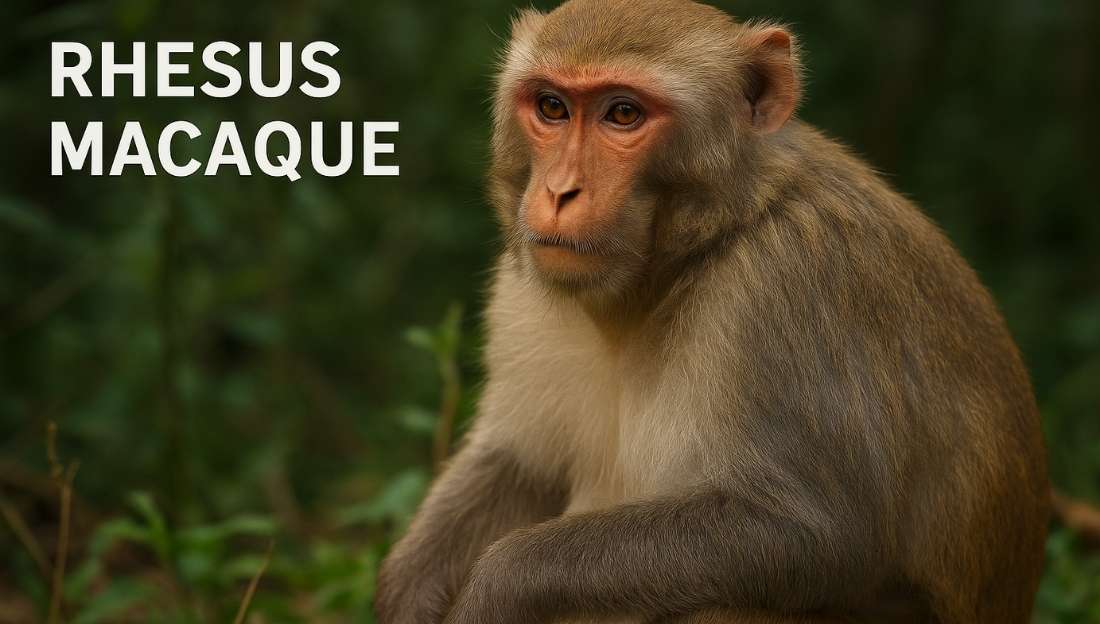
The Standing Committee of the National Board for Wildlife (SC-NBWL) has recommended restoring the Rhesus Macaque to Schedule II of the Wildlife (Protection) Act, 1972, due to rising human–macaque conflict and conservation concerns.
About the Species
- Scientific Name: Macaca mulatta
- One of the most widespread Old World monkeys.
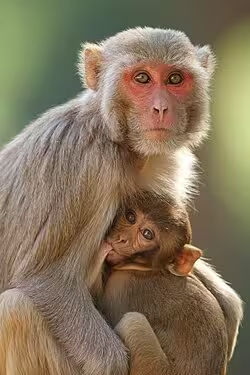
- Easily recognized by brown fur, reddish face, and expressive features.
- Found in India, Nepal, Bangladesh, Pakistan, and parts of SE Asia.
Habitat & Behavior
- Occupies diverse ecosystems—forests, scrublands, grasslands, riverbanks, and cities.
- Thrives in human-dominated landscapes, making it a major species involved in urban wildlife conflict.
- Lives in large social troops with a clear dominance hierarchy.
- Omnivorous diet: fruits, seeds, crops, and human food waste.
Conservation Status
Organization | Status |
IUCN Red List | Least Concern |
Wildlife (Protection) Act, 1972 | Schedule II (Recommended) |
Challenges
- Increasing crop raids, temple-site food dependence, and urban adaptation.
- Feeding by humans disrupts natural foraging behavior.
- Rising conflict has led to calls for scientific population control.
This topic is available in detail on our main website.