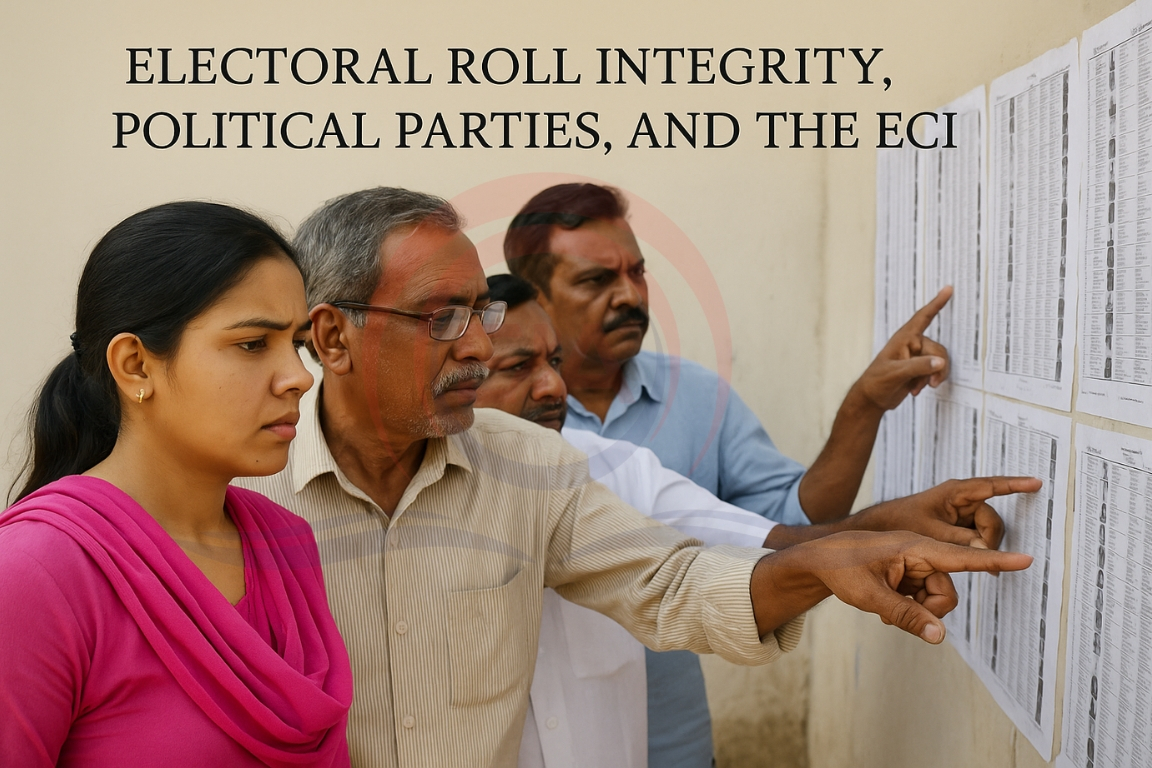

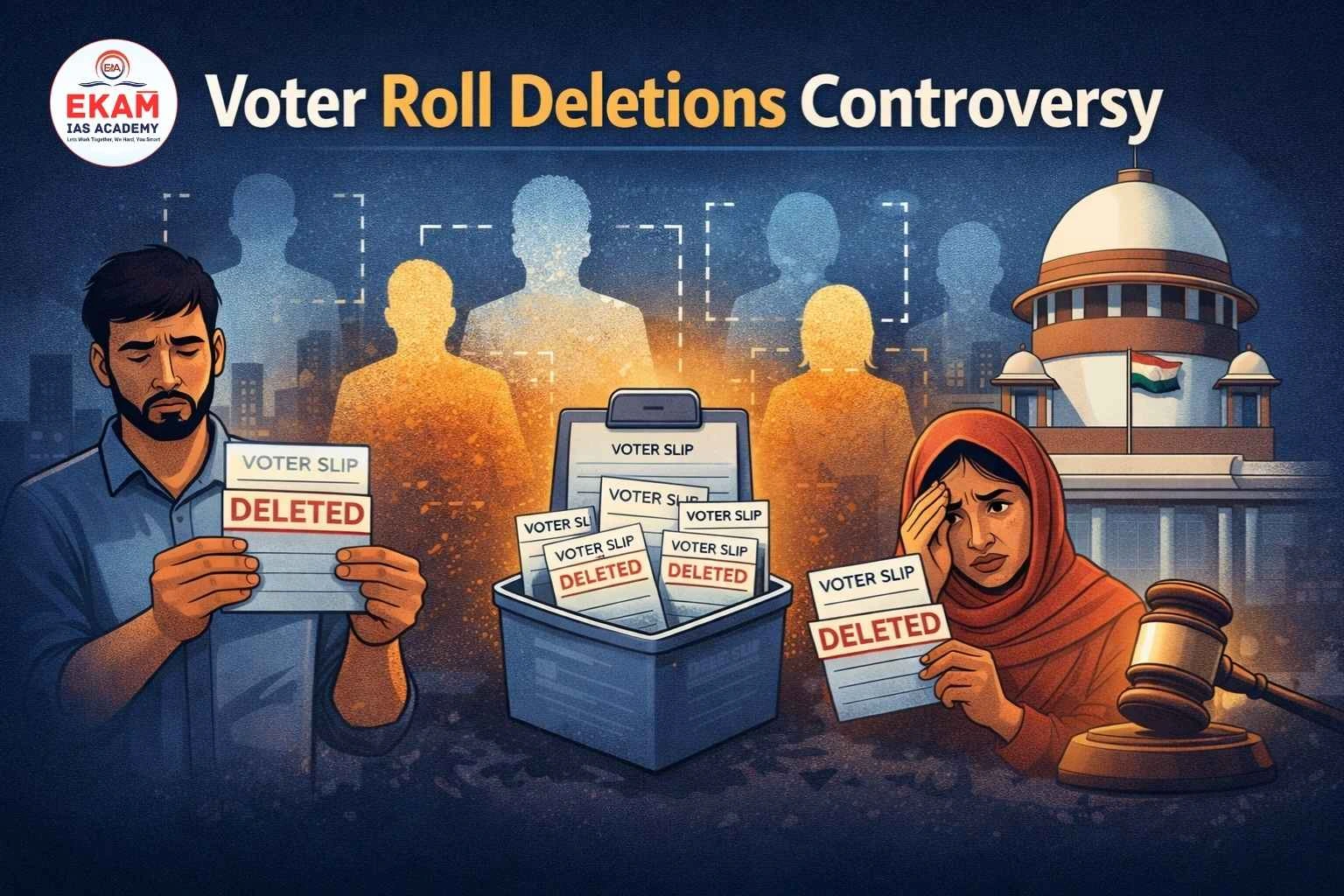
The Supreme Court denied interim relief to 34 lakh individuals removed from electoral rolls in West Bengal after the Summary Intensive Revision (SIR), highlighting how voter exclusion affects electoral participation and candidacy. This topic is highly relevant for aspirants preparing through IAS coaching in Hyderabad, UPSC online coaching, and other civil services preparation platforms.
Background
• Case of C. Geetha (Tamil Nadu): Her name was deleted after filing nomination; plea rejected as rolls were frozen.
• Case of Motab Shaikh (West Bengal): Prompt appeal led tribunal to restore his name via supplementary list.
• Contrast: Timing of appeal and rigid procedures determine eligibility, raising fairness concerns.
Such polity-based case studies are frequently discussed in UPSC coaching in Hyderabad and Hyderabad IAS coaching institutes.
Court’s Position
• Right to vote = expression of citizenship and patriotism.
• Pending appeals do not restore voting rights; excluded individuals cannot vote until tribunal orders inclusion.
• Consistency in electoral process prioritized over interim relief.
These judicial interpretations are often analysed in IAS coaching and civils coaching in Hyderabad for GS2 preparation.
Legal Framework
• Rule 23(5), Registration of Electoral Rules, 1960: Names added only after tribunal approval.
• Rule 23(3): No temporary restoration during appeals.
• Procedural Deviations: SIR deletions often lacked prior notice and hearing (Rules 19 & 20).
Such legal provisions are important for aspirants undergoing UPSC online coaching and structured GS answer writing programs.
Right to Vote vs Right to Contest
• Statutory Rights: Neither is a fundamental right (SC in Ram Chandra Choudhary v Roop Nagar Dugdh Utpadak Sahakari Samiti Ltd, 2024).
• Vote: Right to exercise franchise as per electoral rolls.
• Contest: Separate statutory right, subject to eligibility and disqualification rules.
• Eligibility vs Disqualification: Losing elector status = loss of eligibility, not punishment.
These conceptual distinctions are regularly covered in UPSC coaching in Hyderabad and IAS coaching in Hyderabad.
Implications for Candidates
• Representation of the People Act: Candidate must be a registered voter in the State.
• Loss of Elector Status: Even without disqualification, deletion bars contesting.
• Precedents:
• Jyoti Basu v Debi Ghosal: Contesting elections is purely statutory.
• K. Krishna Murthy v Union of India: Political participation rights subject to statutory limits.
Such case laws are essential for answer writing in civils coaching in Hyderabad.
Concerns in Voter Roll Deletions
• Massive Scale of Exclusion: The Summary Intensive Revision (SIR) exercise led to large scale deletions, leaving lakhs of voters unaware until after nominations closed.
• Democratic Participation at Risk: Removal from rolls directly blocks both the right to vote and the right to contest, undermining fairness in elections.
• Procedural Gaps: Lack of prior notice and opportunity to appeal before deletion raises serious questions about due process and transparency in electoral management.
These governance concerns are widely discussed in UPSC online coaching modules.
Conclusion
The SIR controversy shows how procedural rigidity in electoral roll management can disenfranchise lakhs of voters and candidates. While the Supreme Court upheld consistency, the issue underscores the need for timely notice, transparent procedures, and safeguards to protect both the right to vote and the right to contest in India’s democracy. For aspirants preparing through IAS coaching in Hyderabad, UPSC coaching in Hyderabad, and civils coaching in Hyderabad, this topic is highly important for GS2 and interview preparation.
This topic is available in detail on our main website.