
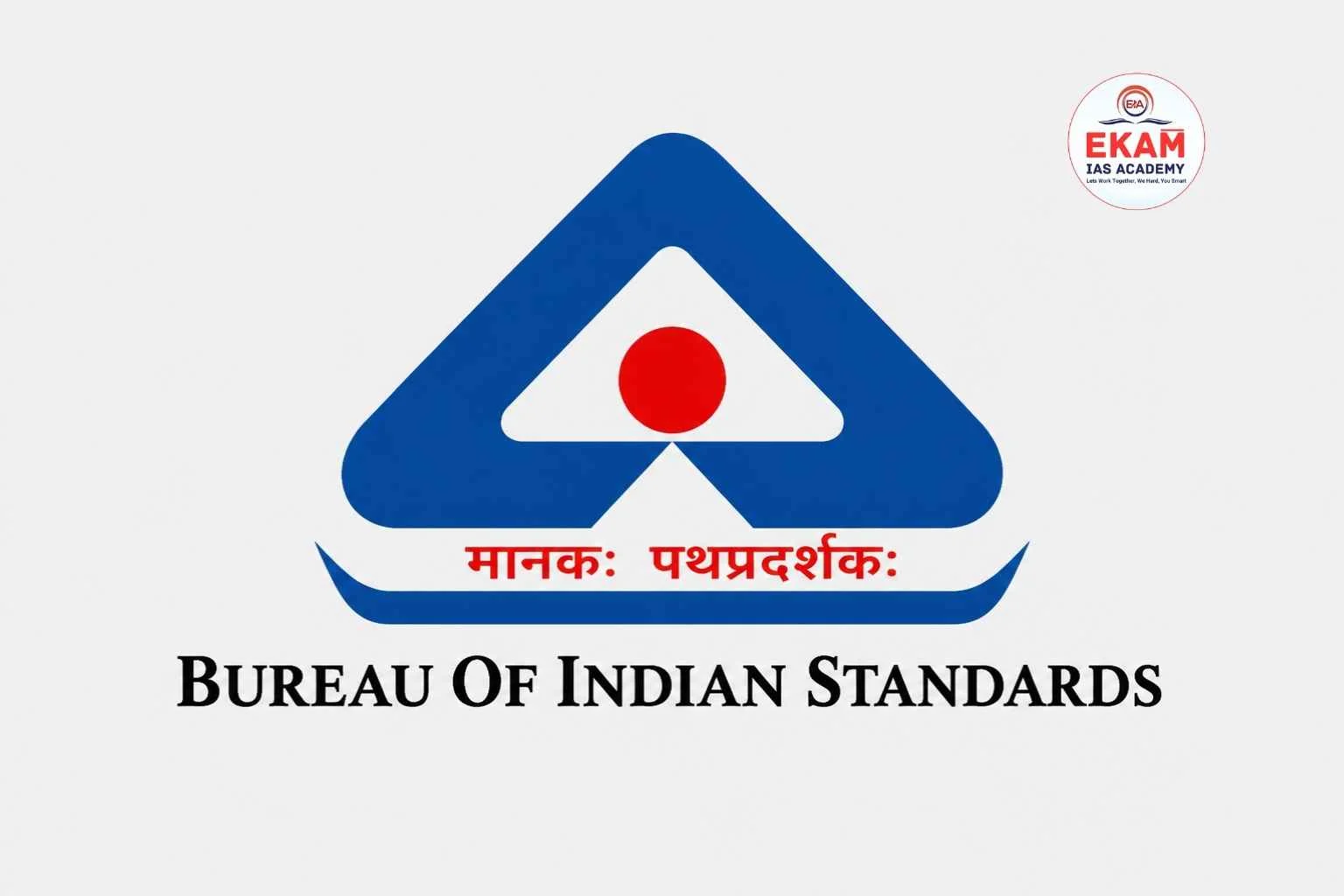
The Bureau of Indian Standards (BIS) has recently published new standards for medical assistive technologies under the National List of Essential Assistive Products (NLEAP) initiative. This governance and quality regulation topic is important for aspirants preparing through IAS coaching in Hyderabad, UPSC coaching in Hyderabad, and UPSC online coaching.
About BIS
• Establishment: Created under the BIS Act, 2016.
• Objective: Harmonious development of standardization, certification, and quality marking of goods.
• Predecessor: Successor to the Indian Standards Institution (ISI) set up in 1947.
• International Role: Represents India in ISO (International Organization for Standardization) and IEC (International Electrotechnical Commission).
• Nodal Ministry: Ministry of Consumer Affairs, Food & Public Distribution.
• Headquarters: New Delhi, with regional and branch offices across India.
Functions of BIS
• Ensures safe and reliable goods for consumers.
• Minimises health hazards through quality standards.
• Promotes exports and substitutes for imports.
• Controls proliferation of varieties by standardisation.
• Operates product certification schemes across sectors (agriculture, textiles, electronics, etc.).
• Provides testing and certification services to industries.
BIS Certification Schemes
• ISI Mark: Standard quality certification for products.
• Hallmarking: For gold and silver jewellery.
• Compulsory Registration Scheme (CRS): For electronics and IT goods.
• Eco Mark: For environment friendly products.
• Management System Certification: For quality, environment, and food safety systems.
Latest Initiative – NLEAP Standards
• BIS has released standards for medical assistive technologies.
• Aim: Ensure quality, safety, and accessibility of assistive products.
• Supports India’s commitment to inclusive healthcare and disability rights.
Significance
• Strengthens consumer protection and public trust.
• Enhances India’s global competitiveness in manufacturing.
• Promotes Make in India by encouraging indigenous production.
• Ensures uniformity and reliability in goods and services.
Conclusion
The new assistive technology standards under NLEAP highlight BIS’s evolving role in supporting inclusive growth and healthcare innovation.
For aspirants preparing through IAS coaching and civils coaching in Hyderabad, this topic is highly relevant for GS2 Governance, Consumer Protection, and Quality Regulation.
This topic is available in detail on our main website.