

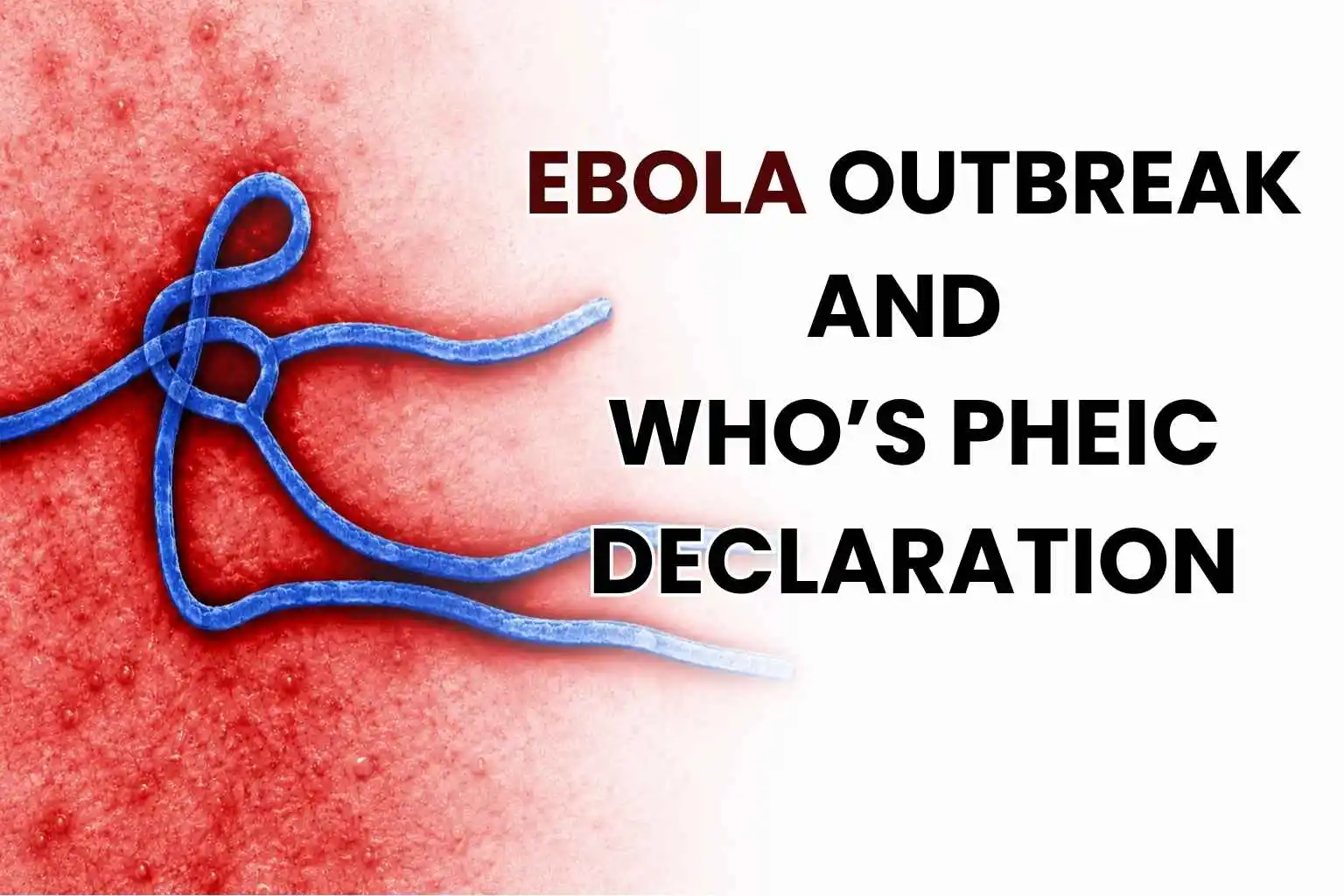
Students preparing through UPSC online coaching and IAS coaching in Hyderabad should note that the World Health Organization recently declared the Ebola outbreak in the Democratic Republic of Congo (DRC) and Uganda as a Public Health Emergency of International Concern (PHEIC) due to rising cases and cross-border spread.
Ebola Virus
• Ebola is a severe viral disease caused by the Ebola virus, first identified in 1976 near the Ebola River.
• It is a zoonotic infection, transmitted from animals (mainly fruit bats) to humans, and spreads through direct contact with infected bodily fluids.
• The disease has a very high fatality rate, often exceeding 50%, making it one of the deadliest viral infections known.
Public Health Emergency of International Concern (PHEIC)
Definition
• A PHEIC is the highest global health alert under the International Health Regulations (IHR, 2005).
• Declared when an outbreak is serious, sudden, unusual, and poses a risk of international spread.
When WHO Issues It
• The WHO Director-General, after consulting the Emergency Committee, declares a PHEIC when the event requires urgent international coordination beyond national capacities.
Past Examples
• H1N1 Influenza (2009)
• Ebola (2014, 2019, 2026)
• Zika Virus (2016)
• COVID-19 (2020)
Why This Time (2026 Ebola Outbreak)
• The Bundibugyo ebolavirus strain in DRC and Uganda caused over 300 suspected cases and 90 deaths.
• Cross-border transmission risk prompted WHO to declare a PHEIC for rapid vaccination, treatment, and containment.
Current Situation (2026)
• The outbreak is driven by the Bundibugyo ebolavirus strain.
• Confirmed cases reported in DRC’s Ituri Province and Uganda’s Kampala region.
• As of May 2026, WHO recorded over 300 suspected cases and around 90 deaths.
• Ring vaccination and monoclonal antibody therapies are being deployed for frontline workers and close contacts.
Transmission and Prevention
• Ebola spreads through direct contact with blood, secretions, bodily fluids, or contaminated surfaces.
• Preventive measures include:
• Rapid isolation of patients
• Contact tracing
• Safe burial practices
• Strict infection-control measures in hospitals
• WHO emphasises community engagement, awareness campaigns, and reducing stigma to encourage early treatment.
Global Response and India’s Role
• International agencies such as World Health Organization, UNICEF, and Centers for Disease Control and Prevention are coordinating surveillance and treatment efforts.
• India contributes through:
• Medical supplies
• Vaccine research collaboration
• Specialised training under the Global Health Security Agenda (GHSA)
• The outbreak highlights the need for stronger global surveillance systems and pandemic preparedness.
Importance for UPSC Preparation
The 2026 Ebola outbreak demonstrates how infectious diseases can rapidly become global threats in an interconnected world. The WHO’s PHEIC declaration underlines the importance of coordinated international response, stronger health systems, vaccine access, and scientific preparedness to manage future pandemics effectively.
This topic is available in detail on our main website.