
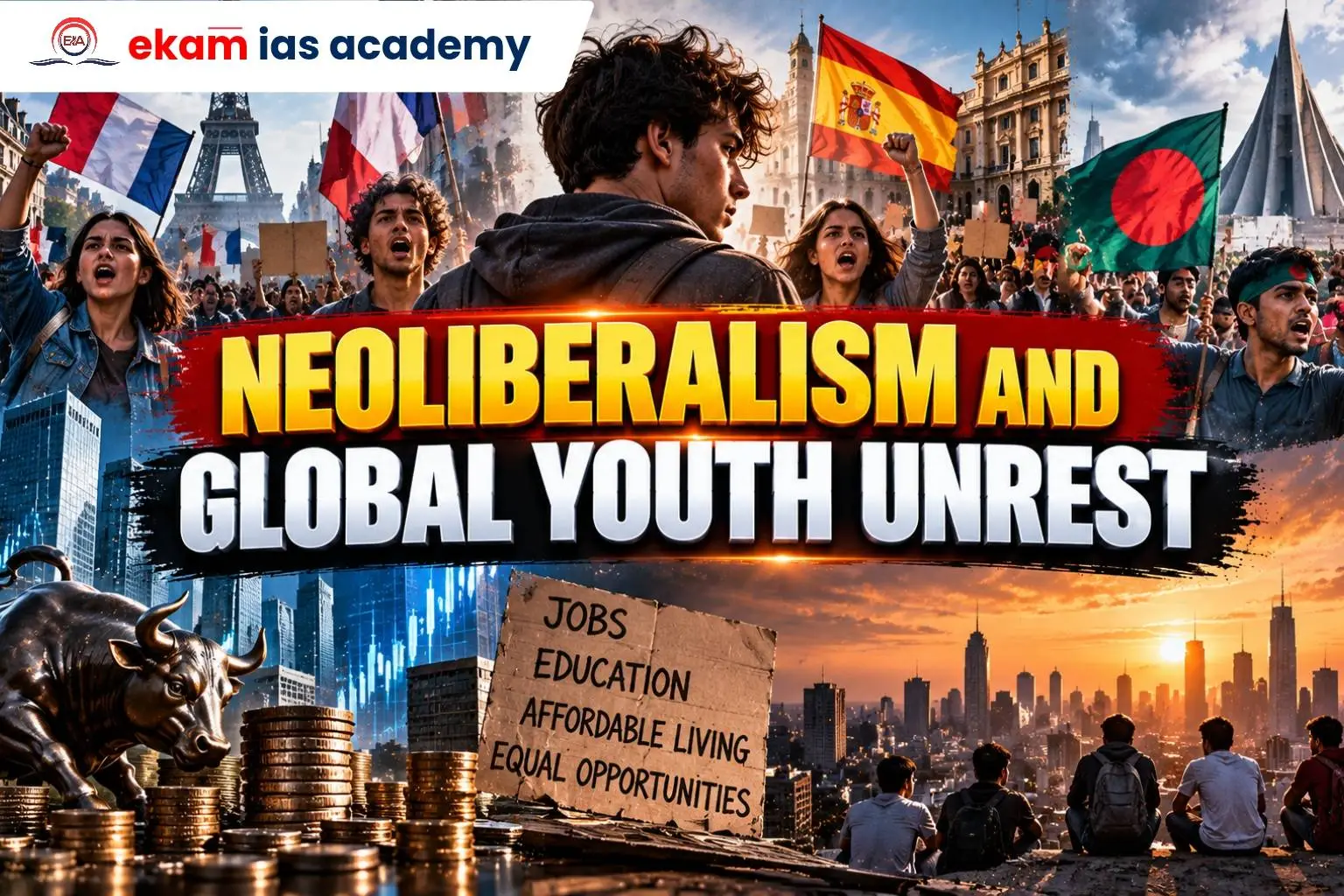
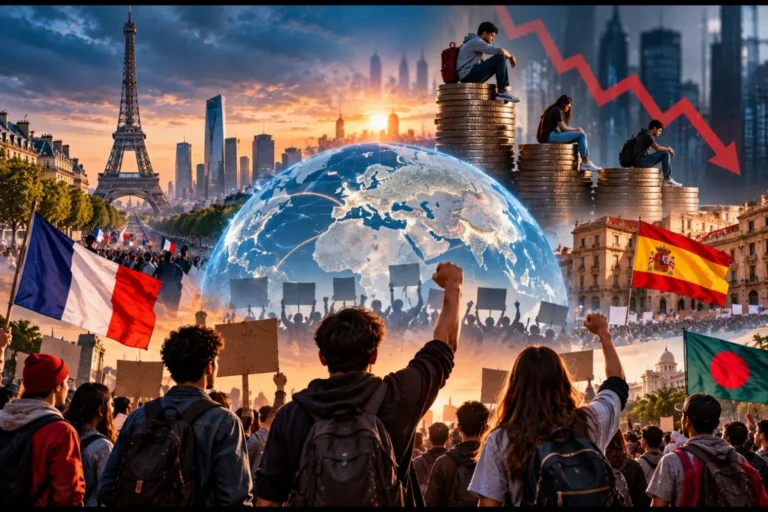
Growing youth-led protests across countries such as France, Spain and Bangladesh have raised concerns about unemployment, rising living costs and declining economic opportunities. This growing Global Youth Unrest reflects wider concerns about Youth Unemployment and Economic Inequality, Economic Inequality Among Youth and changing social expectations.
What is Neoliberalism?
- Neoliberalism is an economic approach that emphasises free markets, privatisation, deregulation, trade liberalisation and limited government intervention. Neoliberalism Explained helps understand the economic foundations of many contemporary global policy debates.
- It gained prominence during the 1980s, particularly under Ronald Reagan in the United States and Margaret Thatcher in Britain.
- Supporters argue that market competition encourages efficiency, innovation and investment.
- Critics believe excessive reliance on markets can weaken public services, labour protection and social equality, raising concerns about the Impact of Neoliberalism on Society and Neoliberal Economic Policies.
Why Are Young People Facing Economic Insecurity?
- Youth unemployment: Young workers often face greater difficulty securing stable employment.
- Weak wage growth: Rising prices reduce purchasing power and living standards, contributing to the Cost of Living Crisis and Youth Protests.
- Costly education: Higher tuition fees increase student debt and financial pressure.
- Job insecurity: Contractual employment and platform-based work may provide limited social protection.
- Technological disruption: Artificial Intelligence and automation could reduce demand for certain entry-level jobs.
- These pressures contribute to Youth Discontent and Democracy, as economic insecurity can influence political participation and social mobilisation.
Economic Debate: Causes of Unemployment
- Neoclassical view: Unemployment may result from wage rigidities, skill mismatches and barriers to hiring.
- Keynesian view: Weak demand for goods and services discourages firms from investing and employing workers.
- Kalecki’s argument: Persistent full employment may weaken employers’ bargaining power, creating political resistance to expansionary policies.
- Underconsumption: Lower wages can reduce household spending, weakening business revenues and future investment.
- These competing perspectives help explain the relationship between Globalisation and Youth, employment and economic inequality.
Historical Background
- The Great Depression of the 1930s encouraged greater government intervention.
- The post-war period (1945–1973) witnessed expanding welfare systems and relatively strong growth in many developed economies.
- The 1970s oil shocks and inflation contributed to a shift towards market-oriented reforms.
- However, unemployment and inequality cannot be attributed to a single economic policy alone.
Relevance for India
- India’s demographic dividend depends on creating productive employment for young people.
- Educated unemployment, skill gaps and informal employment remain important concerns.
- NEP 2020, Skill India and employment-linked initiatives seek to improve education, training and job opportunities.
- Affordable healthcare and education are essential for inclusive growth.
- These issues are relevant to Sociology and Globalisation UPSC and International Relations and Society UPSC, particularly in understanding Youth Political Movements and Social Inequality and Youth Unrest.
Way Forward
- Increase investment in labour-intensive manufacturing and MSMEs.
- Strengthen public education, healthcare and social security.
- Expand apprenticeships and industry-linked skill development.
- Promote fair wages, worker protection and responsible AI adoption.
- Combine private-sector dynamism with effective public investment and regulation.
Conclusion
Sustainable economic progress requires not merely higher profits and growth, but decent employment, affordable opportunities and a fair share of prosperity for the younger generation. Addressing Youth Protests Around the World, Youth Unemployment and Economic Inequality, Social Inequality and Youth Unrest and the broader effects of Neoliberalism and Global Youth Unrest requires inclusive growth and stronger social protection.