
Why in News?
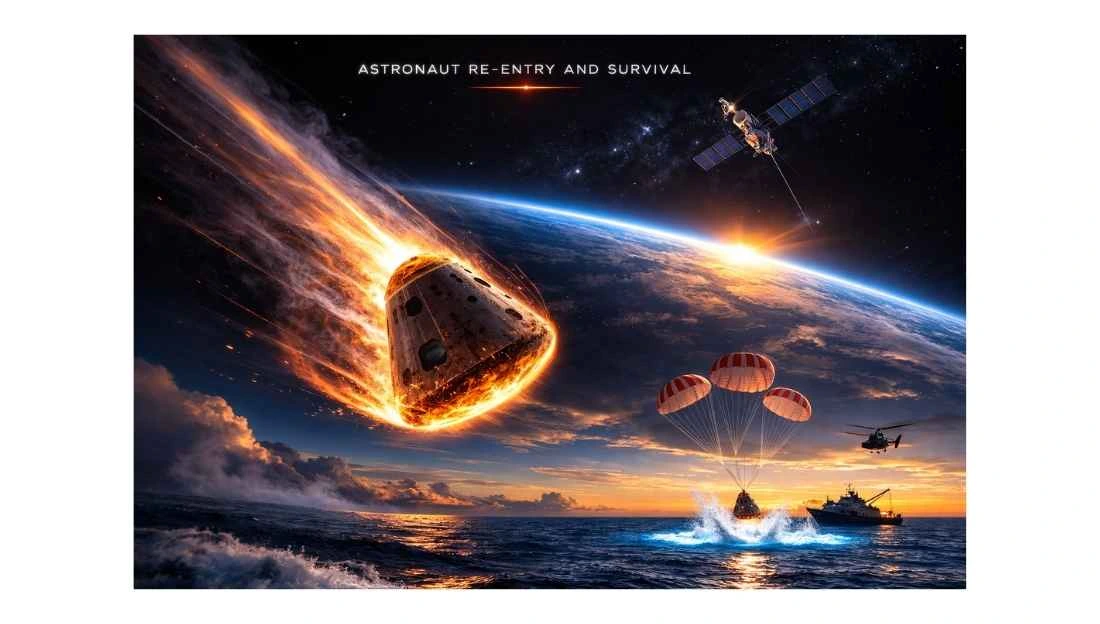
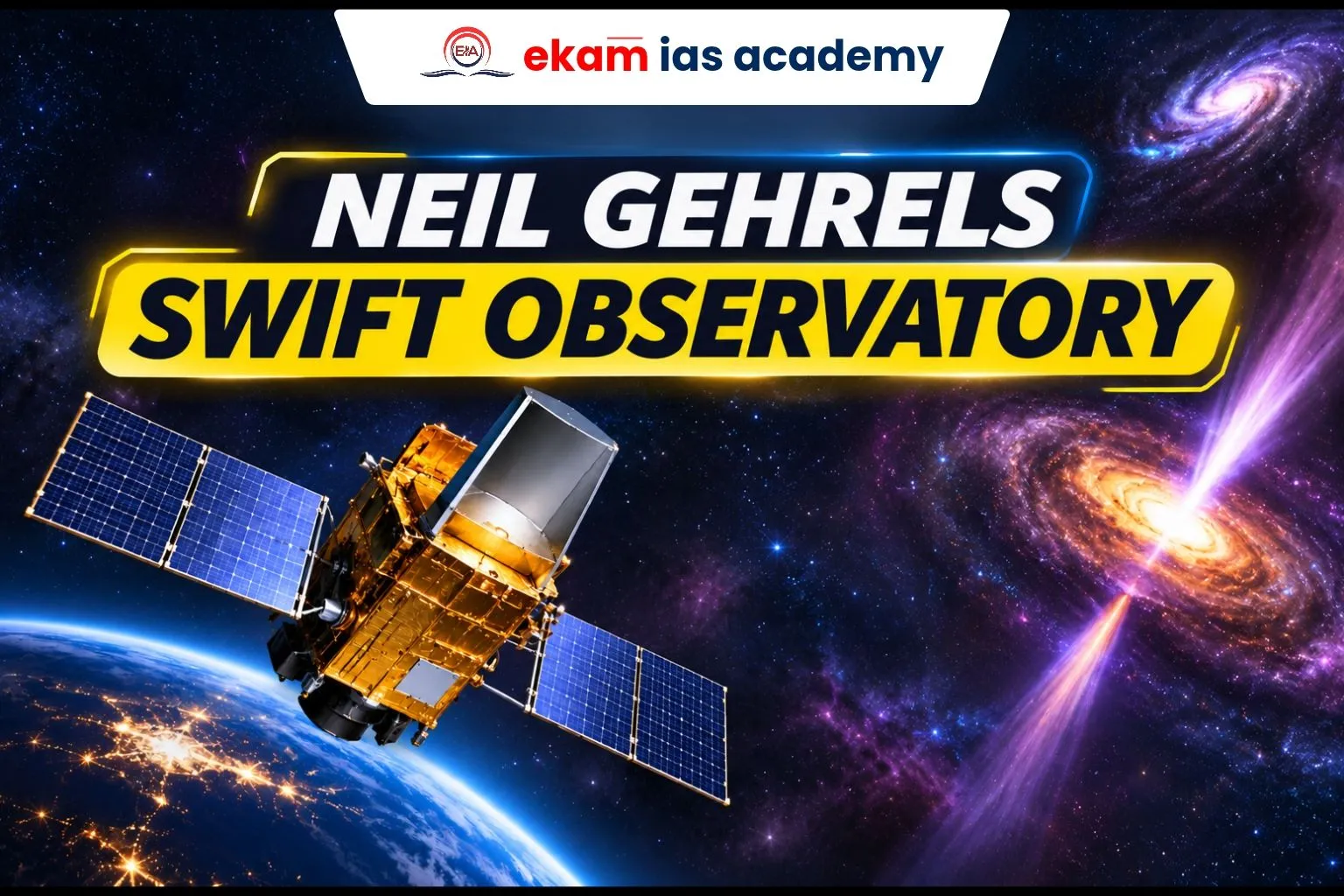
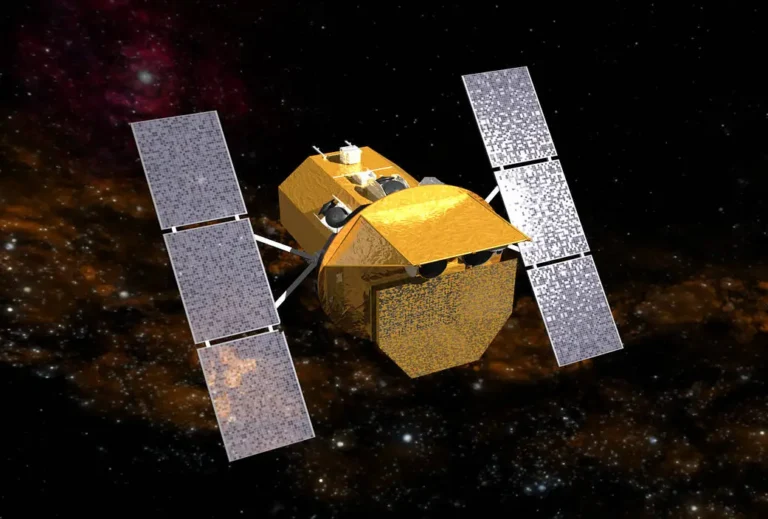
NASA’s Neil Gehrels Swift Observatory reportedly re-entered Earth’s atmosphere over Indonesia on November 4, 2026, after 22 years in orbit. The observatory made significant contributions to understanding Gamma Ray Bursts (GRBs) and other high-energy cosmic events. The mission is an important example of a NASA Space Observatory and Space-Based Astronomy Mission.
Major Objectives
- Identify the origin and evolution of gamma-ray bursts.
- Classify different types of GRBs.
- Study the early universe using distant cosmic explosions.
- Conduct observations of high-energy X-ray sources.
- The mission’s objectives highlight the importance of Gamma Ray Burst Detection, Gamma Ray Astronomy and Space Science and Technology UPSC.
Scientific Instruments
1. Burst Alert Telescope (BAT)
- Detects gamma-ray bursts across a wide field of view.
- Determines their approximate location for follow-up observations.
- BAT played a key role in the Gamma Ray Burst Detection capabilities of the NASA Swift Satellite Mission.
2. X-ray Telescope (XRT)
- Studies X-ray afterglows following gamma-ray bursts.
- Helps determine precise positions and monitor their evolution.
- Its observations contributed significantly to X-Ray Astronomy and the study of high-energy cosmic sources.
3. Ultraviolet/Optical Telescope (UVOT)
- Observes afterglows in ultraviolet and visible light.
- Provides information about their brightness and spectral characteristics.
- UVOT contributed to Ultraviolet Astronomy and made Swift a Multi-Wavelength Space Observatory.
Major Achievements
- Studied numerous gamma-ray bursts and supernova explosions.
- Observed black holes disrupting stars, X-ray flares, asteroids and comets.
- Contributed to approximately 7,000 scientific publications.
- Improved understanding of extreme cosmic events.
- The mission also contributed to scientific knowledge concerning Black Holes and Neutron Stars, making the Neil Gehrels Swift Observatory UPSC topic relevant to Science and Technology Current Affairs UPSC.