
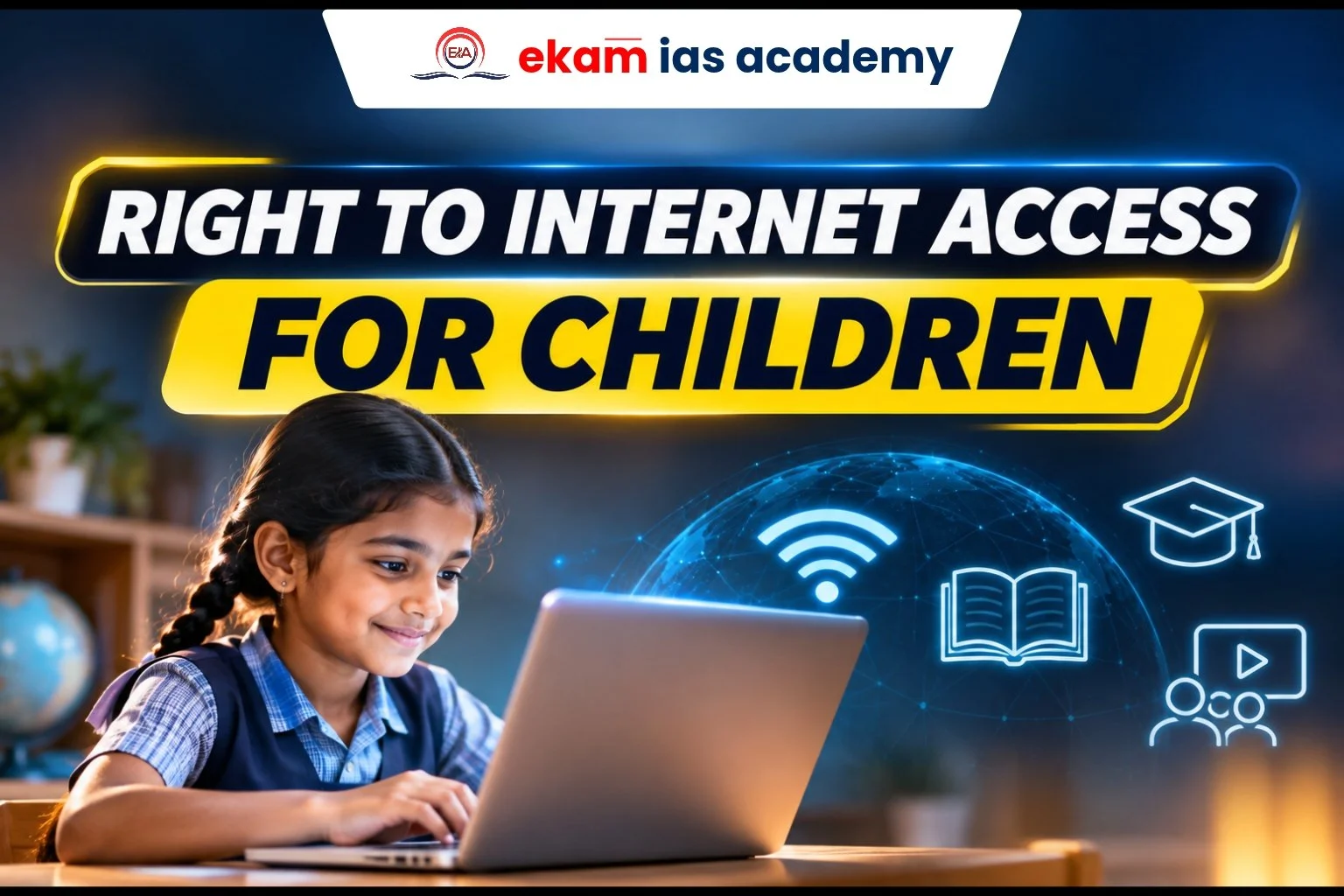
The Supreme Court, in Just Rights for Children Alliance v. S. Harish (2026), reportedly highlighted the importance of children’s access to the internet. The issue is central to Right to Internet Access for Children, Children’s Digital Rights in India and Child Rights in the Digital Age.
Constitutional Framework for Internet Access
Article 19(1)(a) – Freedom of Speech and Expression
- Protects the freedom to express opinions and access information through digital platforms.
- Supports children’s ability to learn, communicate and share ideas.
- It forms an important part of the broader debate on Internet Access and Fundamental Rights and Digital Rights of Children
Article 19(1)(g) – Freedom of Profession and Trade
- Protects occupational and business activities conducted through the internet.
- Primarily relevant to the broader constitutional framework of digital rights.
Article 21 – Right to Life and Personal Liberty
- Protects human dignity, privacy and personal liberty.
- Digital accessibility is increasingly important for meaningful participation in society.
- Article 21 Indian Constitution is therefore relevant to discussions on privacy, dignity and safe digital access for children.
Article 21A – Right to Education
- Guarantees free and compulsory education for children aged 6–14 years.
- Digital resources can support educational access and learning outcomes.
- This connects Children’s Right to Education and Internet with the broader objective of inclusive education.
Important Supreme Court Judgments
- Cricket Association of Bengal Case (1995): Recognised the right to receive and communicate information under Article 19(1)(a).
- Anuradha Bhasin v. Union of India (2020): Protected speech and business activities conducted through the internet and emphasised scrutiny of internet restrictions.
- Pragya Prasun v. Union of India (2025): Highlighted digital accessibility and inclusion, particularly for persons with disabilities.
- Just Rights for Children Alliance v. S. Harish (2026): As reported, emphasised balancing children’s digital opportunities with appropriate safety measures.
- These judgments are relevant to Right to Internet Access UPSC, Children’s Digital Rights in India and Indian Polity and Governance UPSC.
Major Online Risks for Children
- Cyberbullying: Online harassment can affect mental well-being.
- Harmful Content: Exposure to violence, sexual exploitation and misinformation.
- Privacy Violations: Misuse of children’s personal information.
- Excessive Screen Time: May interfere with sleep, physical activity and studies.
- Online Grooming: Offenders may manipulate children through digital platforms.
- Digital Divide: Unequal access can deepen educational and social inequalities.
- These concerns make Online Safety for Children, Child Online Protection in India and Cyber Safety for Children important dimensions of children’s digital rights.
Authority–Liberty Balance
- The Constitution seeks a balance between State authority and individual liberty.
- Restrictions must be lawful, necessary and proportionate.
- Blanket internet bans may restrict access to educational resources and opportunities.
- Child protection should therefore focus on targeted safeguards rather than excessive restrictions.
- The balance between access and protection is central to Digital Rights of Children and Right to Internet Access for Children.

Existing Legal Safeguards in India
- POCSO Act, 2012: Protects children against sexual offences, including offences involving online exploitation.
- Information Technology Act, 2000: Contains provisions addressing certain forms of harmful and illegal online activity.
- Digital Personal Data Protection Act, 2023: Provides a framework for protecting children’s personal data, including special requirements for processing such data.
- These measures contribute to POCSO Act and Online Safety, Online Child Protection Laws India and the protection of Child Rights in the Digital Age.
Way Forward
- Government: Develop child-sensitive regulations and strengthen cybercrime reporting.
- Parents: Encourage responsible internet habits and age-appropriate supervision.
- Schools: Introduce digital literacy, privacy awareness and cyber safety education.
- Digital Platforms: Improve content moderation, privacy settings and reporting mechanisms.
- Children: Promote awareness of online rights, responsibilities and potential risks.
- Inclusive Access: Improve affordable internet connectivity, especially in rural areas.
- Strengthening Digital Literacy for Children alongside safe and affordable connectivity can help realise Right to Internet Access for Children without compromising online protection.
Conclusion
India must protect children from online harm without denying them the educational, social and developmental opportunities offered by safe and inclusive internet access. A balanced approach to Children’s Digital Rights in India, Online Safety for Children, Child Online Protection in India and Children’s Right to Education and Internet is essential for an inclusive digital future.