

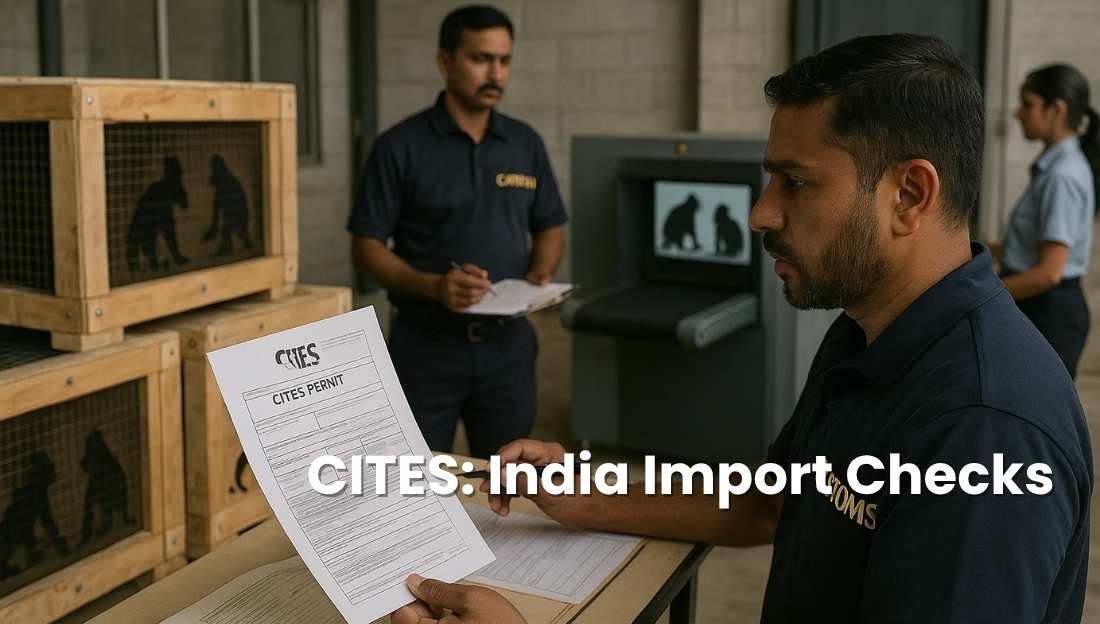
A recent CITES verification mission advised India to halt imports of critically endangered species like gorillas and orangutans due to risks of wild-caught animals being falsely labeled as captive-bred. The move aims to strengthen oversight and prevent illegal wildlife trafficking.
About CITES
- It is a legally binding international treaty with 185 member nations.
- Species are categorized into three Appendices:
- Appendix I – Species facing high extinction risk; trade allowed only in exceptional cases.
- Appendix II – Species requiring controlled trade to prevent overexploitation.
- Appendix III – Species protected in a particular country seeking international cooperation.
- Trade requires CITES-approved export and import permits.
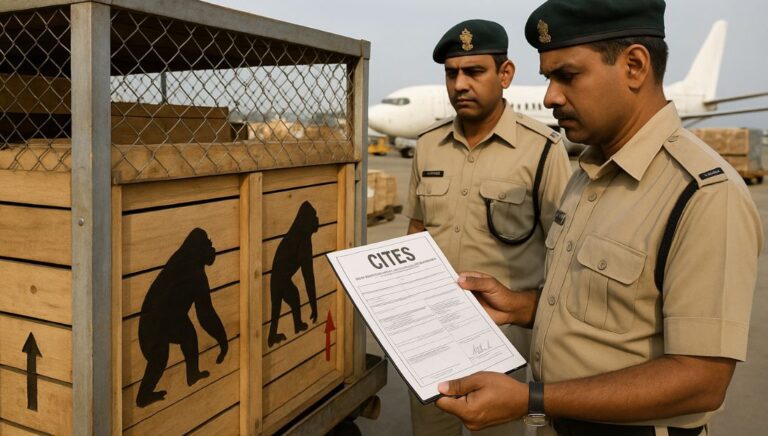
India’s Framework under CITES
- India became a party in 1976.
- The Directorate of Wildlife Preservation under MoEFCC functions as India’s CITES Management Authority.
- Domestic implementation aligns with the Wildlife (Protection) Act, 1972, which regulates trade and possession of wildlife.
Issues Highlighted by the CITES Mission
- Imports to facilities in Gujarat (GZRRC and RKTEWT) triggered scrutiny.
- Permits were present, but concerns persisted regarding:
- True origin of animals.
- Misuse of captive-bred (C) and zoo (Z) source codes.
- Insufficient verification of exporting facilities.
- Imports included species from countries with no credible breeding programs, e.g. gorillas from Haiti, chimpanzees from Egypt and Iraq.
- Some elephants and primates were found to be wild-captured, contradicting captive-bred claims.
- The report noted excellent welfare infrastructure at Indian facilities, but flagged procedural and regulatory gaps.
Recommendations for India
- Strengthen due diligence in verifying captive-bred claims.
- Seek confirmation from source countries regarding animal origins.
- Take corrective actions if illegal sourcing is proven.
- Submit a compliance report within 90 days to the CITES Secretariat.
Conclusion
Strengthening import verification processes will help India maintain its global conservation credibility, uphold wildlife protection commitments, and prevent illegal exploitation of endangered species.
This topic is available in detail on our main website.