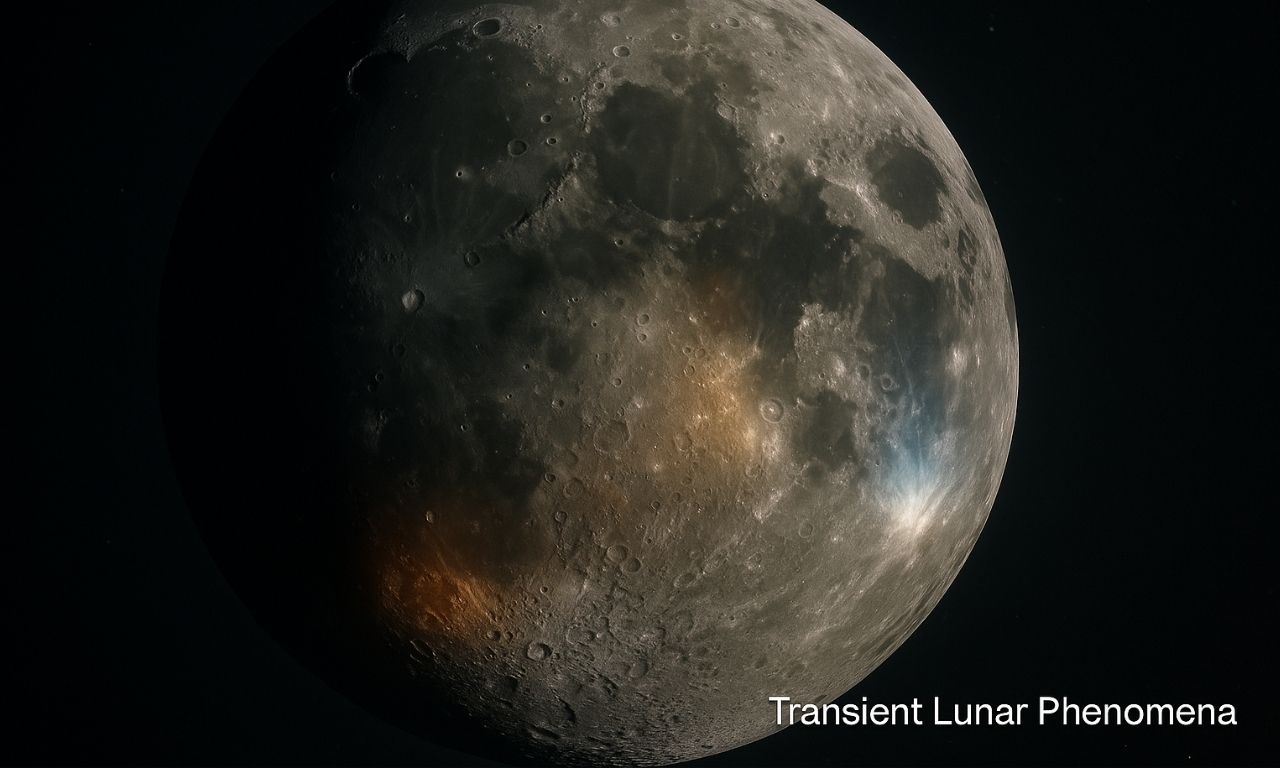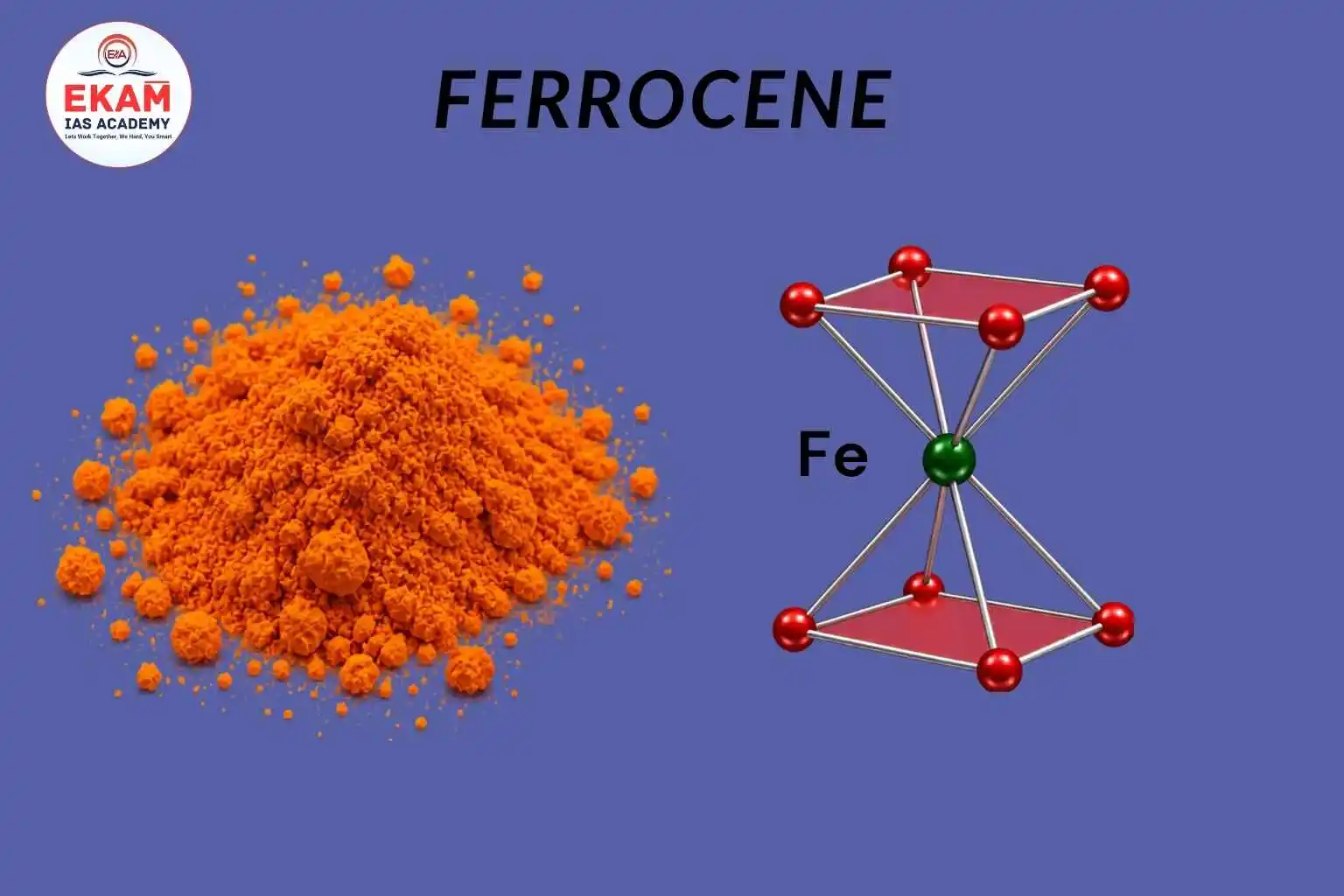

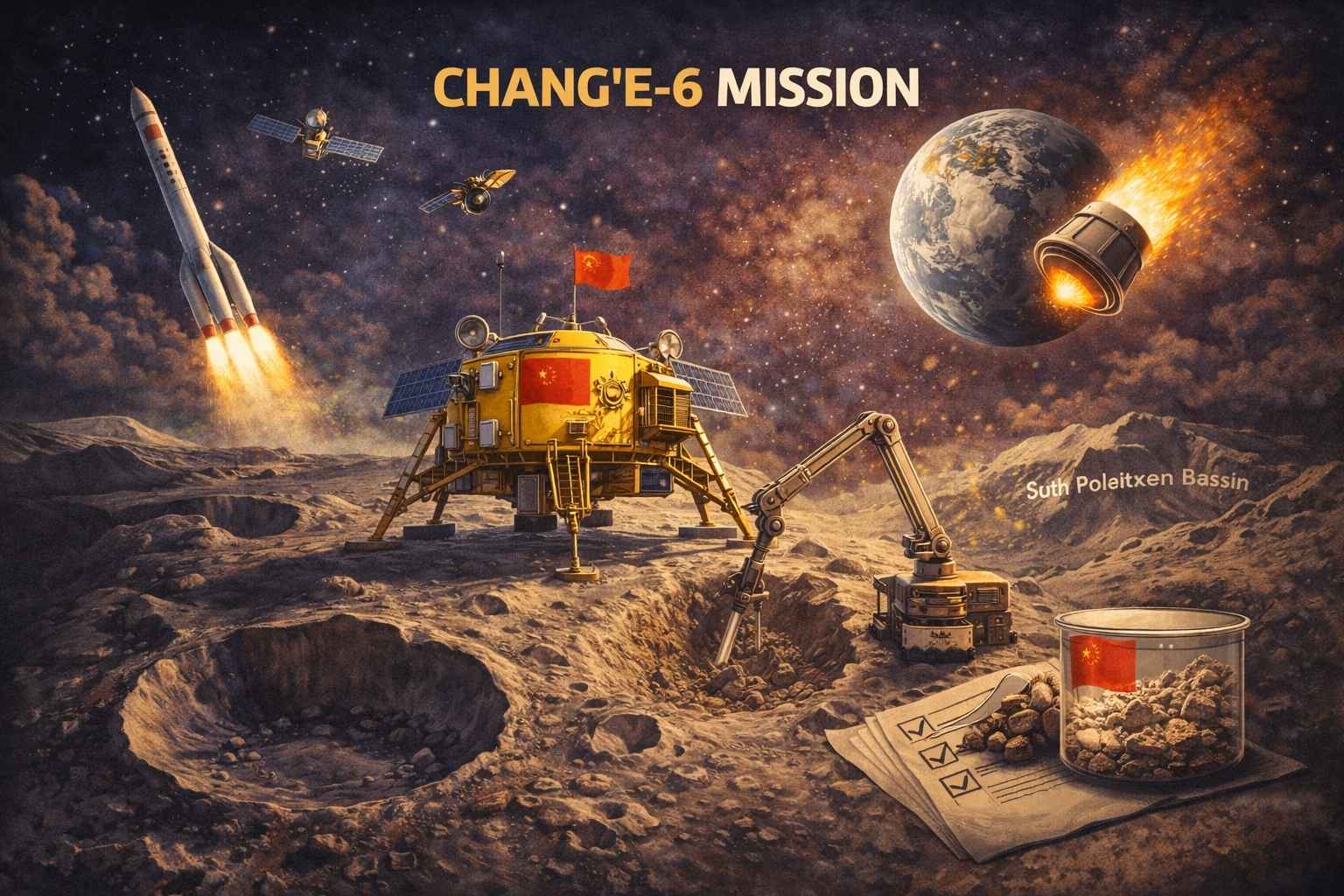
China’s Chang’e-6 lunar mission has successfully returned samples from the far side of the Moon. Recent analysis of the regolith suggests the Moon was formed after a massive ancient collision between Earth and another celestial body—an important GS-III science & technology topic often discussed in IAS coaching in Hyderabad.
About the Mission
- Part of the Chang’e lunar exploration programme, named after the Chinese Moon goddess.
- Launched on May 3, 2024 by a Long March-5 rocket from Hainan.
- First mission to collect and return samples from the far side of the Moon.
- Spacecraft components include orbiter, returner, lander, and ascender.
Such landmark space missions are frequently analysed in GS-III classes offered by UPSC online coaching platforms.
Sampling Techniques
- Equipped with microwave, laser, and optical sensors for navigation and obstacle detection.
- Two sampling methods: Drill for subsurface material. Robotic arm for surface collection.
- Returned samples to Earth in July 2024.
Scientific Importance
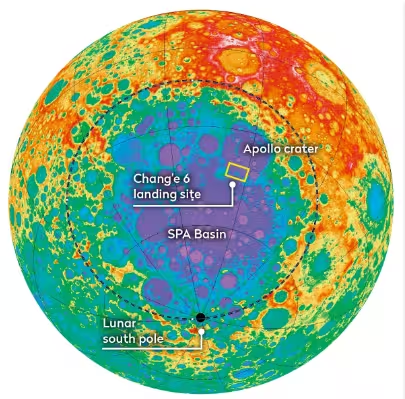
- Landed in the South Pole–Aitken Basin, a 4-billion-year-old crater.
- Samples may contain material from the Moon’s deep interior, excavated during the ancient impact.
- Provides clues about the Moon’s origin, geology, and evolution.
Challenges of Far Side Exploration
- Communication with Earth is difficult; requires relay satellites.
- Only the second mission to reach the far side (after Chang’e-4 in 2019).
Significance
- Strengthens China’s position in space exploration and planetary science.
- Enhances global understanding of the Moon’s formation and resources.
- Demonstrates advanced capability in sample-return missions, crucial for future deep-space exploration.
This topic is available in detail on our main website.