
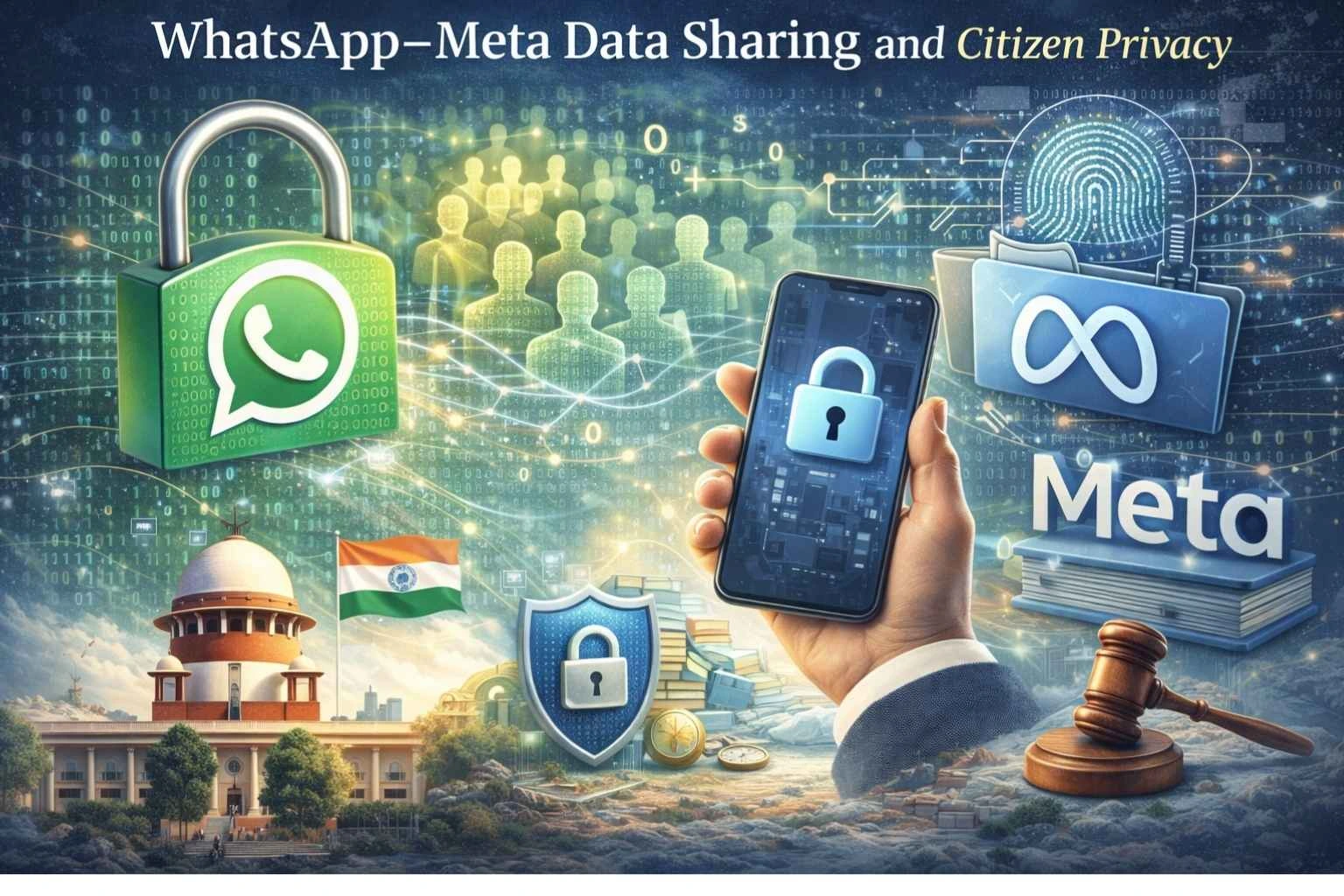
WhatsApp informed the Supreme Court that it does not share user data with its parent company Meta, and will comply with NCLAT directions on user consent by March 2026 — an important governance and privacy issue often analysed in UPSC coaching in Hyderabad.
Background of the Case
• CCI Findings (2021): WhatsApp’s “take-it-or-leave-it” privacy policy forced users to share data with Meta. Found to be an abuse of market dominance.
• NCLAT Ruling (2025): Upheld the penalty but emphasized user choice and consent. Non-essential data collection (like advertising) requires express and revocable consent.
• Supreme Court Proceedings (2026): Bench cautioned against violation of the right to privacy.
• Compared unauthorized data sharing to a “decent way of committing theft.” WhatsApp submitted affidavit explaining end-to-end encryption technology.
Importance of Citizen Privacy
• Fundamental Right: Privacy recognized as part of Article 21 (Right to Life and Personal Liberty) in Puttaswamy vs Union of India (2017).
• Protection Against Exploitation: Prevents misuse of personal data for commercial gain.
• Trust in Digital Platforms: Ensures users feel secure while using messaging and social media services.
• Democratic Safeguard: Protects citizens from surveillance and manipulation in political or economic contexts — a constitutional dimension regularly discussed in IAS coaching in Hyderabad.

Challenges
• Market Dominance: Platforms with billions of users can impose unilateral policies.
• Consent Issues: Users often face “forced consent” to continue using essential services.
• Data Exploitation: Risk of personal data being used for targeted advertising and profiling.
• Regulatory Gaps: Enforcement of the Digital Personal Data Protection Act, 2023 is still evolving.
• Competition Concerns: Data-sharing practices can distort markets and harm consumer choice.
Way Forward
• Strengthen Legal Safeguards: Ensure strict enforcement of the DPDP Act, 2023. Mandate clear, informed, and revocable consent for data use.
• Enhance Transparency: Platforms must disclose how data is collected, stored, and shared. Independent audits of privacy practices should be encouraged.
• Balance Privacy and Competition: Regulators must address both privacy violations and market exploitation. Promote fair competition by preventing monopolistic control over user data — a key governance issue covered in UPSC online coaching.
Conclusion
Protecting citizen privacy is not only a constitutional mandate but also essential for consumer trust and democratic integrity. Strong enforcement, transparency, and user-centric policies are crucial to ensure that digital platforms operate responsibly in India’s rapidly growing digital economy — a critical theme for aspirants preparing through civils coaching in Hyderabad.
This topic is available in detail on our main website.