
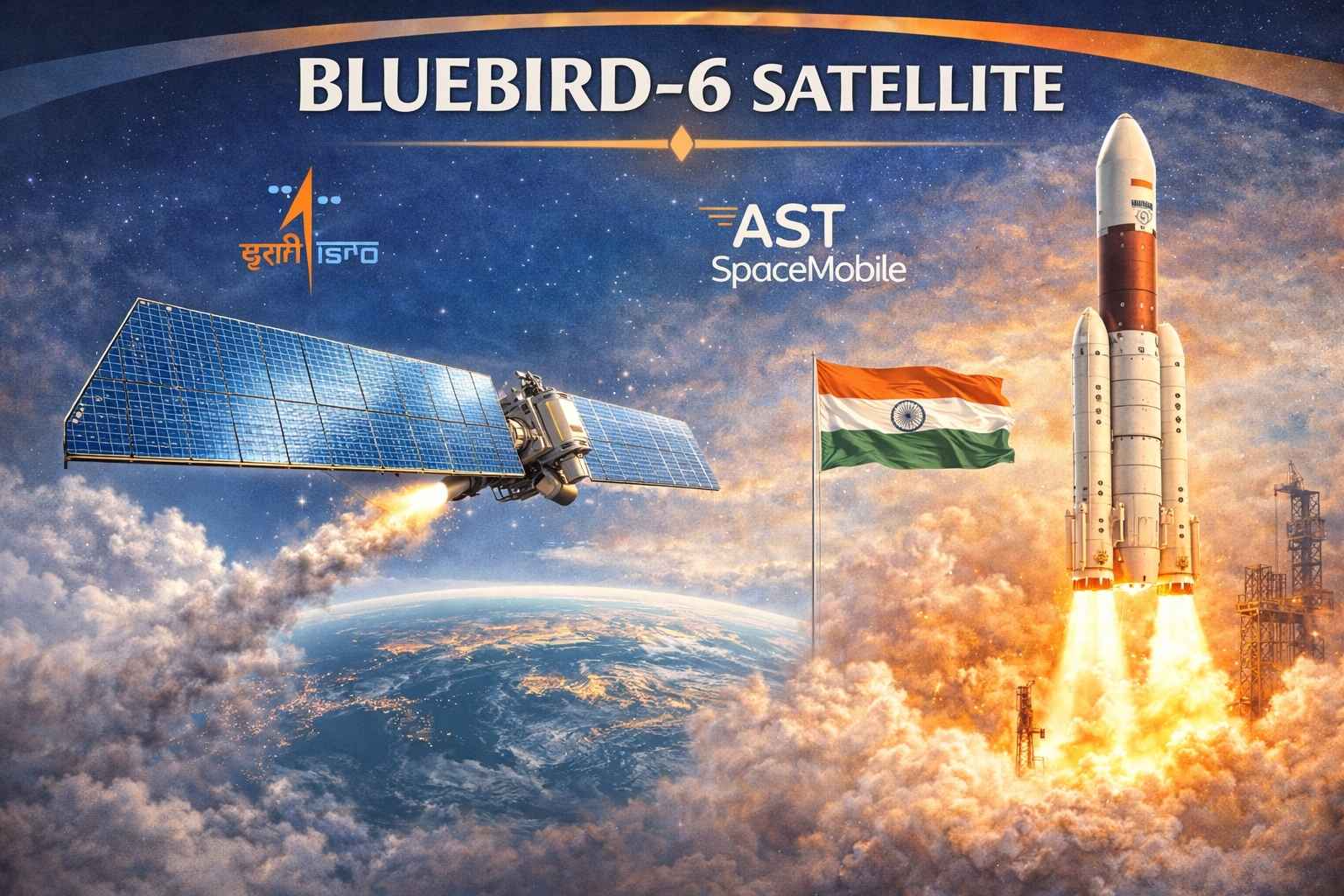
ISRO is set to launch BlueBird-6, a commercial communication satellite of US-based AST SpaceMobile, on 21 December 2025 using its heavy-lift LVM-3 (Gaganyaan-class) rocket. The mission highlights India’s growing role in the global commercial space sector and is a relevant contemporary case study for aspirants preparing space technology topics through a UPSC Academy in Hyderabad.
What is BlueBird-6?
- A commercial communication satellite developed by AST SpaceMobile (USA).
- Designed to provide direct-to-mobile internet connectivity without the need for ground-based cell towers.
- Enables ordinary smartphones to access broadband services directly from space.
Features of BlueBird-6
- Weight: ~6.5 tonnes — among the heaviest payloads launched by ISRO
- Orbit: Low Earth Orbit (LEO), enabling low latency and wide coverage
- Technology:
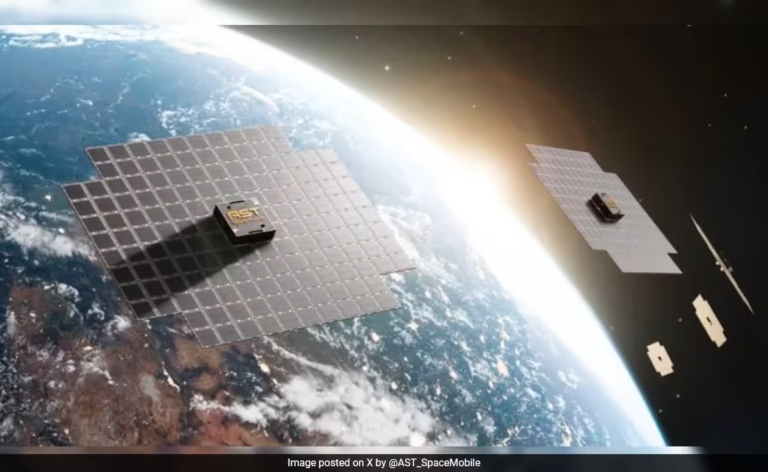
- One of the largest phased-array antennas ever deployed
- Antenna area of nearly 2,400 square feet
- Coverage: Remote, rural, maritime, and underserved regions
- Significance:
- Helps bridge the digital divide
- Strengthens global mobile broadband infrastructure
Such developments are often linked with GS-III themes of inclusive technology, discussed at the Best IAS Academy in Hyderabad.
Strategic Importance of the Mission
- Demonstrates ISRO’s capability to launch heavy commercial satellites.
- Boosts private sector participation in space activities.
- Strengthens India–US cooperation in advanced space technologies.
About LVM-3 (GSLV Mk III / Bahubali)
- ISRO’s heavy-lift launch vehicle.
- Height: About 43 metres; Weight: Around 640 tonnes.
- Payload capacity:
- 10 tonnes to LEO
- 4 tonnes to GTO
- Three-stage rocket:
- Solid boosters (S200)
- Liquid core stage (L110)
- Cryogenic upper stage (C25)
- Key role in Gaganyaan human spaceflight mission.
Conclusion
The BlueBird-6 launch marks a major milestone in ISRO’s journey as a reliable global commercial launch provider. By successfully deploying one of the heaviest communication satellites ever launched from Indian soil, ISRO demonstrates its technological maturity, launch reliability, and growing role in global digital connectivity.
For UPSC aspirants preparing Science & Technology and Space topics through institutions like the UPSC Academy in Hyderabad, the mission offers an excellent contemporary example linking space technology, digital inclusion, and international cooperation.
This topic is available in detail on our main website.