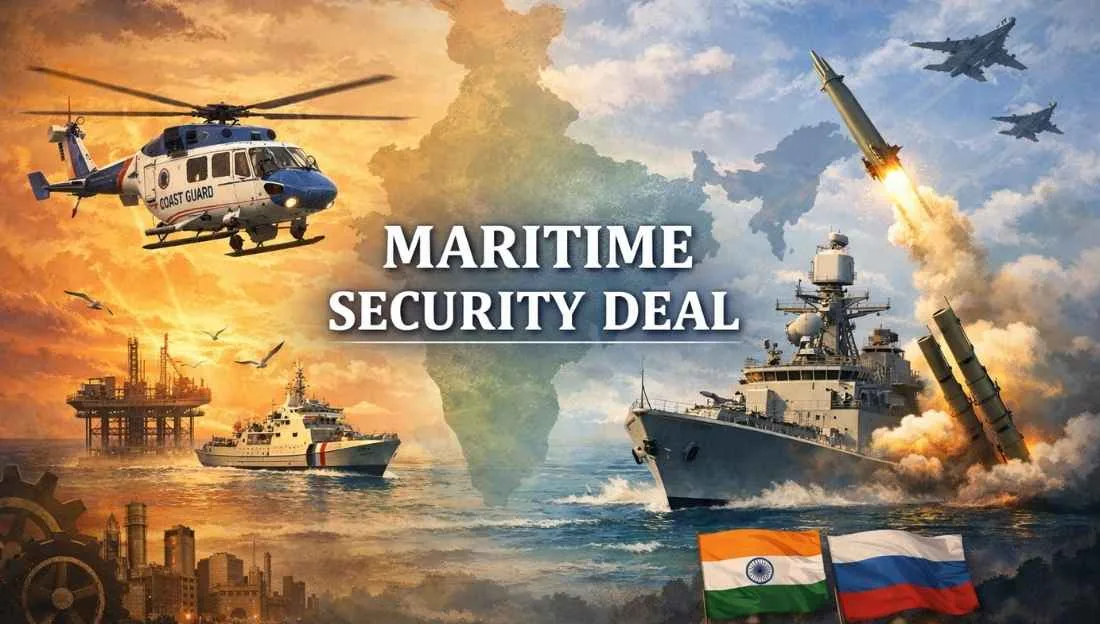

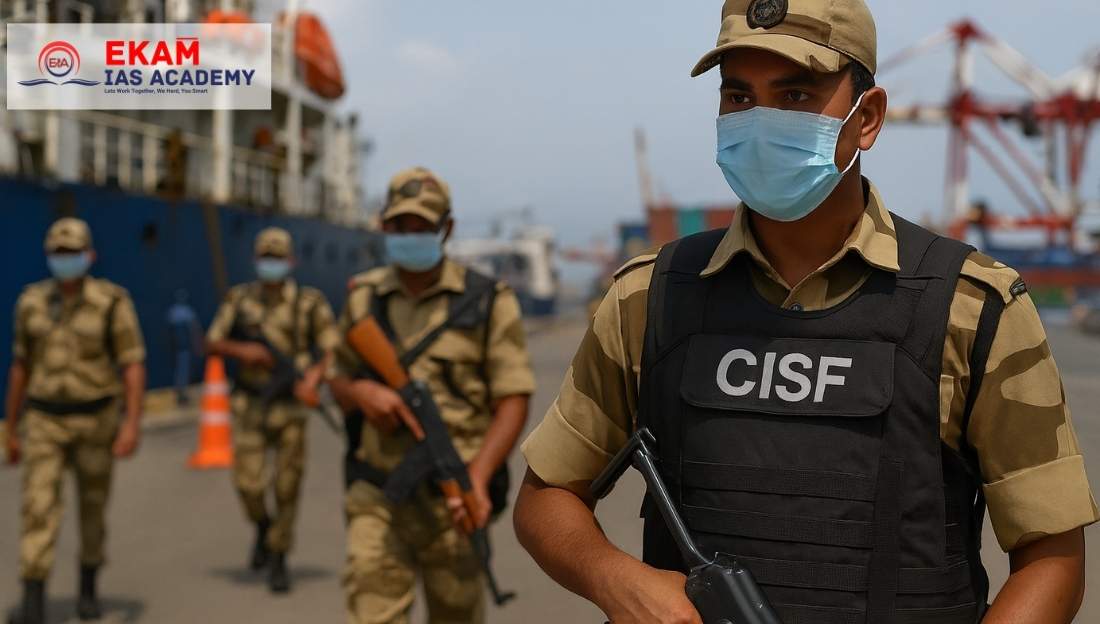

Recently Government has designated the Central Industrial Security Force (CISF) as the sovereign security regulator for ports, including private ones, to ensure uniform and professional protection of maritime infrastructure.
New Security Framework
- CISF as Lead Security Agency: CISF to take charge of access control, cargo scanning, surveillance, and coastal patrolling at major ports.
- Phase-wise Implementation: Initially covers 80 major export-import ports. Remaining 170 minor ports to be gradually included.
- ISPS Alignment: CISF becomes the Recognised Security Organisation (RSO) under the International Ship and Port Facility Security (ISPS) Code, aligning ports with global maritime safety standards.
India’s Port Security Mechanism
- ISPS Code: Introduced post 9/11, mandates global norms for safeguarding ships and port facilities from terror threats. India is a compliant member.
- Central Leadership: CISF’s designation ensures unified, professional, and sovereign enforcement of security norms across commercial and private ports.
Major Challenges
- Fragmented Security: Private and small ports rely on local police or private security agencies lacking specialised maritime expertise.
- Transnational Threats: Increasing cases of drug trafficking, arms smuggling, illegal migration, maritime terrorism, and cyberattacks on port IT systems.
- Resource & Personnel Gaps: CISF needs nearly 10,000 extra personnel; each major port requires 800–1,000 officers.
- Coastal Vulnerability: India’s 7,500 km coastline remains porous with weak surveillance in non-major ports.
Committee Recommendations
- 2024 Joint Committee (CISF + Directorate General of Shipping) suggested:
- Hybrid Security Model: CISF to manage core security; state police/private agencies handle peripheral duties.
- Strengthening manpower, surveillance technology, and coastal coordination.
CISF

- Established: 1969, declared Armed Force of the Union in 1983.
- Mandate: Secures critical infrastructure including airports, seaports, nuclear plants, Delhi Metro, Parliament, heritage monuments, and major government buildings.
- Force Structure: Over 1.8 lakh personnel; seven operational sectors; specialized Fire Wing and Disaster Response Unit.
- Post-26/11 expansion: Extended to private sector and high-risk economic assets.
Conclusion
Unifying port security under CISF marks a major step in strengthening India’s maritime security architecture. It enhances global compliance, prevents illegal activities, and protects national economic lifelines. However, successful implementation will depend on manpower readiness, inter-agency coordination, and technological integration.
This topic is available in detail on our main website.