
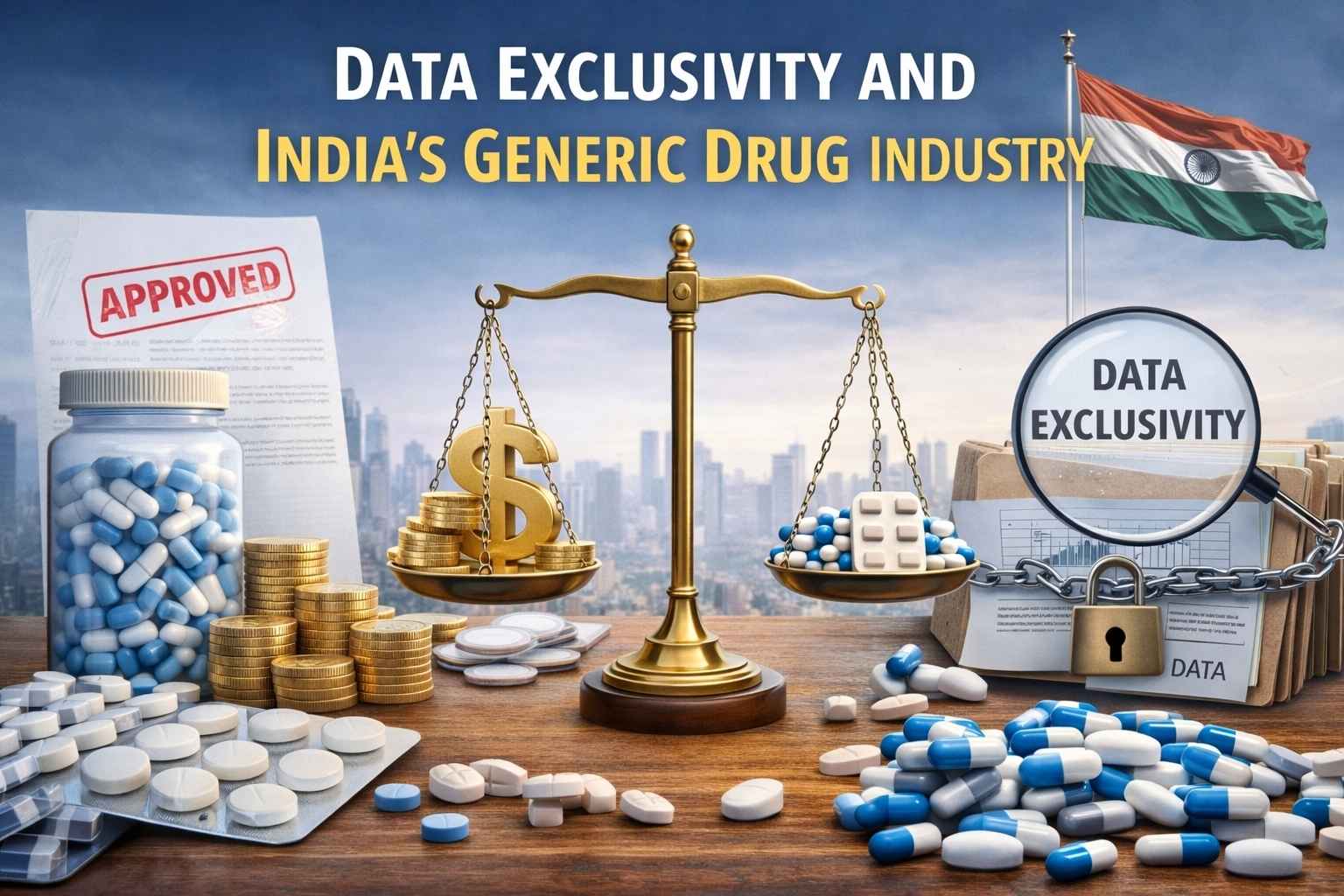
The Union government is examining whether to introduce data exclusivity in the pharmaceutical sector, amid ongoing trade negotiations and efforts to attract foreign investment. This policy debate has significant implications for public health, drug affordability, and India’s established generic medicines ecosystem—topics frequently analysed by aspirants preparing through UPSC coaching in Hyderabad.
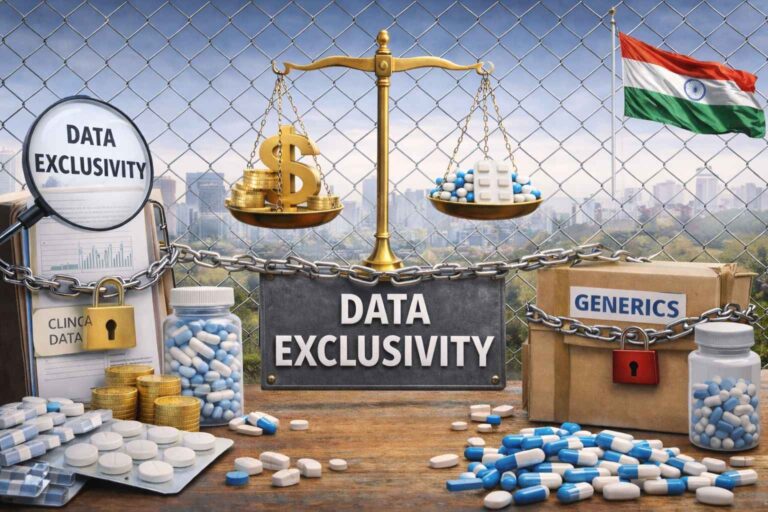
What is Data Exclusivity?
- When a new drug is developed, companies submit clinical trial data to prove safety and effectiveness.
- Data exclusivity gives the innovator exclusive rights over this data for a fixed period.
- During this time, regulators cannot use the same data to approve generic versions, even if the patent has expired.
- Generic companies must either: Wait until exclusivity ends, or Conduct fresh clinical trials, which are costly and time-consuming.
- It is different from patents: Patents protect the invention. Data exclusivity protects the test data used for approval.
India’s Pharma Model and Role of Generics
- India is a global leader in generic medicines. Nearly 90% of Indian pharma firms focus on generics, not new drug discovery.
- This model ensures Low-cost medicines for Indian patients and exports to developing countries India’s image as the “pharmacy of the Global South”
- Currently, Indian law does not recognise data exclusivity, allowing quick generic entry after patent expiry.
At present, Indian law does not recognise data exclusivity, allowing rapid generic entry once patents expire—a key strength often highlighted in public health debates at the Best IAS Academy in Hyderabad.
Government’s Current Position
- Inter-ministerial discussions are ongoing involving Commerce Ministry, DPIIT, Health Ministry, and Pharma Department.
- The issue is linked to trade negotiations, especially with EFTA countries, and attracting foreign investment.
- However, the Health Ministry has stated that it has no formal proposal to introduce data exclusivity, showing lack of consensus.
Impact on Access to Medicines
- Possible consequences include, Delayed availability of generics and Higher drug prices due to extended monopolies
- Data exclusivity may protect even off-patent drugs, indirectly extending monopoly beyond the 20-year patent term.
Implications for Generic Drug Industry
- Indian generic firms may face Higher costs due to mandatory clinical trials, Reduced competitiveness in global markets
- Tools like compulsory licensing and patent challenges may lose effectiveness if regulatory approval itself is blocked.
Policy tools such as compulsory licensing and patent challenges may lose effectiveness if regulatory approval itself is restricted, an issue often debated in GS Paper II and III by aspirants from Top UPSC Coaching in Hyderabad.
Concerns Around Drug Regulation
- CDSCO has hinted that existing rules create an unequal field between innovators and generics.
- Public health experts fear of Patent evergreening, Unnecessary trials and Delayed entry of affordable medicines
Conclusion
While data exclusivity may attract investment, it risks weakening India’s generic-driven pharma strength and limiting access to affordable medicines. A cautious, public-health-first approach is essential.
This topic is available in detail on our main website.