
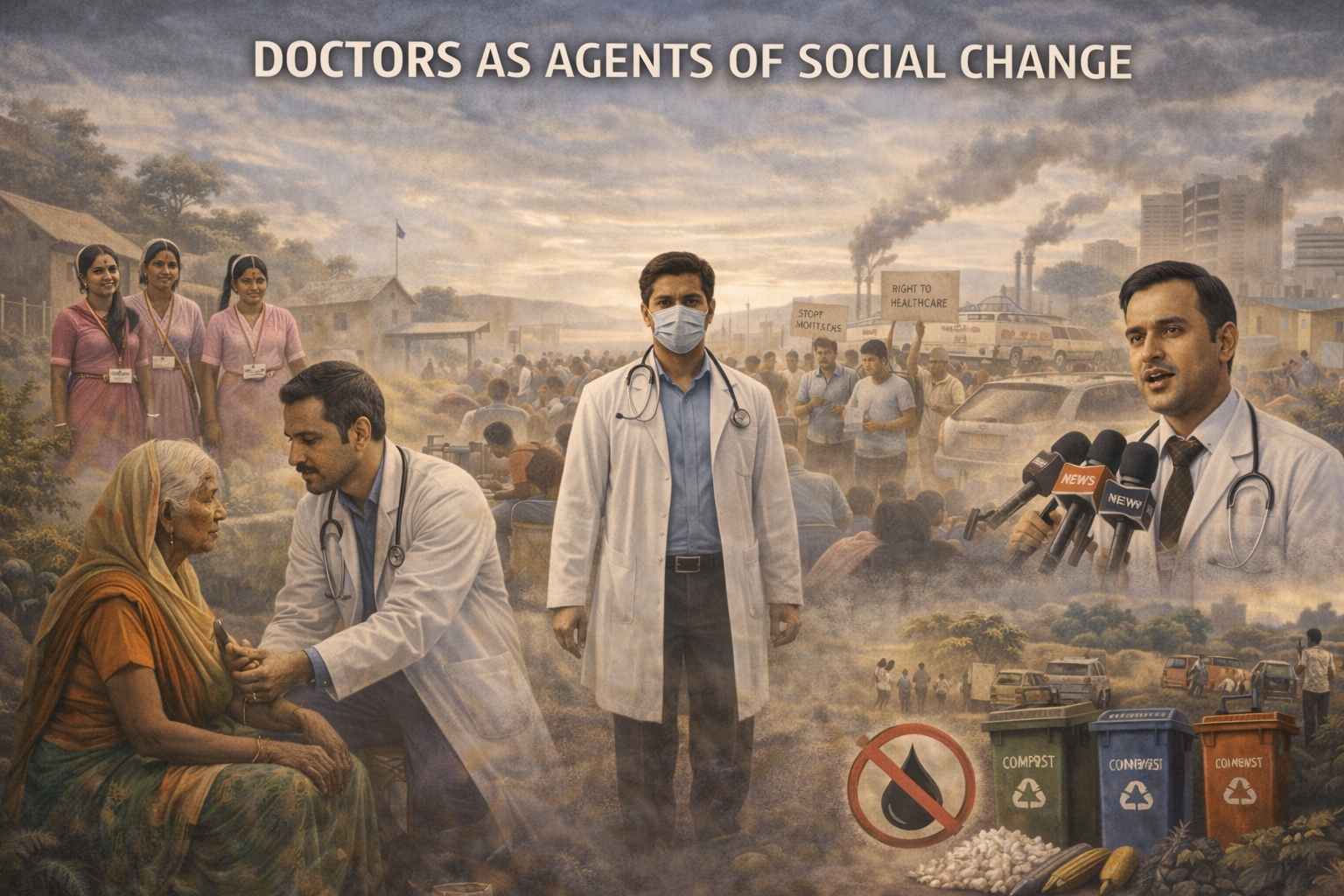
India’s healthcare system has come under focus due to high out-of-pocket health spending, expanding private sector dominance, and a sharp rise in non-communicable diseases. This has triggered discussions on the need for doctors to engage beyond clinical practice to address policy gaps and social determinants of health—an issue increasingly debated in UPSC coaching in Hyderabad.
State of Healthcare in India
- Quality & Access Issues: India’s healthcare system faces serious ethical concerns like fake medicines and unnecessary surgeries, while public health spending remains low (around 2.1% of GDP), leading to high out-of-pocket costs that push millions into poverty.
- Disease Burden & Workforce Shortage: Non-communicable diseases account for about 63% of deaths, yet India has only 8.3 doctors and 17.4 nurses per 10,000 people far below WHO’s recommended threshold.
- Frontline & Infrastructure Challenges: ASHA workers receive meagre pay and lack job security, and many PHCs/CHCs operate without adequate staff or equipment, leaving rural areas disproportionately underserved.
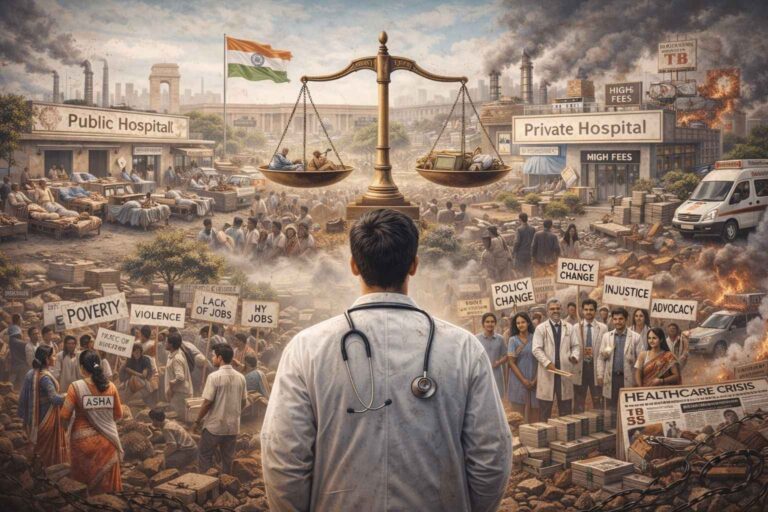
Impact of Privatisation
- Private healthcare accounts for nearly 55–60% of total health spending in India, making healthcare expensive for common citizens.
- Doctors in private hospitals often face pressure to meet financial targets, affecting ethical medical decision-making.
- Government schemes like AB PMJAY, while expanding insurance coverage, increasingly channel public funds to private hospitals instead of strengthening public infrastructure.
- High fees in private medical colleges, often exceeding ₹40–50 lakh for MBBS, push doctors to focus on income recovery rather than community health.
Medical Education Issues
- Medical training has become exam-oriented, with excessive focus on MCQs rather than bedside clinical skills.
- An MBBS degree is often considered inadequate, forcing doctors into multiple postgraduate courses and fellowships.
- Limited exposure to public health and social medicine reduces understanding of poverty, nutrition, housing, and sanitation as causes of disease.
Doctors’ Role Beyond Clinics
- Doctors directly observe how poverty leads to malnutrition, pollution causes respiratory diseases, and unsafe roads result in trauma cases.
- Their social credibility gives them influence in courts, media debates, and policy discussions.
- Silence from doctors allows harmful policies and profit-driven practices to continue unchecked—an important GS-IV dimension for aspirants in civils coaching in Hyderabad.
Challenges Faced by Healthcare Providers
- ASHA workers, who form the backbone of primary healthcare, are paid incentives rather than fixed salaries and have repeatedly protested for minimum wages and social security.
- Public hospitals are overcrowded, with India having only 0.7 doctors per 1,000 people, below the WHO recommended ratio of 1:1000.
- Doctors face long working hours, staff shortages, and frequent violence at workplaces, leading to stress and professional burnout.
Policy Failure and Accountability
- India accounts for over 25% of global TB cases, despite decades of control programmes.
- Rising cases of kidney failure, cancer, anaemia, and road traffic injuries highlight failures in regulation, prevention, and implementation.
- The healthcare system focuses more on treatment than prevention, ignoring root causes such as tobacco promotion, pollution, and unsafe infrastructure.
Way Forward
- Doctors must collectively question harmful health policies and profit-driven healthcare models.
- Strong advocacy can push governments to increase public health spending, currently only around 2.1% of GDP.
- Physicians should amplify the voices of vulnerable communities and integrate medical ethics with social justice.
Recommendations from Policies and Committees
- Increase Public Health Spending (National Health Policy, 2017): The government should raise public health expenditure to 2.5% of GDP to strengthen preventive care, primary health centres (PHCs), and reduce people’s dependence on costly private hospitals.
- Parliamentary Standing Committees: There is a need for strict regulation of private hospitals to prevent unnecessary surgeries, overcharging, and unethical practices, along with better monitoring of government health insurance schemes to reduce misuse of public funds.
- Strengthen Health Workforce ASHA workers should be given fixed salaries, social security, and pensions, and vacant posts in PHCs and CHCs must be filled by doctors, nurses, and trained mid-level providers to improve rural healthcare delivery.
Conclusion
Doctors are not only providers of treatment but also trusted social leaders. In a deeply unequal society like India, they carry both the authority and responsibility to challenge systems and policies that create disease, suffering, and injustice—an argument of high relevance for aspirants preparing through UPSC online coaching.
This topic is available in detail on our main website.