
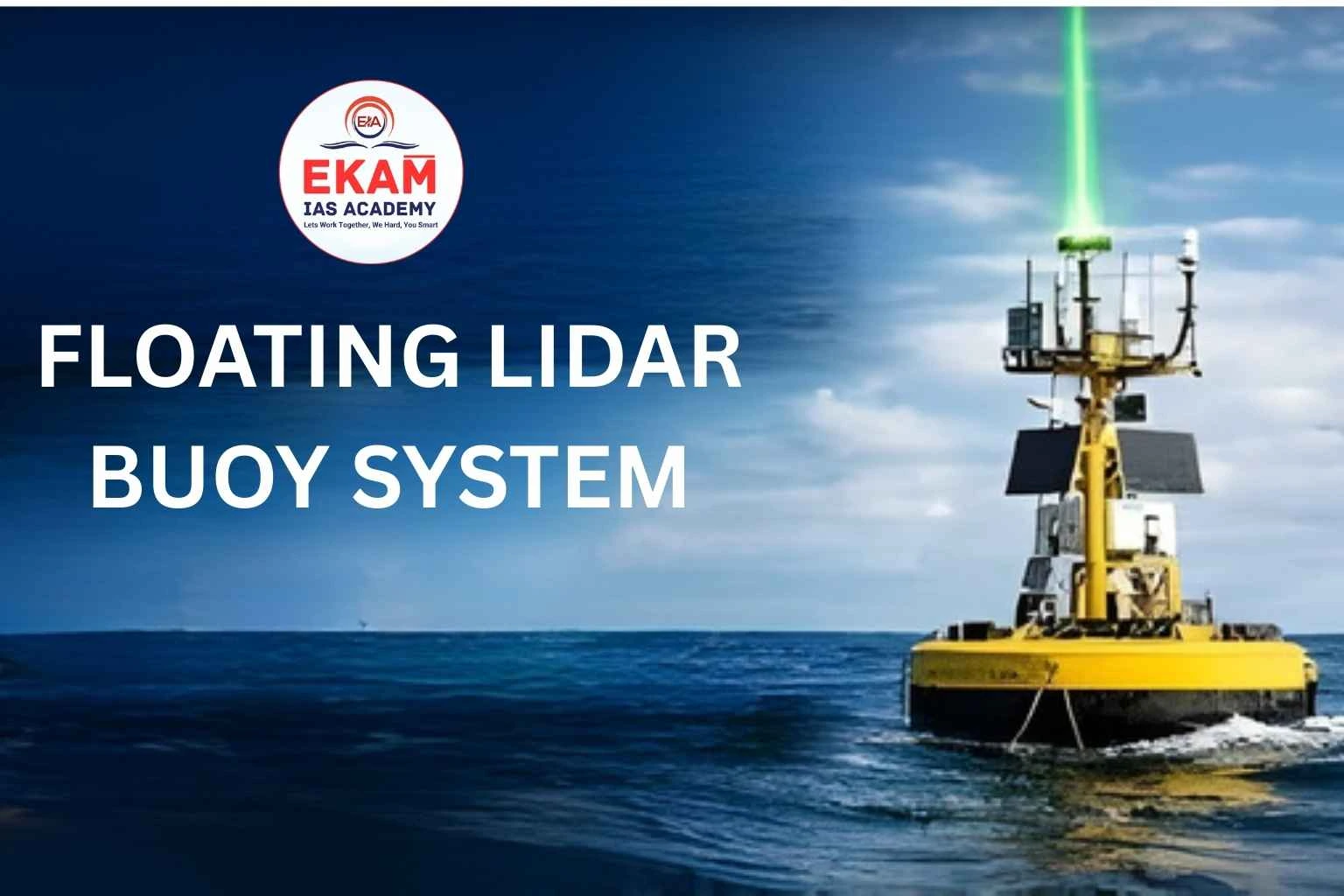
The National Institute of Ocean Technology (NIOT) has successfully tested an indigenous Floating LiDAR Buoy near the coast of Muttom. Such scientific and technological advancements are important for aspirants preparing through IAS coaching in Hyderabad, UPSC online coaching, and other civil services preparation programs.
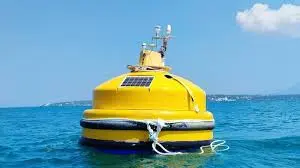
What is Floating LiDAR Buoy System?
• It is an advanced ocean-based monitoring device used to measure wind and atmospheric conditions over seas.
• Combines: A floating structure (buoy), LiDAR (Light Detection and Ranging) technology.
• Designed for collecting accurate, real-time marine data.
Understanding such innovations is essential for students preparing through UPSC coaching in Hyderabad and Hyderabad IAS coaching institutes, where science and technology topics form a key part of the UPSC syllabus.
What is LiDAR Technology?
• LiDAR stands for Light Detection and Ranging.
• It works by: Emitting laser pulses into the atmosphere, Measuring the time taken for signals to return after hitting particles.
• Helps in calculating: Wind speed and direction and Air density and movement.
• Provides high precision data, even at higher altitudes.
These core concepts are frequently covered in IAS coaching and civils coaching in Hyderabad, helping aspirants build strong conceptual clarity for UPSC examinations.
Working Mechanism
• The buoy floats on the ocean surface.
• It continuously sends laser beams upward.
• Reflected signals are analysed to: Track wind patterns, Study changes at different heights.
• Can measure wind profiles up to 300 metres above sea level, which is difficult for traditional tools.
Such technological mechanisms are often discussed in UPSC online coaching and structured UPSC coaching in Hyderabad programs.
Key Features
• Operates in harsh marine environments.
• Provides continuous and real-time data.
• More flexible and cost-effective than fixed offshore towers.
• Useful in remote ocean regions where installation of instruments is difficult.
These features highlight advancements that are important for aspirants studying through Hyderabad IAS coaching programs, especially for GS Paper 3.
Significance
• Improves weather forecasting accuracy.
• Helps in better cyclone and storm tracking.
• Supports development of offshore wind energy projects.
• Enhances understanding of climate change and ocean-atmosphere interaction.
• Strengthens India’s scientific and technological capabilities in ocean studies.
Such applications are widely analysed in IAS coaching and civils coaching in Hyderabad, linking science with disaster management and environmental studies.
Conclusion
The Floating LiDAR Buoy System is a major step towards advanced marine monitoring, enabling better disaster management, renewable energy planning, and climate research in India. For aspirants preparing through IAS coaching in Hyderabad, UPSC coaching in Hyderabad, and UPSC online coaching, such developments are crucial for mastering science and technology topics in UPSC.
This topic is available in detail on our main website.