
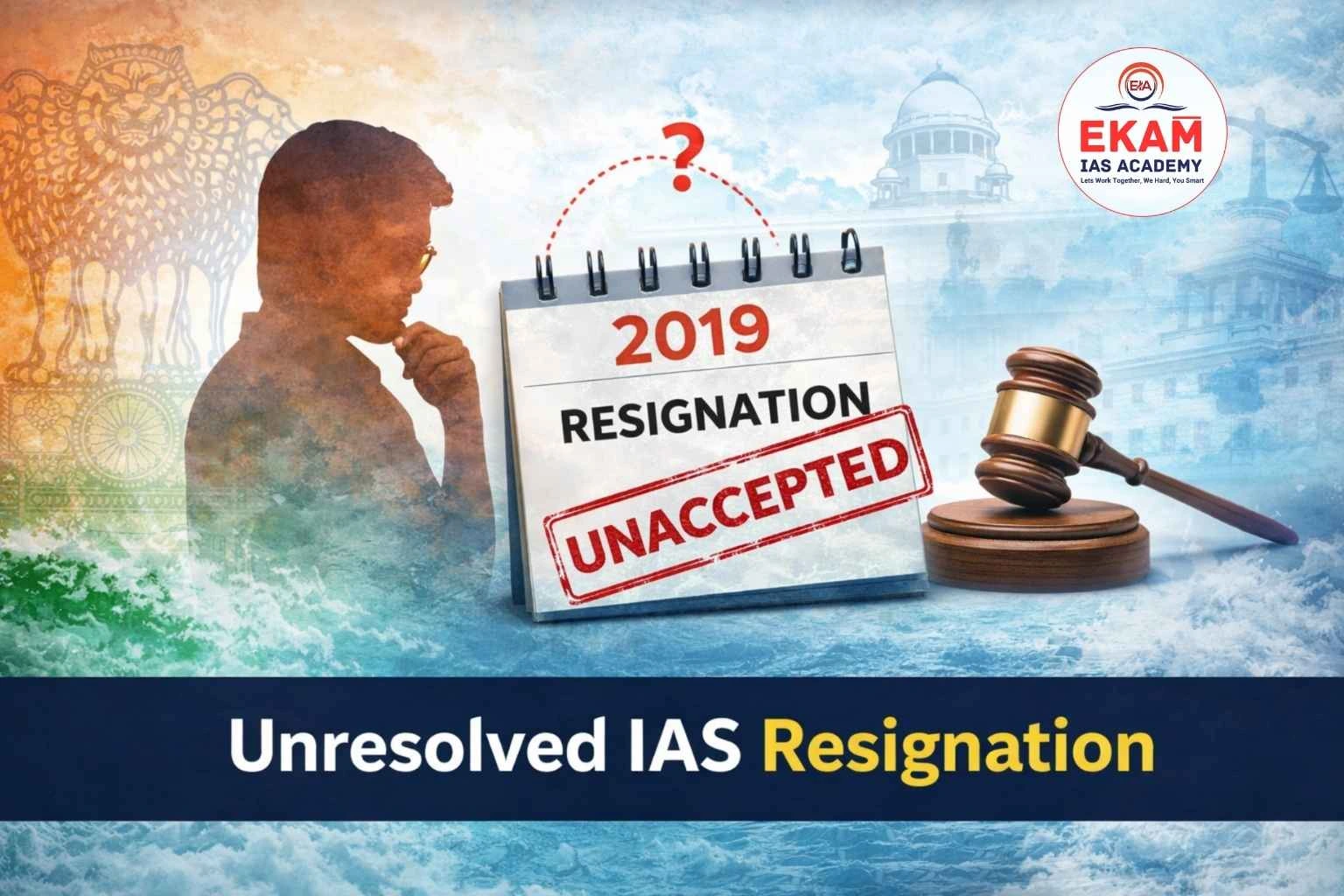
Former IAS officer Kannan Gopinathan’s resignation since 2019 remains unaccepted, delaying his entry into politics and raising concerns over rules, timelines, and neutrality in civil service resignations. Such governance and administrative issues are important for aspirants preparing through IAS coaching in Hyderabad, UPSC online coaching, and other civil services preparation platforms.
Rules on Political Activity
• Conduct Rules: IAS officers cannot join political parties or engage in political activities while in service.
• 2014 Amendment: Rule 3(1) mandates political neutrality and commitment to constitutional values.
• Officers serve the Constitution and public interest, not political ideologies.
Understanding such constitutional provisions is essential for students preparing through UPSC coaching in Hyderabad and Hyderabad IAS coaching institutes, especially for GS Paper 2.
Resignation Process
• Governed by Rule 5(1) & 5(1A) of All India Services (Death-cum-Retirement Benefits) Rules, 1958.
Procedure:
• State cadre officers submit to Chief Secretary.
• Central deputation officers submit to concerned ministry, forwarded to cadre state.
• AGMUT cadre routed via Ministry of Home Affairs.
Final authority:
• IAS: DoPT Minister (Prime Minister).
• IPS: Home Minister.
• IFS: Environment Minister.
These administrative procedures are often covered in IAS coaching and civils coaching in Hyderabad for better understanding of governance mechanisms.
Conditions and Implications
• Resignation must be clear and unconditional.
• Officers lose retirement benefits after resignation.
• Resignation may be delayed/rejected if:
- Pending dues, vigilance cases, or disciplinary proceedings.
- Service bonds not fulfilled (e.g., training/fellowship).
- Officer holds a crucial post requiring replacement.
Such governance-related issues are frequently analysed in UPSC online coaching and structured UPSC coaching in Hyderabad programs.
Administrative Delays
• No Fixed Timeline: Current rules do not prescribe a statutory time limit for acceptance of resignation, leaving scope for prolonged delays.
• Guideline Principle: DoPT circulars state that retaining an unwilling officer is against public interest, hence resignations should normally be accepted promptly.
• Legal Status Issue: Until resignation is formally accepted, the officer continues to be treated as “in service,” which bars them from political participation under All India Services Conduct Rules.
• Governance Concern: Such delays highlight excessive administrative discretion, raising questions about fairness, transparency, and accountability in personnel management.
These issues are important for aspirants studying through IAS coaching in Hyderabad and Hyderabad IAS coaching programs.
Withdrawal of Resignation
• Allowed under Rule 5(1A)(i) if in public interest.
• Must be within 90 days of resignation (2011 amendment).
• Not permitted if resignation was for political activity.
• If resignation not yet accepted, withdrawal is automatic (e.g., Shah Faesal returned in 2022).
Trends
• Since 2010, 31 IAS officers resigned; many for private sector opportunities or politics.
• Reflects changing career preferences among technocrat entrants post CSAT introduction.
Way Forward
• Introduce Fixed Timelines: Establish a statutory time limit (e.g., 90–120 days) for processing resignations to prevent indefinite delays and ensure administrative fairness.
• Enhance Transparency: Mandate public disclosure of resignation status through DoPT portals, improving accountability and reducing scope for arbitrary decisions.
• Codify Clear Grounds for Rejection: Define specific, limited conditions (pending vigilance cases, dues, or bond obligations) under which resignation can be withheld, avoiding misuse of discretion.
• Strengthen Judicial Oversight: Allow officers to appeal to an independent tribunal or High Court if resignation acceptance is unreasonably delayed, ensuring checks on executive power.
Such reforms are often discussed in IAS coaching and civils coaching in Hyderabad, helping aspirants write better UPSC Mains answers.
Conclusion
The case highlights gaps in resignation acceptance timelines and the tension between civil service neutrality and democratic participation. For aspirants preparing through IAS coaching in Hyderabad, UPSC coaching in Hyderabad, and UPSC online coaching, such topics are crucial for understanding governance, administrative reforms, and constitutional principles.
This topic is available in detail on our main website.