

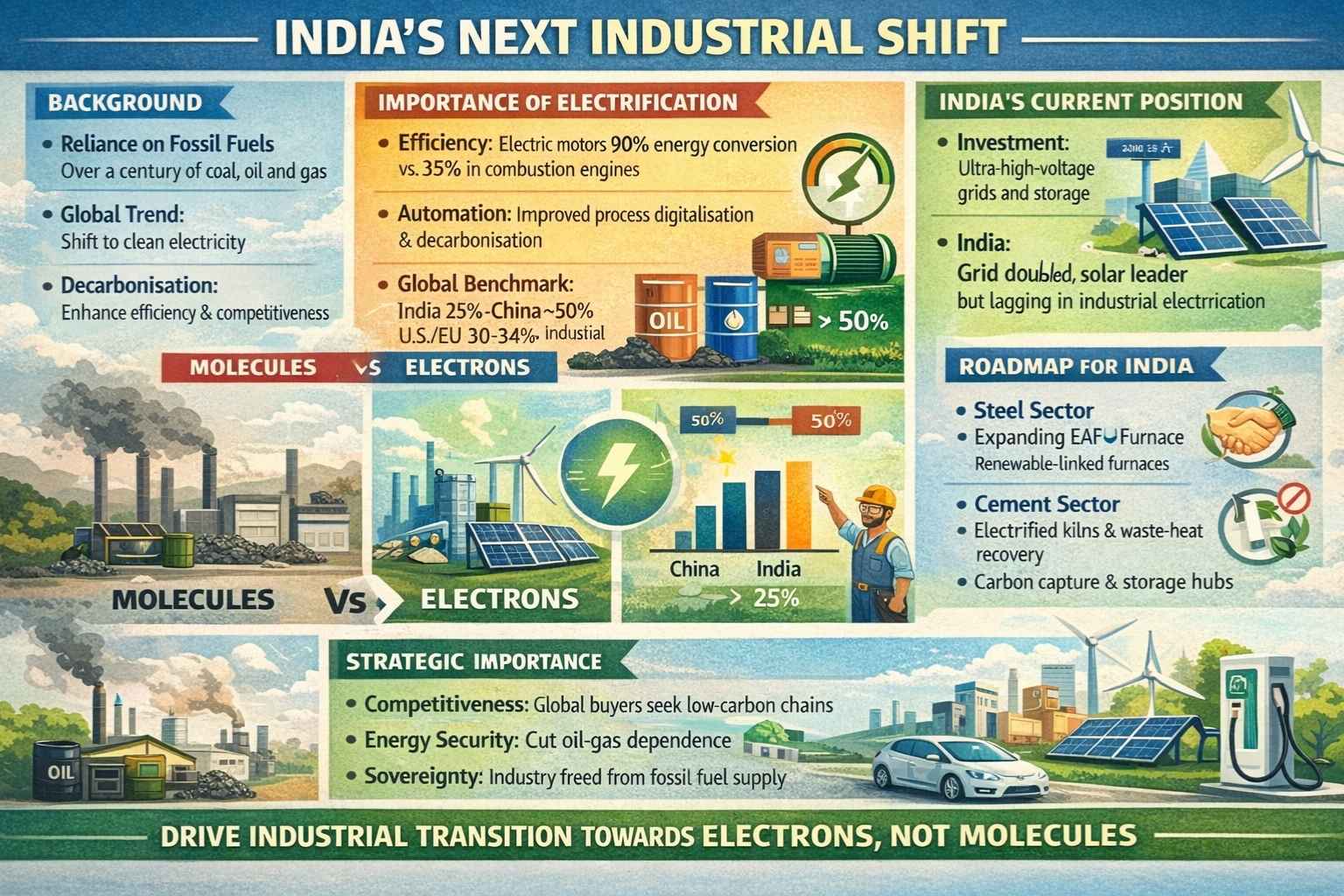
India is preparing for a major industrial transition where electricity (electrons) will increasingly replace fossil fuels (molecules) in factories and industries. This shift is central to discussions on industrial competitiveness, climate policy, and GS Paper III, and is closely followed by aspirants preparing through UPSC coaching in Hyderabad.
Background
- For over a century, industries worldwide have relied on molecules—coal, oil, and gas—for energy.
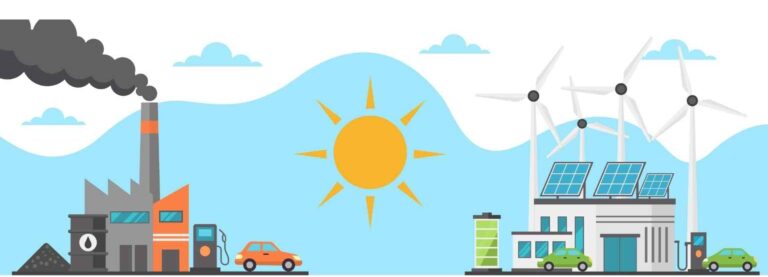
- The emerging global trend is a shift toward electrons, i.e., clean and reliable electricity delivered through modern grids.
- This transition is crucial for emission reduction, efficiency gains, and industrial competitiveness.
- Experts warn that without rapid electrification, India risks losing ground in global supply chains, especially under carbon-sensitive trade regimes like the EU’s Carbon Border Adjustment Mechanism (CBAM).
Importance of Industrial Electrification
- Efficiency Advantage: Electric motors convert nearly 90% of energy into useful work, compared to about 35% in combustion engines.
- Automation & Control: Electrification enables superior process control, digitalisation, and easier decarbonisation.
Global Benchmarks
- China: Nearly 50% of industrial energy from electricity, with a large share from green sources.
- India: Only 25% of industrial energy from electricity; green electrons constitute just 7–8% of final energy.
- U.S. & EU: Around 30–34% economy-wide electrification.
China’s Strategy vs India’s Position
- China’s Approach: Large-scale investments in grids, ultra-high-voltage transmission, and energy storage since 2010.
- India’s Status: Grid capacity has doubled in a decade and solar additions lead globally, but challenges remain—unreliable power quality and policy emphasis on generation rather than industrial electrification.
Roadmap for India
- Steel Sector: Expand Electric Arc Furnace (EAF) share beyond the current 30%, improve scrap collection, and incentivise renewable-linked furnaces.
- Cement Sector: Pilot electrified kilns, scale waste-heat recovery, and prepare CCUS hubs.
- MSMEs: Replace coal boilers and diesel gensets with electric boilers and induction furnaces; enable concessional finance and pooled renewable power purchase agreements.
- Digitalisation: Embed advanced controls in industrial clusters for efficiency gains and transparent carbon data.
Strategic Importance
- Competitiveness: Global buyers increasingly demand low-carbon supply chains; access to green electrons can determine contracts.
- Energy Security: Reduced dependence on imported oil and gas.
- Sovereignty: Industries can locate based on skills and logistics rather than fuel availability—an idea often highlighted in industrial policy modules at Hyderabad IAS coaching.
Conclusion
India must launch a National Mission on Industrial Electrification, expand grid investments, and mandate electrification in new industrial parks. The next industrial revolution will be powered by electrons, not molecules—and decisive action today will determine India’s competitiveness tomorrow, a recurring theme for aspirants using UPSC online coaching.
This topic is available in detail on our main website.