


The Union Government has introduced the Sabka Bima Sabki Raksha (Amendment of Insurance Laws) Bill, 2025 in Parliament to strengthen regulatory oversight and consumer protection in India’s expanding insurance sector. The Bill assumes significance for aspirants studying financial governance reforms through a UPSC Academy in Hyderabad.
Background
- Insurance penetration in India has increased, yet remains below global averages.
- Persistent concerns include mis-selling of policies, non-transparent commissions, and delays in grievance redressal.
- The insurance ecosystem has expanded to include agents, brokers, banks, NBFCs, fintech platforms, web aggregators, and TPAs.
- However, regulatory oversight has lagged behind market expansion, creating supervisory gaps.
- These challenges necessitated stronger legal backing for the regulator.
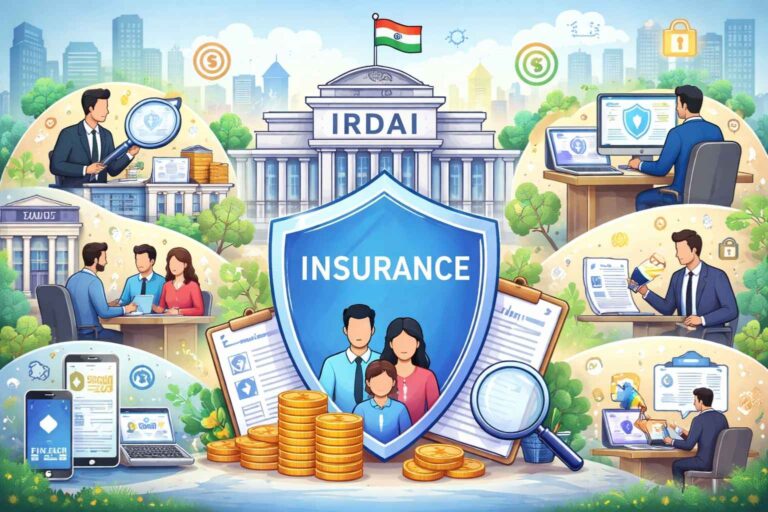
Key Features of the Bill
The Bill amends existing insurance legislations to grant enhanced supervisory and enforcement powers to IRDAI.
- Marks a shift from a rule-compliance model to a proactive, enforcement-oriented regulatory framework
- Applies uniformly to insurance companies and intermediaries, ensuring comprehensive oversight
This transition mirrors reforms in other financial regulators and is often discussed in governance modules at the Best IAS Academy in Hyderabad.
Expanded Search and Inspection Powers
- The IRDAI Chairperson can order search, inspection, and seizure operations.
- These powers may be used when entities are suspected of:
- Hiding information,
- Refusing to submit records, or
- Destroying or tampering with documents.
- Authorized officers may enter premises, seize records, and access locked spaces if required.
- This brings IRDAI’s authority closer to regulators like SEBI, ensuring regulatory parity.
Stronger Enforcement and Penalties
- IRDAI can now order disgorgement of illegal gains earned through:
- Excessive commissions,
- Rebates, or
- Unethical sales practices.
- The regulator may issue binding directions to insurers in the public interest to:
- Protect policyholders,
- Prevent mismanagement, and
- Improve corporate governance.
- Though insurers will have the right to be heard, compliance will be mandatory.
Regulation of Commissions and Intermediaries
- IRDAI will have authority to: Fix commission ceilings, Enforce disclosure norms, and Regulate payment structures.
- This aims to reduce commission-driven mis-selling, especially in digital and fintech-based insurance platforms.
Significance and Current Affairs Linkages
- Strengthens consumer trust and policyholder protection
- Supports national goals such as Insurance for All by 2047 and digital financial inclusion
- Aligns India’s insurance regulation with global best practices
- Complements reforms in banking and capital markets governance
- Reflects India’s shift towards strong financial sector regulation amid rising digital finance risks
These linkages are crucial for GS-II and GS-III answers framed in IAS Coaching in Hyderabad.
Challenges and Way Forward
- Concerns may arise over excessive concentration of powers.
- Safeguards such as due process, transparency, and judicial review are essential.
- Reforms must be supported by consumer awareness, financial literacy, and faster dispute resolution mechanisms.
Conclusion
The Sabka Bima Sabki Raksha Bill, 2025 represents a decisive step towards robust insurance governance in India. By empowering IRDAI with stronger enforcement tools while focusing on consumer protection, the Bill seeks to balance market expansion with regulatory discipline, thereby strengthening India’s overall financial regulatory architecture.
For UPSC aspirants preparing governance and economic reforms through platforms like the UPSC Academy in Hyderabad, the Bill offers a high-value contemporary case study.
This topic is available in detail on our main website.