
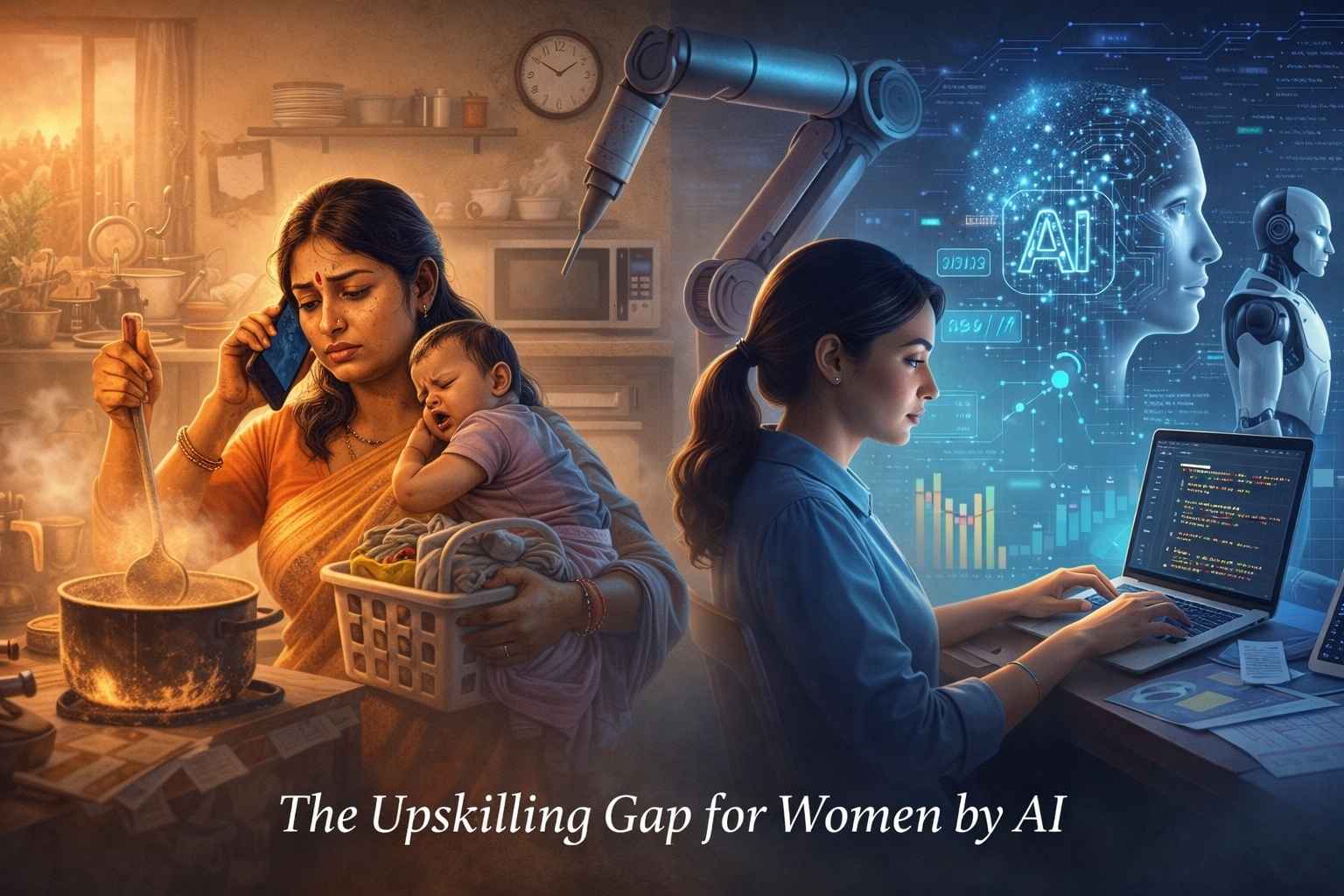
India’s 2024 Time Use Survey highlights that working women spend nearly 10 hours less per week on self-development compared to men. This gap raises serious concerns about women’s ability to adapt to an AI-driven economy where continuous learning and reskilling are essential. The issue is increasingly discussed in social justice and economic development debates by aspirants preparing through UPSC coaching in Hyderabad.
Women’s Work Burden
- Around 40% of Indian women are part of the labour force.
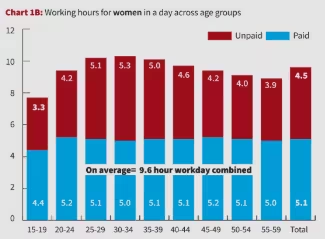
- Women spend 9.6 hours daily on combined paid and unpaid work, compared to men’s 8.6 hours.
- A large share of women’s time is consumed by unpaid caregiving, household chores, and voluntary work.
- During prime working ages (25–39 years), women’s total work hours exceed 70 hours per week, reflecting the “double shift.”
Gender Imbalance in Time Use
- Men devote over 80% of their work hours to paid employment, while women spend nearly half on unpaid tasks.
- Women sleep 2–2.5 hours less per week than men during prime working years.
- Women spend 10–12 hours less per week on self-development activities such as skill-building, learning, and personal well-being.
Economic Impact
- Women contribute only 17% of India’s GDP, not due to lower effort but because unpaid labour remains invisible in national income accounting.
- Household responsibilities are the most cited reason for women remaining outside the formal labour market.
- Rising female workforce participation is often confined to unpaid family labour or low-paid self-employment, limiting economic mobility.
- AI-driven automation risks disproportionately affecting women’s jobs, while algorithm-based performance metrics may penalise caregivers with limited time flexibility—an emerging concern in policy discussions at Hyderabad IAS coaching.
Policy and Structural Solutions
- Redesign workplaces and technology around women’s time constraints.
- Use time-use data to free women’s hours from unpaid work and redirect them to remunerative activities.
- Expand gender budget allocations for time-saving infrastructure: affordable childcare, elder care, piped water, clean energy, and safe transport.
- Provide lifelong, flexible upskilling opportunities tailored to women’s mobility and digital access.
- Scale initiatives like the India AI Mission and AI Careers for Women to strengthen vocational and digital skills.
Conclusion
Women’s invisible labour and time poverty limit their ability to benefit from AI-driven opportunities. Unless policies value and free women’s time while ensuring access to flexible upskilling, India’s vision of Viksit Bharat 2047 will remain incomplete.
This topic is available in detail on our main website.