
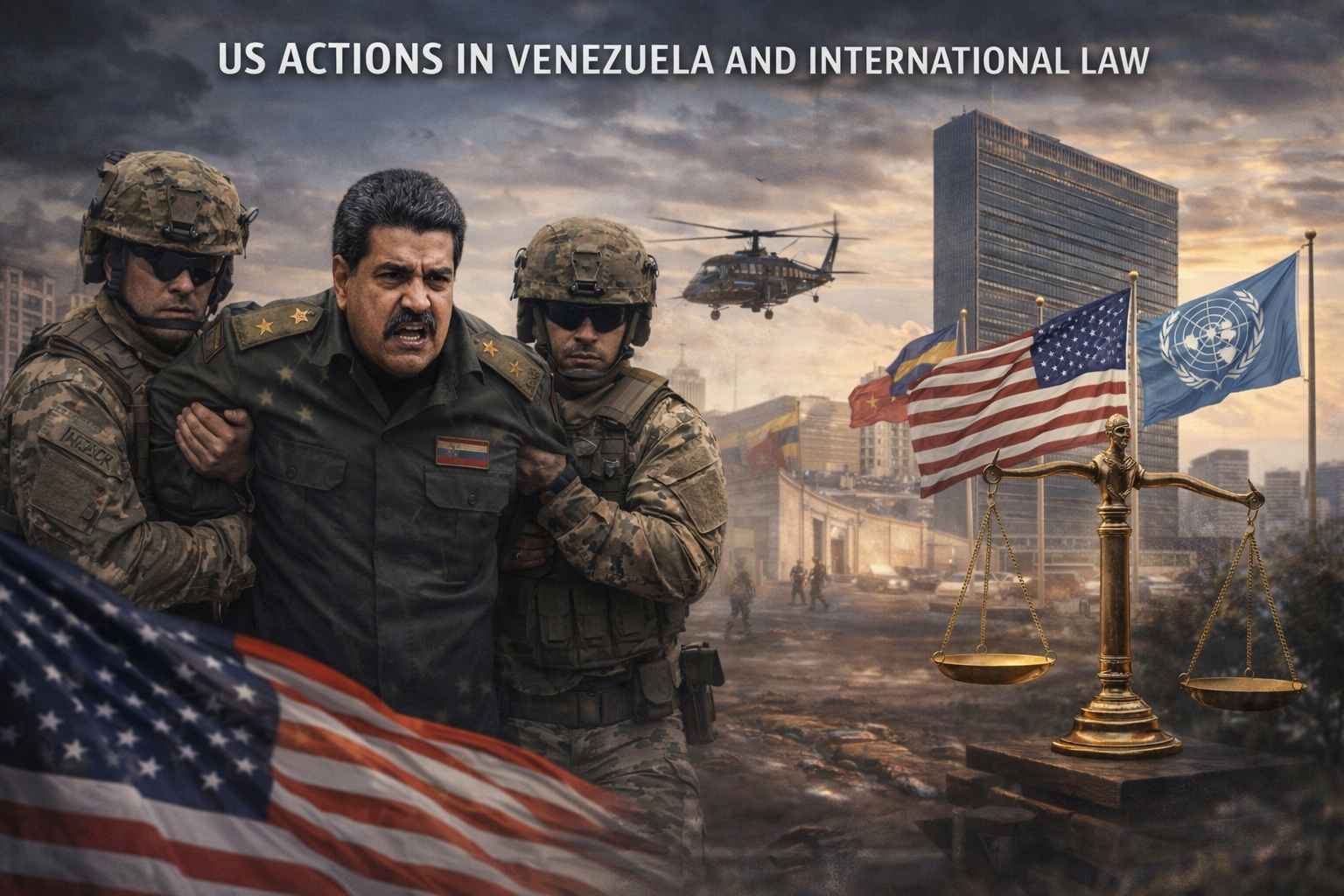
The United States recently carried out military operations in Venezuela, detaining President Nicolás Maduro. These actions have sparked global debate as they are widely seen as violations of international law and state sovereignty—an issue frequently analysed in international relations and polity discussions within UPSC coaching in Hyderabad.
Background:
- The United States carried out attacks on Venezuelan drug boats and took President Nicolás Maduro into custody.
- These actions are being called illegal under international law, no matter what Venezuela’s internal politics are.
- The incident highlights concerns about misuse of military power and the weakening of global legal rules.
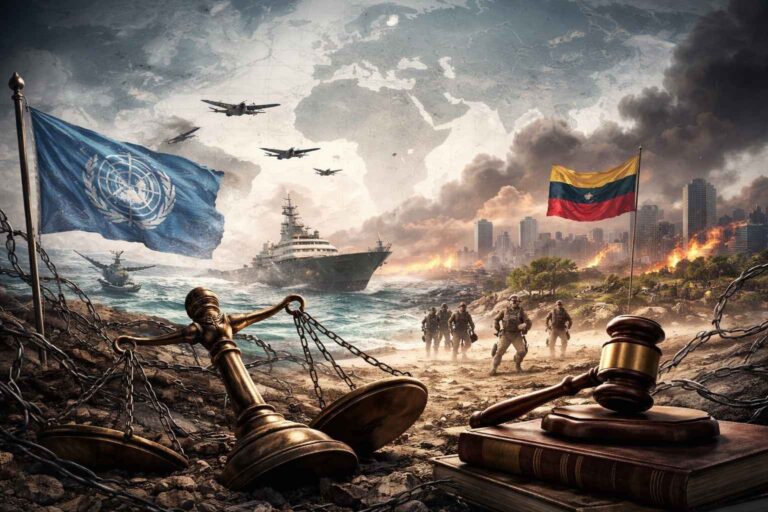
Use of Force under International Law
- UN Charter Article 2(4): Prohibits the threat or use of force in international relations.
- Exceptions: Permitted only in cases of self-defence or with explicit United Nations Security Council authorisation.
- U.S. Justification: Claims of law-enforcement and regional security do not satisfy international legal thresholds.
- Monroe Doctrine Revival: Interpreted as a return to imperialist practices undermining Latin American sovereignty—an analytical angle relevant for GS-II and essay preparation in civils coaching in Hyderabad.
Immunity of Heads of State
- ICJ Precedent (Arrest Warrant Case): Heads of state enjoy personal immunity from foreign courts.
- Maduro’s Status: Regardless of disputed elections, he exercised effective control over Venezuela, making him legally recognised.
- Violation: Forcibly taking custody of a sitting head of state without consent is an internationally wrongful act.
- Dangerous Precedent: Allowing states to deny immunity based on subjective recognition would destabilise international law.
Larger Implications
- Weakening of International Law: Powerful nations increasingly disregard legal norms.
- Domestic Rule of Law Link: Decline in democracy and rule of law at home weakens respect for international law abroad.
- Authoritarian Trends: Both authoritarian and hegemonic states undermine global legal frameworks.
- Need for Collective Action: Democracies must unite to defend international law against violations.
Way Forward
- Strengthen domestic rule of law to reinforce commitment to international legal obligations.
- Reaffirm adherence to UN Charter principles, especially the prohibition on the use of force.
- Build global consensus against unilateral military interventions.
- Promote credible accountability mechanisms for violations, including by powerful states—an important reform discourse in IAS coaching in Hyderabad.
Conclusion
The U.S. operation in Venezuela is not only unlawful but dangerously precedent-setting. If left unchecked, such actions risk dismantling the fragile architecture of international law and emboldening authoritarianism worldwide. Defending sovereignty and legal norms is no longer optional—it is the frontline battle for preserving global order, a core theme for aspirants preparing through UPSC coaching in Hyderabad.
This topic is available in detail on our main website.