
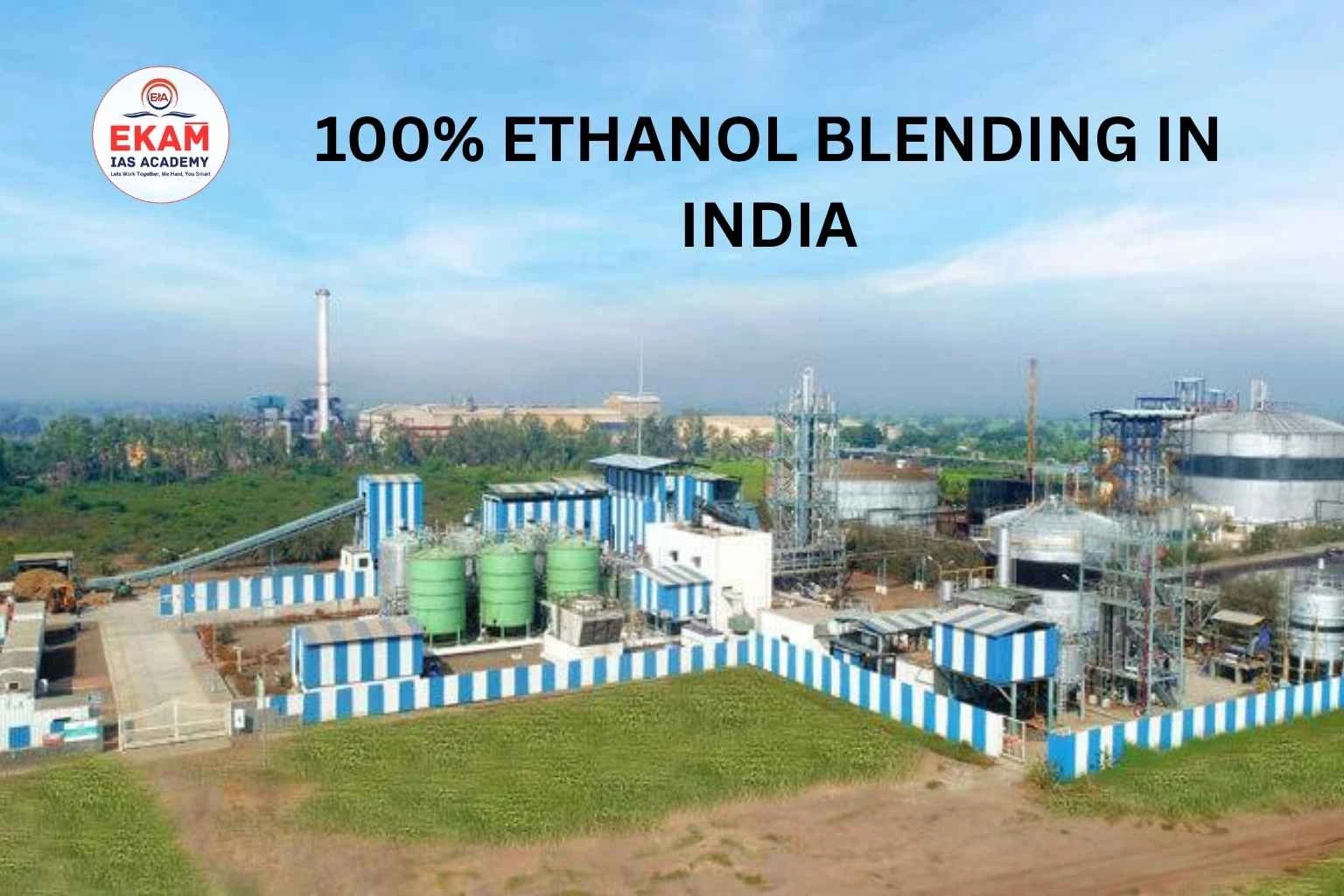
Recently, the Union Road Transport Minister advocated for 100% ethanol blending (E100) as part of India’s push for energy self-reliance and reducing dependence on fossil fuel imports. This topic is important for aspirants preparing through IAS coaching in Hyderabad, UPSC coaching in Hyderabad, and UPSC online coaching.
Understanding Ethanol Blending
• E100 Fuel: Pure ethanol used as fuel; delivers 45–55% less energy per litre compared to petrol.
• Vehicle Compatibility: Most Indian vehicles are designed for E20; higher blends like E85/E100 need flex fuel engines.
• Flex Fuel Vehicles: Require corrosion resistant systems, advanced sensors, and optimised combustion tuning. Brazil has adopted widely; India has limited prototypes (Toyota, Maruti, Hyundai).
Such environmental and energy topics are widely covered in Hyderabad IAS coaching.
Infrastructure & Supply Chain Needs
• Requires new fuel storage, distribution, and retail systems.
• Alignment with domestic manufacturing push is essential.
• Aggressive blending targets raise concerns about vehicle readiness and infrastructure bottlenecks.
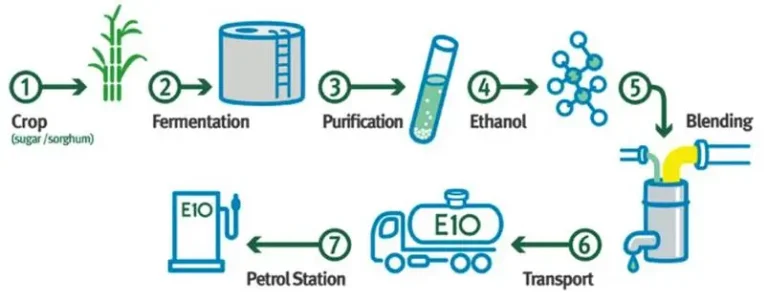
Ethanol Production in India
• Current Source: Primarily from sugarcane (water intensive, grown in stressed regions).
• Sustainability Concerns: Impacts food supply and water use.
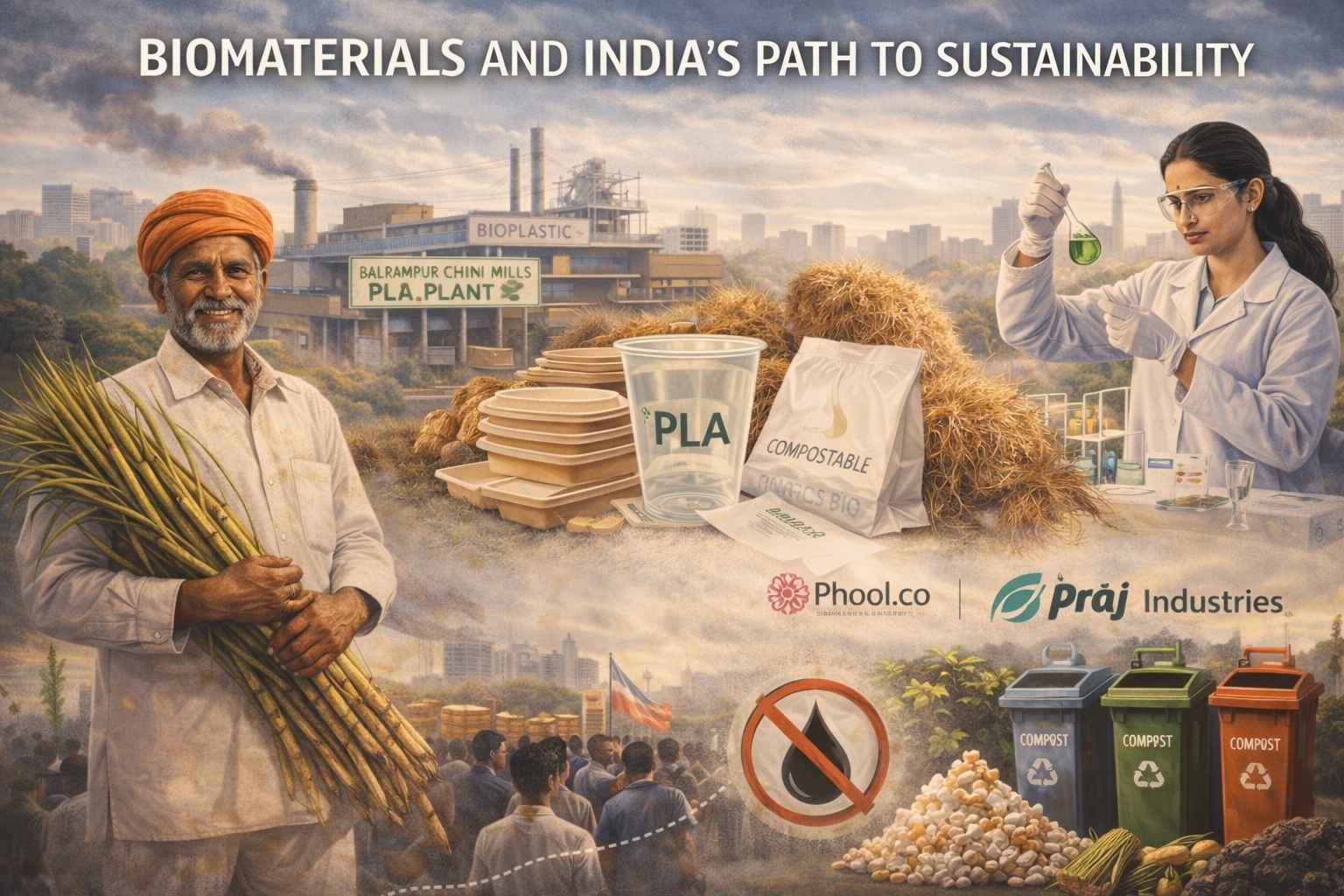
• Second Generation Ethanol (2G): Made from crop residues (e.g., rice straw); reduces stubble burning and pollution. Supported by Indian Oil Corporation and other PSUs.
Cost & Policy Support
• Ethanol production cost is comparable or higher than petrol.
• Requires government pricing support and subsidies.
• Ethanol Blending Programme:
• Launched in 2003.
• Blending rose from ~2% (2014) → E10 (2022).
• E20 rollout from 2023, nationwide by 2025 (ahead of 2030 target).
These economy-environment intersections are important for GS3 and emphasized in IAS coaching and civils coaching in Hyderabad.
Link with CAFE Norms
• CAFE I (2017), II (2022), III (2027): Progressive tightening of emission targets (~30% stricter under CAFE III).
• Indirect Link: CAFE III may push automakers towards higher ethanol blends (E85/E100) to meet emission norms.
• Consumer Concerns: E20 fuel gives 6–7% lower mileage, raising cost worries.
Challenges of 100% Ethanol Blending
• Vehicle Compatibility: Most cars are built for E20 fuel; higher blends like E85/E100 need flex fuel engines with special design.
• Consumer Acceptance: Ethanol gives lower mileage (6–7% less for E20), raising cost concerns for users.
• Infrastructure Gaps: India lacks adequate storage, transport, and distribution systems for high ethanol blends.
• Feedstock Dependence: Ethanol mainly comes from sugarcane, which is water intensive and unsustainable in drought-prone regions.
• High Production Costs: Ethanol is often costlier than petrol; without climate finance or subsidies, adoption is difficult.
Way Forward
• Flex Fuel Vehicles: Promote industry incentives for flex fuel engine production to handle E85/E100 blends.
• Second Generation Ethanol: Expand 2G ethanol plants using crop residues (rice straw, maize stalks) to reduce reliance on sugarcane.
• Policy Integration: Link ethanol blending targets with CAFE III emission norms to push automakers towards cleaner fuels.
• Pricing Support: Provide subsidies and administered pricing to balance consumer costs and encourage adoption.
• Diversified Energy Strategy: Combine ethanol with green hydrogen (National Hydrogen Mission) and renewables for long-term energy security.
Conclusion
India’s push for 100% ethanol blending reflects its energy security goals, but success depends on vehicle readiness, sustainable feedstocks, infrastructure upgrades, and consumer acceptance. For aspirants using UPSC online coaching and IAS coaching in Hyderabad, this topic is highly relevant for GS3 Environment and Economy.
This topic is available in detail on our main website.