

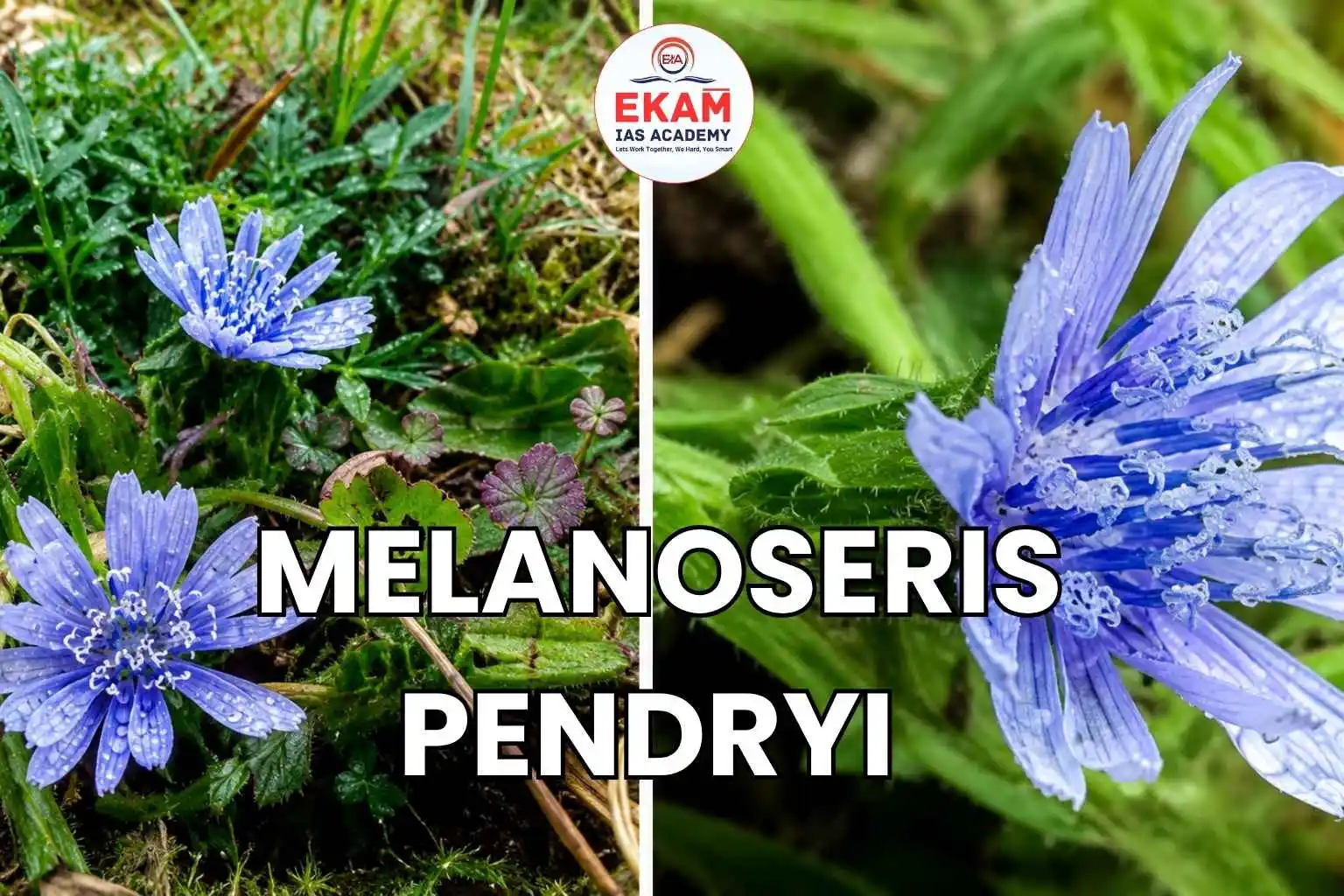
A team of Indian botanists recently discovered a new flowering plant species named Melanoseris pendryi in the Sikkim Himalayas at altitudes above 4,000 m. This topic is important for aspirants preparing through IAS coaching in Hyderabad, UPSC coaching in Hyderabad, and UPSC online coaching.
Taxonomic Classification
• Genus: Melanoseris
• Family: Asteraceae (commonly known as the daisy family)
• Native Range: Extends from Iran to southern China and Indo-China, reaching Java in Southeast Asia.
• Habitat in India: Alpine grasslands of northern Sikkim, near the Tibetan Plateau.
Distinctive Features
• Petal Structure: Lavender-purple petals (ligules) covered with long white hairs on their undersides.
• Growth Pattern: Grows close to the ground among cushion-like shrubs to resist strong winds and cold.
• Root System: Possesses a fleshy, branching root that stores nutrients and moisture, enabling survival in harsh alpine conditions.
• Reproductive Traits: Shorter floral tube and stout seed structure distinguish it from other Melanoseris species.
Ecological Significance
• Found in fragile alpine zones where vegetation is sparse and highly adapted to low temperatures.
• Acts as an indicator of climate change impacts on Himalayan flora.
• Highlights the rich biodiversity of the Eastern Himalayas, one of the world’s biodiversity hotspots.
• Botanists propose classifying it as Critically Endangered due to threats from tourism, grazing, and habitat degradation.
Threats
• Climate change altering alpine temperature and moisture conditions.
• Overgrazing and habitat disturbance from tourism activities.
• Fragile mountain ecosystems vulnerable to ecological imbalance.
• Limited distribution makes the species highly sensitive to environmental changes.
Conservation Importance
• Strengthens the need for biodiversity conservation in Himalayan ecosystems.
• Supports India’s commitments under the Convention on Biological Diversity (CBD).
• Highlights the role of scientific exploration and taxonomy in environmental protection.
• Encourages sustainable eco-tourism and habitat preservation measures.
Conclusion
The discovery of Melanoseris pendryi underscores India’s rich botanical diversity and the importance of conserving fragile Himalayan ecosystems. Protecting such rare alpine species is essential for maintaining ecological balance, biodiversity, and genetic richness. Aspirants preparing through IAS coaching and civils coaching in Hyderabad should understand its relevance in biodiversity conservation, climate change, and environmental governance.
This topic is available in detail on our main website.