

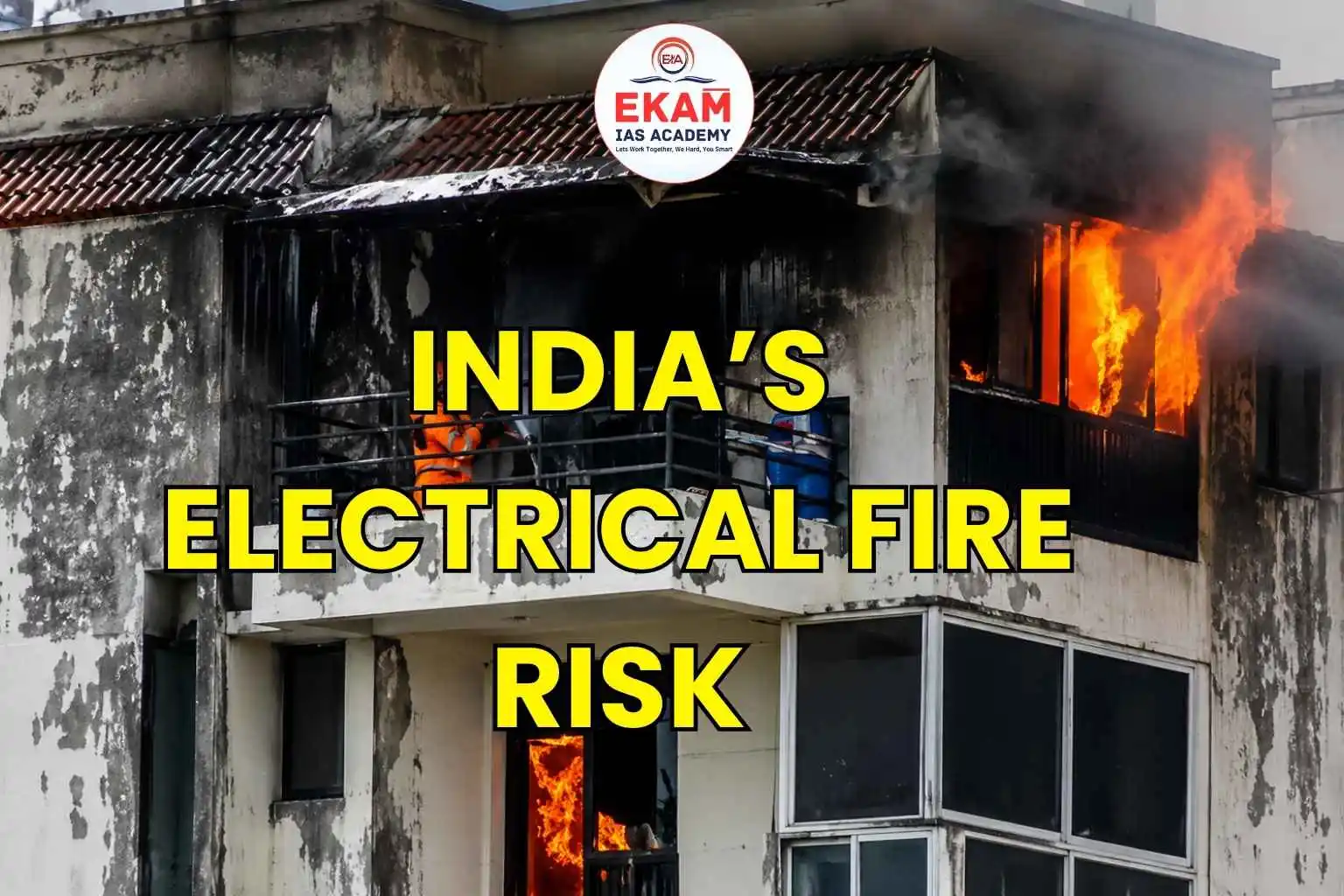
Recently, the tragic Vivek Vihar fire in East Delhi (May 2026), which killed nine people, highlighted systemic weaknesses in electrical infrastructure and the widespread use of high-load appliances creating hidden fire hazards. This topic is important for aspirants preparing through IAS coaching in Hyderabad, UPSC coaching in Hyderabad, and UPSC online coaching.
Why Older Homes Face Higher Risks
• Outdated Wiring: Many homes built decades ago were designed for minimal loads such as fans and lights.
• Mismatch with Modern Demand: Today’s appliances — ACs, induction cooktops, and geysers — overload old circuits.
• Poor Maintenance: Loose joints, corroded wires, and counterfeit components increase ignition risks.
• Global Parallels: Europe also faces ageing installation risks, but India’s challenge is intensified by rapid urbanisation and weak enforcement.
Air Conditioners as High-Risk Electrical Appliances
• High Start-Up Load: AC compressors draw 6–8 times their normal running current during startup, stressing circuits and causing overheating if wiring is inadequate.
• Shared Circuit Overload: Many households connect ACs with other heavy appliances like geysers and washing machines on the same circuit, increasing fire risks.
• Harmonic Distortion: Inverter ACs consume power in irregular pulses, creating harmonics that overload neutral wires.
• Silent Overheating: Harmonics combined with loose joints or damaged insulation create hidden hotspots that can ignite electrical fires.
Major Causes of Electrical Fires
• Short circuits and overloaded circuits.
• Loose electrical connections creating hidden hotspots.
• Counterfeit electrical components with poor insulation quality.
• Arc faults and ground faults.
• Ageing electrical equipment and deteriorated wiring systems.
Global Lessons
• Japan & South Korea: Mandatory periodic inspections reduced electrical fires by nearly 90%.
• EU Directive (2024): Recognised EV chargers, solar panels, and batteries as emerging electrical fire risks.
• USA: Arc Fault Circuit Interrupters (AFCIs) have been mandatory since 1999.
Electrical Safety Framework in India
• National Electrical Code (2023) and National Building Code (2016) provide norms for electrical installations and fire safety.
• Bureau of Indian Standards (BIS) mandates contractor certification and inspection approval before energising new connections.
• Enforcement Gaps: Protective devices such as AFCIs and Residual Current Devices (RCDs) are still not mandatory in most homes.
• Fire Forensics Deficiency: India lacks trained electrical forensic engineers, often leading to superficial “short circuit” explanations instead of scientific investigations.
Policy Strengthening Measures
• Harmonic Compliance Standards: Introduce mandatory power quality monitoring for hospitals, EV charging stations, and data centres.
• Periodic Electrical Inspections: Make regular electrical audits compulsory after major load additions such as rooftop solar or battery systems.
• Integrated National Dataset: Develop a centralised database combining fire department, BIS, and crime record data for better risk mapping.
• Public Awareness and Training: Promote safe wiring practices, appliance load management, and regular maintenance awareness campaigns.
Significance
• Strengthens disaster preparedness and urban safety.
• Supports resilient infrastructure in rapidly urbanising cities.
• Reduces economic losses and fatalities from preventable electrical fires.
• Highlights the importance of modern electrical standards in smart city development.
Conclusion
Ensuring compliance with updated electrical codes, expanding forensic capacity, and mandating advanced protective devices are essential to reducing electrical fire risks in India. Aspirants preparing through IAS coaching and civils coaching in Hyderabad should understand its relevance in disaster management, urban governance, and infrastructure safety.
This topic is available in detail on our main website.