
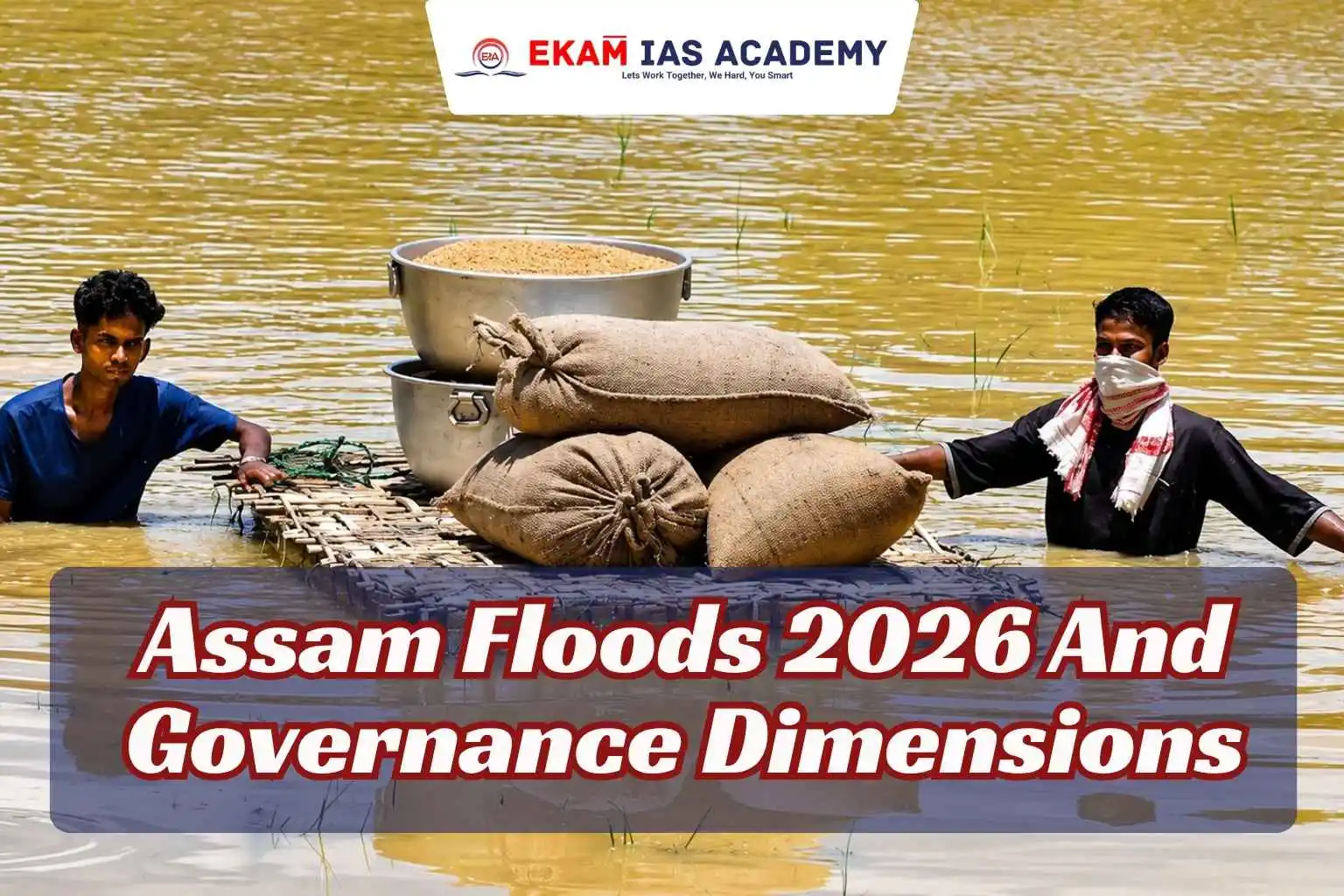
Assam is facing unprecedented floods in 2026, with over 66 deaths in a week and millions displaced across 31 districts. This topic is important for aspirants preparing for GS3 Environment and disaster management through upsc online coaching.
Background
- Assam’s geography, with the Brahmaputra and Barak river basins, makes it naturally flood-prone.
- Annual monsoon floods are common, but this year’s intensity is linked to extreme weather events.
- Upper Assam districts like Sivasagar, Charaideo, and Jorhat are among the worst affected.
Causes of Flooding
- Climate Change: Rising frequency of high-intensity rainfall and cloudbursts.
- Geography: Brahmaputra’s braided channels and low-lying floodplains increase vulnerability.
- Deforestation & Encroachment: Human activity reduces natural flood absorption capacity.
- Dam Management Issues: Sudden water releases from upstream reservoirs worsen flooding.
- Example: The IPCC Report (2023) noted that South Asia will face more extreme rainfall events due to global warming.
Impact
- Humanitarian Crisis: Over 7 lakh people displaced, loss of lives and livelihoods.
- Agriculture Damage: Crops submerged, affecting food security and rural economy.
- Infrastructure Loss: Roads, bridges, and houses destroyed, slowing economic recovery.
- Health Risks: Waterborne diseases and lack of sanitation in relief camps.
Government Response
- Rescue Operations: NDRF, SDRF, and Army deployed for evacuation.
- Relief Measures: Temporary shelters, food distribution, and medical aid.
- Policy Initiatives: Assam State Disaster Management Authority (ASDMA) coordinating efforts.
- Example: Similar large-scale relief was mobilized during the Kerala floods (2018).
Broader Dimensions
- Environmental: Need for afforestation and wetland conservation.
- Technological: Use of satellite data and flood forecasting models for early warning.
- Governance: Integration of flood management with climate adaptation policies.
- Global Comparison: Countries like Japan use advanced flood control infrastructure (levees, floodways) to minimize damage.
Way Forward
- Strengthen embankments and river basin management.
- Promote community-based disaster preparedness.
- Integrate flood control with National Climate Action Plan.
- Enhance regional cooperation for upstream water management.
Conclusion
Assam’s floods highlight that climate change, poor planning, and fragile geography together demand urgent reforms in disaster management and sustainable development.