

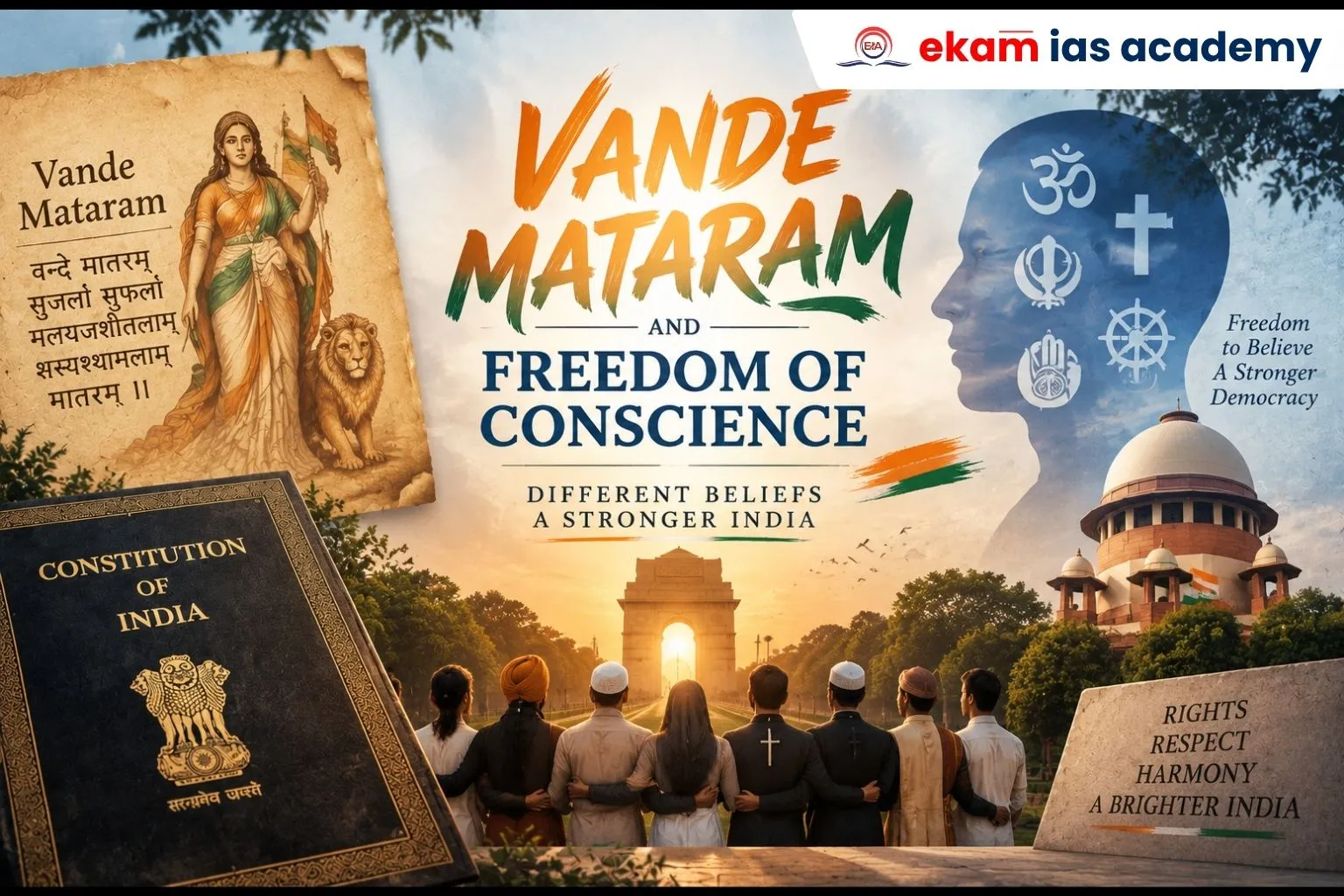
Recently, the Supreme Court asked the Centre to clarify its position on compulsory singing of Vande Mataram and Freedom of Conscience, and protection of religious freedom. The issue has raised a constitutional debate on Vande Mataram Freedom of Conscience, especially regarding Vande Mataram and Article 25 of the Indian Constitution.
Background
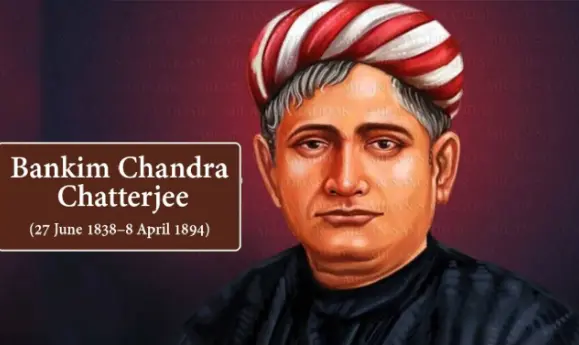
- Written by Bankim Chandra Chattopadhyay, Vande Mataram is recognised as India’s National Song of India Vande Mataram.
- The case focuses on whether the government can make singing the National Song compulsory at public functions.
- It also examines whether a person who respectfully refuses to sing can be punished under law.
- The Supreme Court is examining the balance between respect for national symbols and fundamental rights, especially Freedom of Conscience in India and religious freedom.
- The issue involves questions related to Vande Mataram and Fundamental Rights, individual liberty and constitutional limitations.
Constitutional Issues
- Article 25 Indian Constitution: Protects freedom of conscience and the freedom to profess, practise and propagate religion, subject to constitutional limitations.
- Freedom of Religion Article 25 ensures that individuals have the right to follow their beliefs while maintaining public order, morality and health.
- Article 26: Protects certain rights of religious denominations.
- Secularism: The State must maintain constitutional neutrality while regulating public conduct.
- Individual liberty: National symbols can command respect, but the question before the Court concerns whether respect can be enforced through criminal penalties.
- The debate on Vande Mataram Constitutional Debate highlights the relationship between national identity and constitutional freedoms.
Bijoe Emmanuel Case, 1986
- The Supreme Court protected three students who did not sing the National Anthem because their religious beliefs did not allow them to do so.
- The Court held that remaining silent respectfully is not the same as insulting the National Anthem.
- The judgment highlighted the importance of freedom of religion, freedom of conscience and respect for individual beliefs.
- The case remains an important reference for Freedom of Conscience UPSC, Article 25 UPSC and Fundamental Rights UPSC topics.
Broader Significance
- The case raises the constitutional balance between national unity and individual freedom.
- It also highlights the difference between honouring a national symbol and compelling personal expression.
- The existing National Honour law specifically penalises intentional acts such as preventing the singing of the National Anthem or causing disturbance during it.
- The discussion on Vande Mataram and Religious Freedom reflects wider constitutional questions regarding individual rights.
HONOURING NATIONAL SYMBOLS AND DPSP
- Article 51A(a): It is a Fundamental Duty of every citizen to respect the National Flag and National Anthem.
- Article 49: The State has a duty to protect national monuments and places of historical or artistic importance.
- Article 51: The State should promote international peace, respect for international law and peaceful settlement of disputes.
Respect for national symbols is encouraged through Fundamental Duties, while Fundamental Rights protect individual freedom of conscience and religion.
The topic of Vande Mataram UPSC and Indian Polity UPSC is important for understanding the balance between constitutional values, Fundamental Rights and civic duties.
Conclusion
A constitutional democracy can promote respect for national symbols while protecting freedom of conscience, religious liberty and peaceful non-participation. The debate over Vande Mataram and Freedom of Conscience demonstrates the importance of maintaining harmony between national values and constitutional freedoms.