

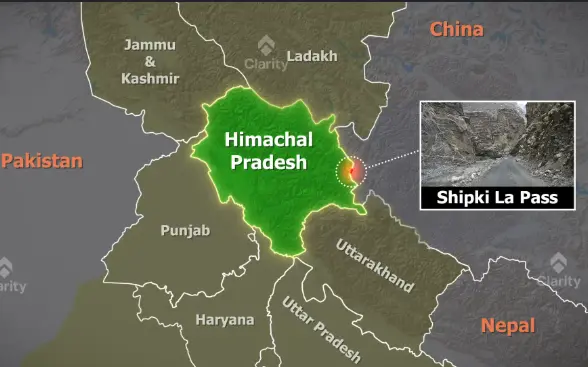
Cross-border trade between India and China through Shipki La Pass in Himachal Pradesh has resumed after a gap of six years, reviving an ancient Himalayan trade route and creating new economic opportunities for border communities. The development highlights the role of border trade in strengthening regional connectivity and confidence-building measures between neighbouring countries. This topic is important for aspirants preparing for GS2 International Relations through upsc coaching in hyderabad.
Shipki La Trade
- Shipki La Pass in Himachal Pradesh’s Kinnaur district connects India with Tibet.
- Historically part of the Silk Route, facilitating barter trade of wool, salt, and agricultural goods.
- Trade was suspended for six years due to security and administrative concerns.
- The resumption reflects India’s effort to balance border development with diplomatic engagement.
Key Developments in 2026
- Flagging off traders: Revenue & Horticulture Minister Jagat Singh Negi inaugurated the trade, presenting ceremonial Khataks to 16 traders.
- Barter system: Exchange of goods permitted for 72 hours in Tibet.
- Trade mart inaugurated: Chhuppan Trade Mart built at ₹1.70 crore to facilitate transactions.
- Goods permitted: 72 items from India, 30 items from Tibet side.
- Regulatory compliance: Traders instructed to follow Union Commerce Ministry’s import‑export rules.
Economic & Social Significance
- Boost to border economy: Enhances livelihood opportunities for Kinnaur’s local communities.
- Employment generation: Creates self‑employment avenues for youth in remote areas.
- Cultural revival: Strengthens traditional ties through ceremonial exchanges and barter practices.
- Infrastructure push: State government focusing on roads, communication, and amenities in border villages.
Challenges
- Security concerns: Border tensions may disrupt continuity.
- Limited scope of goods: Traders seek expansion beyond current lists.
- Dependence on barter system: May restrict modern trade practices.
- Need for transparency: Strict adherence to customs and trade regulations essential.
Way Forward
- Expand trade basket: Include more agricultural and handicraft products.
- Strengthen border infrastructure: Roads, digital connectivity, and logistics hubs.
- Community empowerment: Skill training and cooperative societies for traders.
- Diplomatic engagement: Use trade as a confidence‑building measure with China.
- Sustainable development: Ensure ecological balance in fragile Himalayan terrain.
Conclusion
Resumption of Shipki La trade is a vital step in reviving ancient economic links, empowering border communities, and balancing India’s regional diplomacy with China.