

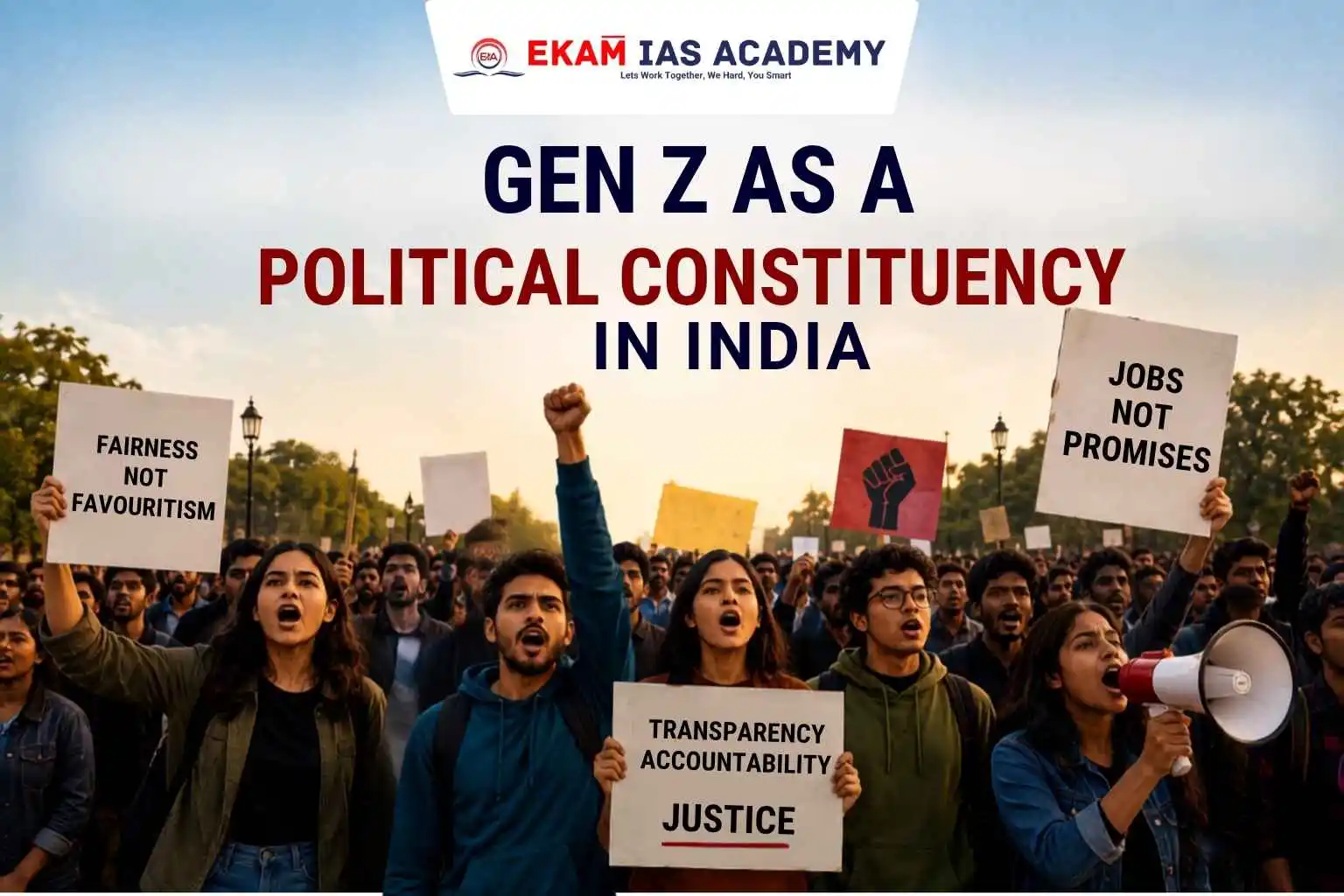
Political strategist Naresh Arora has highlighted that Gen Z represents India’s first political constituency shaped more by mindset and issues rather than caste, religion, or fixed ideology. The recent youth participation in movements like the Jantar Mantar protests reflects a shift towards accountability, fairness, and issue-based political engagement. This topic is important for aspirants preparing for GS1 Society and Indian Polity through upsc coaching in hyderabad.
Gen Z’s Distinctive Political Behaviour
- Mindset over identity: Unlike earlier generations shaped by caste or religion, Gen Z rallies around issues and values.
- Fluid support: They may back a cause today and oppose the same party tomorrow, without seeing contradiction.
- Digital expectations: Politics is expected to function with the responsiveness of a digital platform.
- Information consumption: Gen Z relies on social media, short videos, and peer networks rather than traditional party propaganda.
Lessons for Political Parties
- Beyond first‑time voters: Treating Gen Z only as new voters is a mistake; they are issue‑driven and demand accountability.
- Leaderless mobilisation: The protests were decentralised, allowing participants to rally around causes rather than organisations.
- Symbolic movements: The rise of the Cockroach Janta Party (CJP) showed that frustration can crystallise into symbolic platforms, even without strong organisational structures.
- Moral framing: At 20, corruption is seen as a moral failure, not just administrative inefficiency.
Implications for Governance
- Trust deficit: The protests were not only about exam leaks but about institutional credibility.
- Government caution: Must avoid assuming the anger is limited to one examination; it reflects broader concerns about fairness.
- Opposition caution: Public anger is not an automatic electoral dividend; Gen Z tests the entire political class.
- Reward fairness: The party that convinces youth that hard work leads to fair rewards will gain their trust.
Comparative Perspective
- Global parallels: Similar youth‑driven movements in Hong Kong, Chile, and the US show Gen Z’s role in reshaping democratic participation.
- Indian context: Echoes earlier youth mobilisations like the JP Movement (1970s) and Anna Hazare’s anti‑corruption protests (2011), but with stronger digital influence.
- Policy response: Proposals like a National Youth Commission Bill highlight attempts to institutionalise youth voices.
Way Forward
- Engage youth directly: Create participatory platforms for policy dialogue.
- Transparent governance: Ensure accountability in exams, jobs, and institutions.
- Digital outreach: Use social media responsibly to communicate policies.
- Issue‑based politics: Focus on education, employment, climate change, and corruption rather than identity politics.
Conclusion
Gen Z is redefining Indian politics as a constituency of mindset, parties that ignore their demand for fairness and responsiveness risk losing the trust of an entire generation.



One thought on “Gen Z As A Political Constituency In India”