
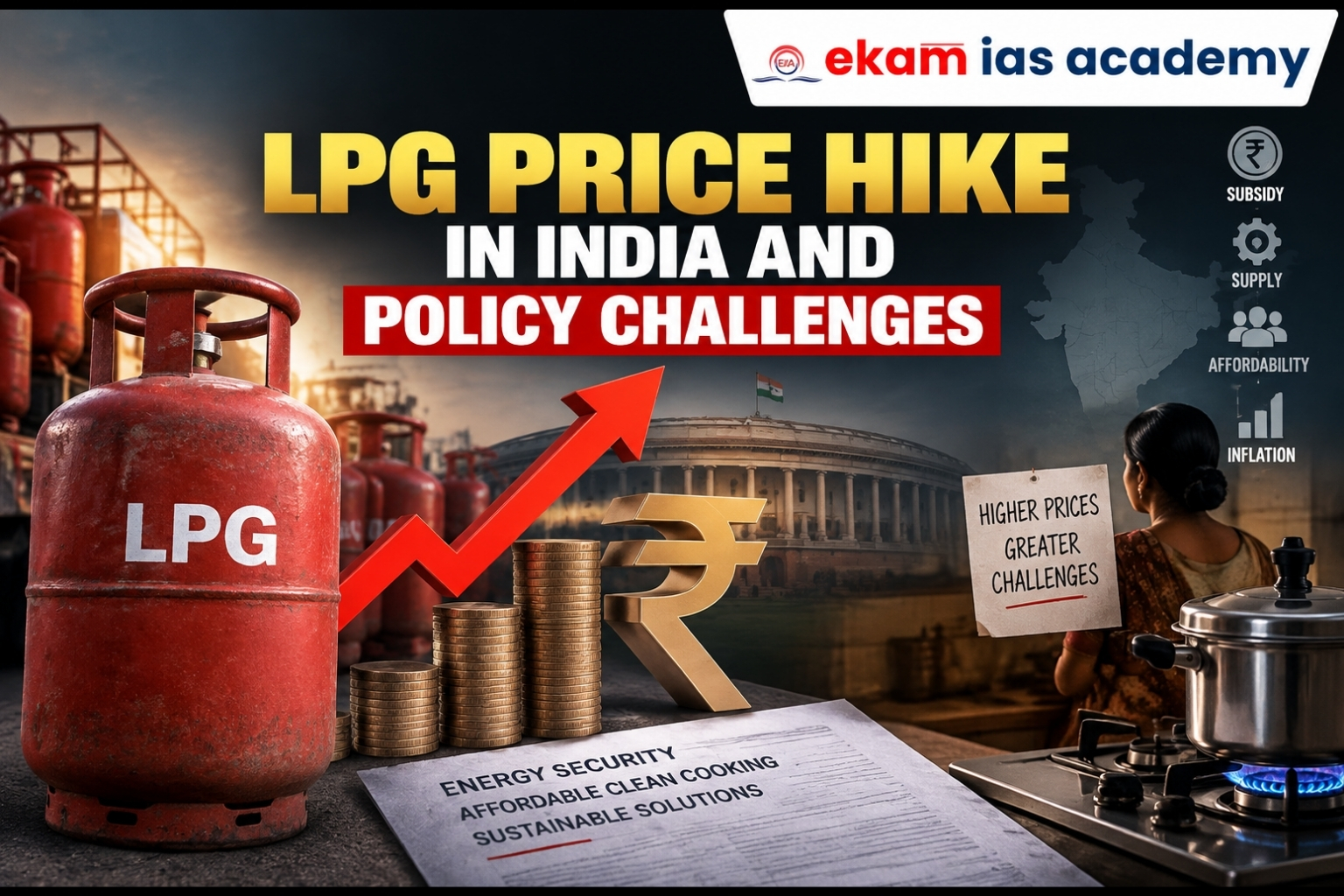
On September 1, 2026, oil-marketing companies (OMCs) raised the price of the commercial LPG cylinder due to under-recoveries in the domestic segment. The LPG Price Hike in India has renewed debates around LPG Price Hike India, affordability, subsidy management, and long-term energy policy reforms. The issue highlights challenges related to LPG Prices in India, fiscal burden, and balancing consumer welfare with market realities.
What Prompted the Hike?
- Under-Recoveries: OMCs incur losses when selling LPG below cost. In June 2026, under-recoveries were over ₹700 per cylinder, falling to ₹188 in August but still significant.
- Cross-Subsidisation: Commercial LPG hikes help offset losses in the domestic segment, which accounts for 90.4% of consumption.
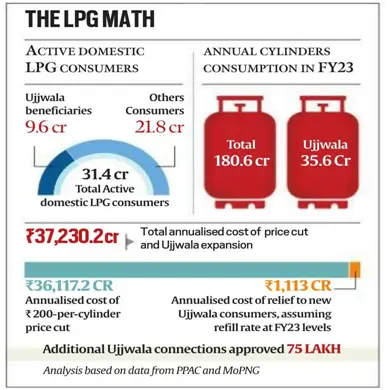
- Ujjwala Subsidy: About 10.6 crore beneficiaries receive ₹300 subsidy per cylinder, further increasing fiscal pressure.
- Rising LPG Subsidy in India requirements have created challenges for maintaining affordability while controlling government expenditure.
- The balance between subsidy support and market pricing remains central to LPG Subsidy Policy India.
Supply Situation
- Imports Decline: POL imports fell by 45.1% between April–July 2026 due to reduced LPG inflows.
- Domestic Production: OMCs ramped up daily bottled LPG output from 34,000 MT to 55,000 MT.
- Target Setting: Government directive fixed a daily production target of 63,810 MT to meet demand.
- Increasing LPG Import Dependence India creates vulnerability to global supply disruptions and international price fluctuations.
- Changes in imports and supply availability directly influence Domestic LPG Price India trends.
Wider Impact
- Commercial Sector: Restaurants and hospitality see marginal cost increases, though concerns persist about future hikes.
- Industrial Use: Industries like glass-making rely on bottled LPG but are transitioning to piped natural gas (PNG) for stability.
- Festive Season Demand: Elevated demand during festivals could amplify price pressures.
- Inflationary Concerns: Though limited in immediate effect, repeated hikes risk contributing to input-cost inflation.
- Continuous increases may affect LPG Price and Inflation India, especially through transportation, food services, and household expenditure channels.
- Rising costs also raise concerns regarding LPG Price Rise and Household Impact.
Way Forward
- Balancing Subsidies: Government must manage fiscal burden of Ujjwala subsidies while ensuring affordability.
- Diversification: Expanding PNG networks and promoting electric cooking can reduce LPG dependence.
- Strategic Reserves: Enhancing cavern storage to cushion against import volatility.
- Transparent Pricing: Linking LPG prices to global benchmarks with clear subsidy mechanisms.
- Addressing LPG Affordability in India requires a balance between consumer protection, fiscal sustainability, and energy security.
- Effective LPG Policy Challenges India solutions require reforms in pricing, supply diversification, and subsidy targeting.
Conclusion
While commercial hikes offset domestic losses, sustainable solutions lie in diversifying energy sources, strengthening reserves, and balancing subsidies with fiscal prudence. Without long-term reforms, India risks recurring cycles of price volatility and consumer distress.
The issue of LPG Price Hike 2026, LPG Crisis India, and LPG Price Hike UPSC is important under GS Paper 2 themes related to governance, welfare policies, energy security, inflation management, and public policy challenges.