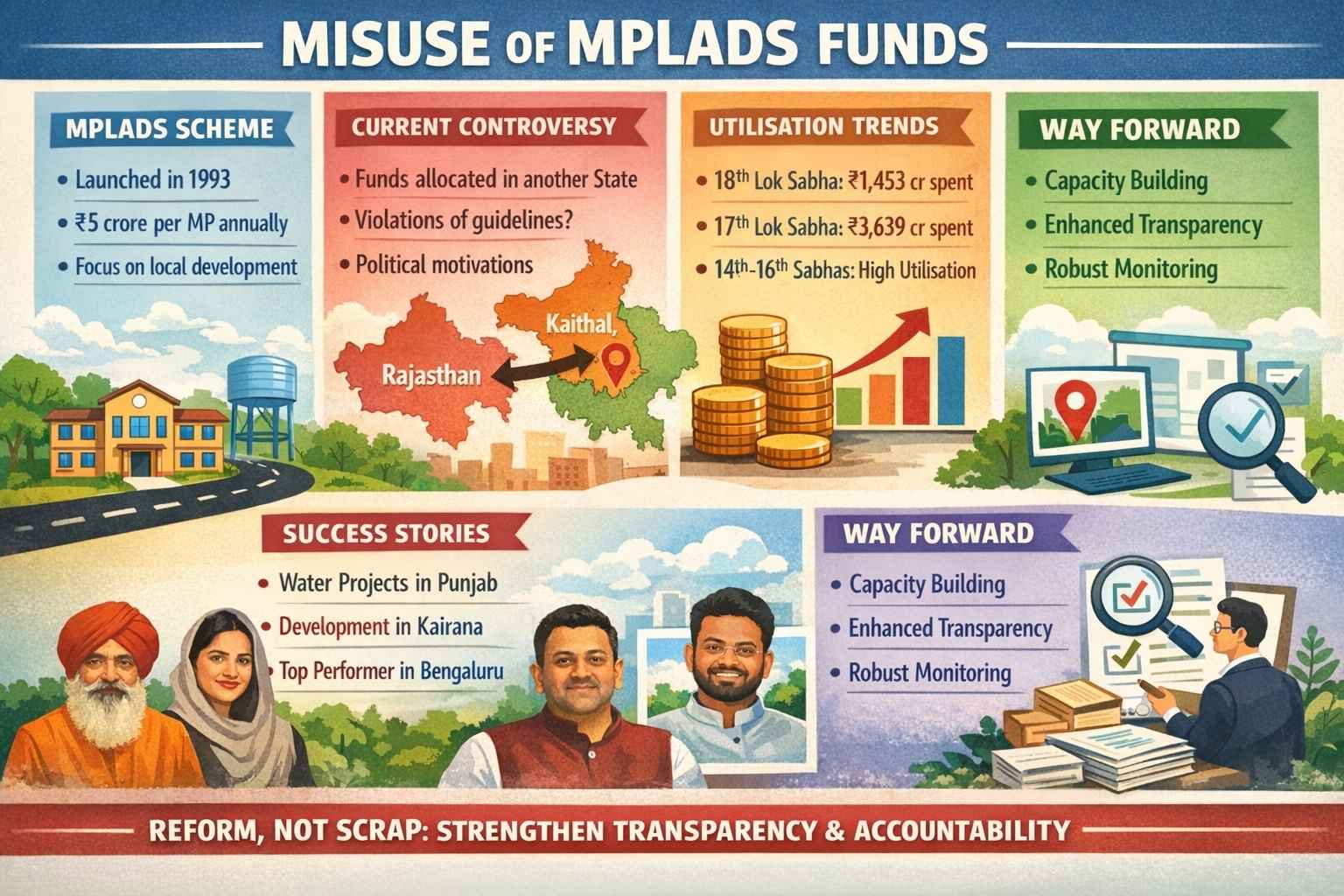

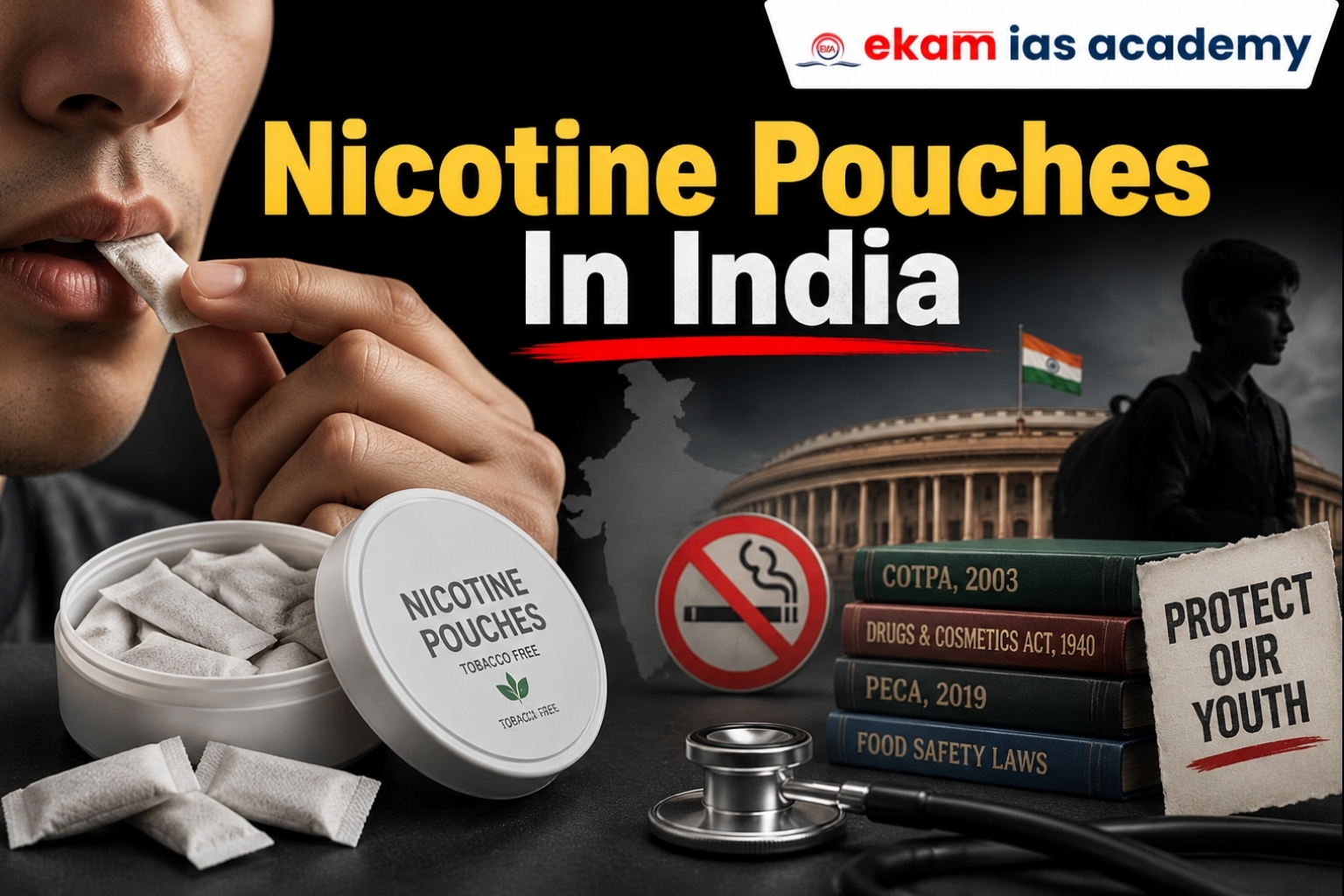
A recent ICMR study (2026) found Nicotine Pouches in India entering Indian cities through online platforms and hookah shops, raising concerns after the WHO warning about their health risks. The growing availability of Nicotine Pouches India has created debates around Nicotine Pouch Regulation India, public health protection, and tobacco control policies. Yet, India lacks clarity on which law governs these products.
What are Nicotine Pouches?
- Small, tobacco-free sachets containing nicotine, flavourings, and plant fibres.
- Placed between lip and gum, allowing nicotine absorption without smoke or vapour.
- Marketed as alternatives to cigarettes and vapes.
- Oral Nicotine Pouches India are increasingly promoted as smoke-free nicotine products, creating concerns regarding their accessibility and long-term health impact.
- Unlike traditional tobacco products, nicotine pouches contain no tobacco leaf but deliver nicotine directly, raising concerns about Nicotine Pouches Health Risks and addiction.
Legal Position
- COTPA, 2003: Governs tobacco products but does not extend to all nicotine products. Since pouches are not listed, they fall outside its ambit.
- Drugs and Cosmetics Act, 1940: Nicotine gums and patches are approved as therapeutic drugs. Pouches, however, make no therapeutic claim and thus may not qualify as “drugs.”
- PECA, 2019: Bans e-cigarettes and vapes. Pouches differ as they involve no device or vapour, hence not covered.
- Food Safety Laws: Broad definitions of “food” under FSSA could arguably include pouches, as courts have held chewing products like supari and tobacco to be food.
- Import Regulations: Classified under HS Code 2404 91 30 as “restricted.” They require DGFT licence and cannot be freely imported.
- Duty-Free Shops: Though some shops stock them, they remain subject to Customs Act restrictions. Their classification as “restricted” makes legal sale doubtful.
- The uncertainty surrounding Nicotine Pouches Regulation highlights the need for a clear legal framework.
- The issue of Nicotine Pouches Drugs and Cosmetics Act applicability remains a major regulatory debate in India.
Policy Concerns
- Health Risks: Direct nicotine absorption poses addiction risks, especially among youth.
- Regulatory Gap: Neither tobacco law, drug law, nor vape ban fully covers pouches.
- Smuggling Risk: Delay in regulation could replicate the illicit trade seen with vapes.
- Consumer Protection: Lack of labelling, safety standards, and age restrictions.
- Increasing availability raises concerns regarding Nicotine Pouches and Youth, as young consumers may perceive these products as safer alternatives.
- The debate around Nicotine Addiction in India has expanded with the emergence of new nicotine delivery products.
- Stronger Nicotine Pouches and Tobacco Control measures may be required to prevent a rise in nicotine dependence.

Way Forward
- Clear Classification: Government must decide whether pouches fall under tobacco, drugs, or food law.
- Immediate Notification: Ban or regulate imports under Customs Act and Foreign Trade Act to prevent proliferation.
- Public Awareness: Campaigns highlighting health risks of nicotine substitutes.
- Global Learning: Align with WHO recommendations and study EU/US regulatory models.
- India must establish a comprehensive Nicotine Pouch Regulation India framework to address import controls, consumer safety, and youth protection.
- Regulatory decisions should also consider global approaches towards Nicotine Replacement Therapy India and other nicotine-based products.
Conclusion
Nicotine pouches expose a regulatory vacuum in India’s health and trade laws. Regulating them is essential to prevent addiction, smuggling, and public health damage. India must act decisively, as it did with vapes, to safeguard its youth and uphold its tobacco control commitments.
The issue of Nicotine Pouches Ban in India, Nicotine Pouches Current Affairs, and Nicotine Pouches UPSC is important under GS Paper 2 themes related to health governance, regulatory frameworks, consumer protection, and public policy.